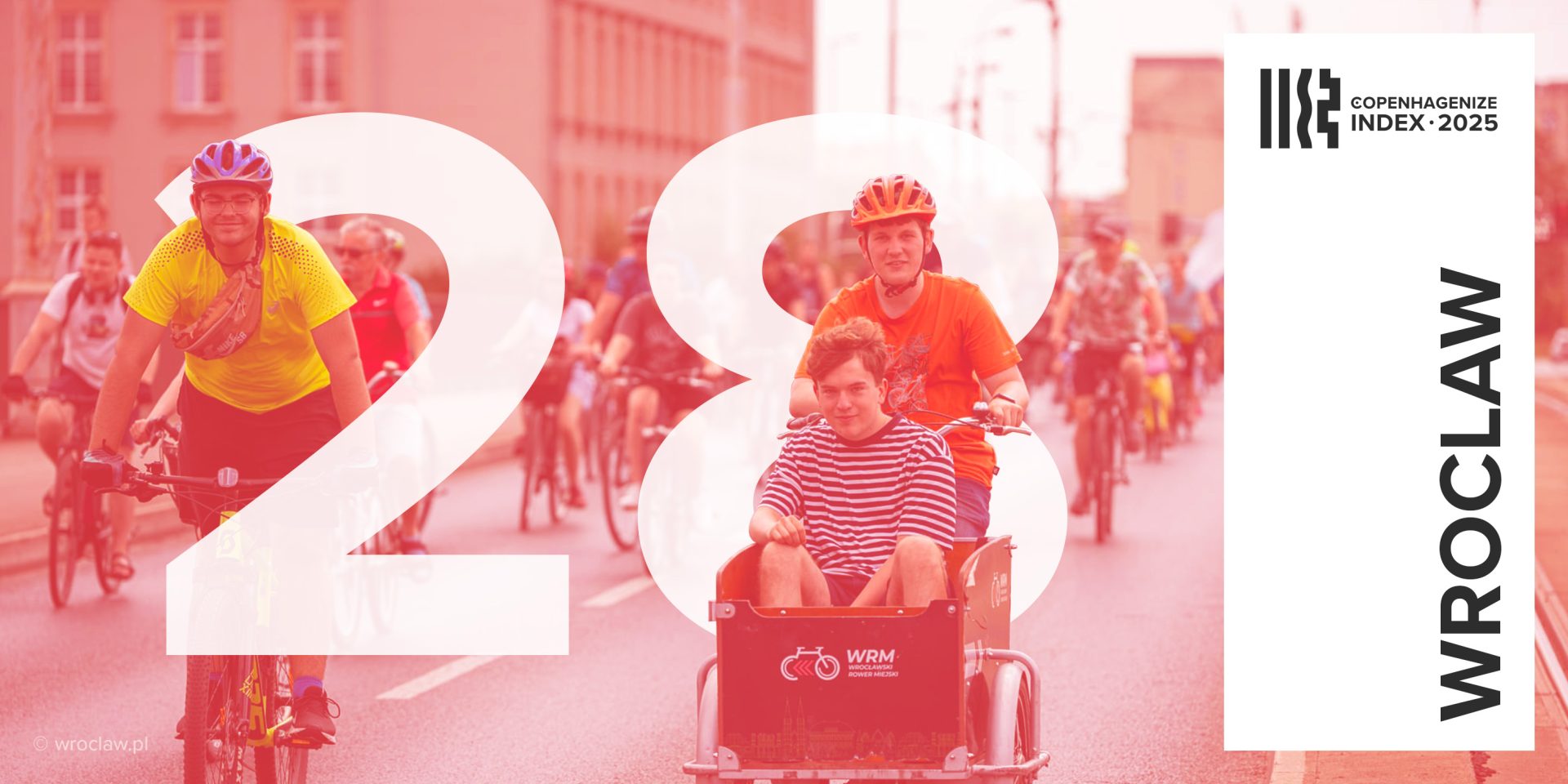
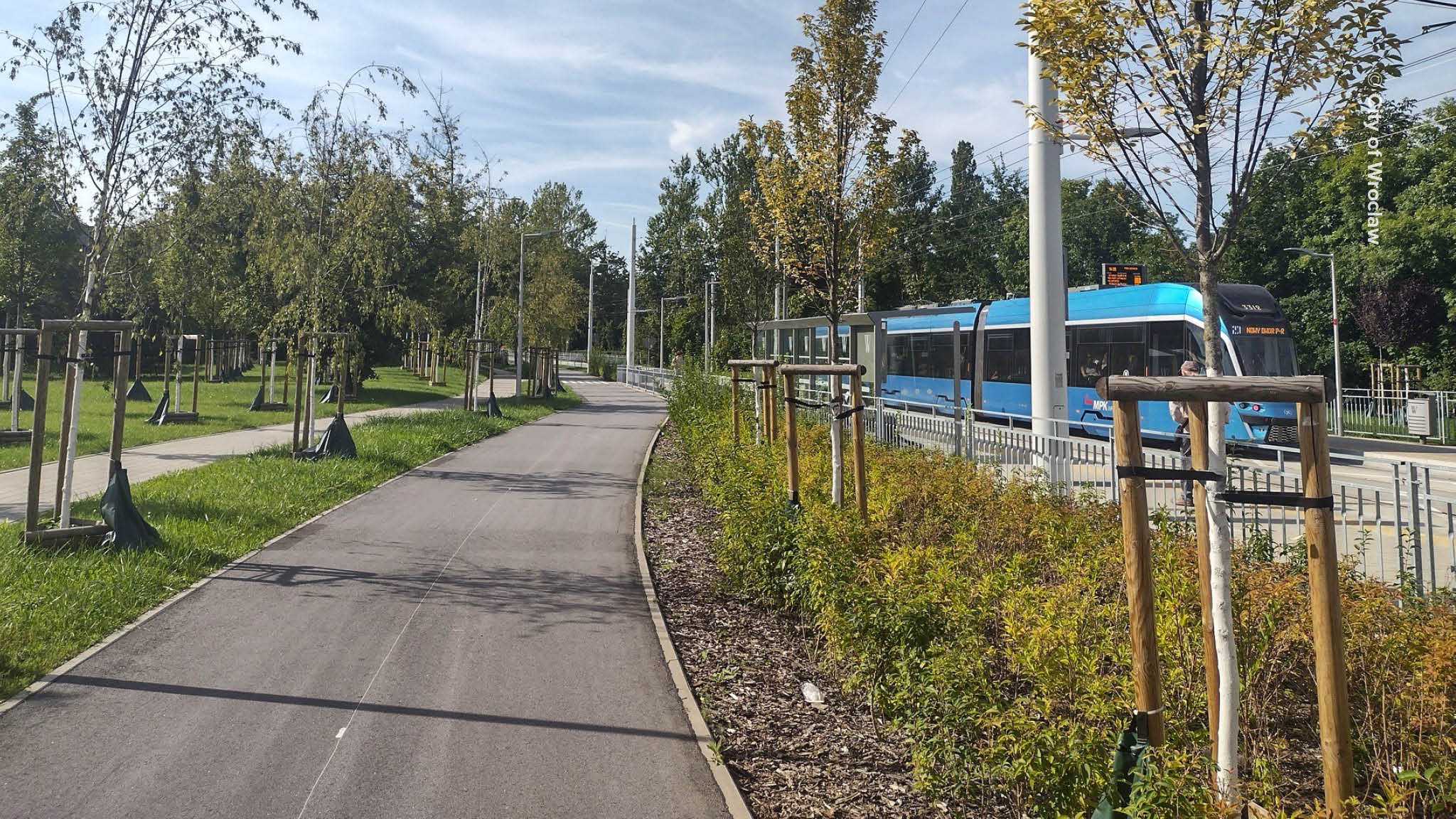
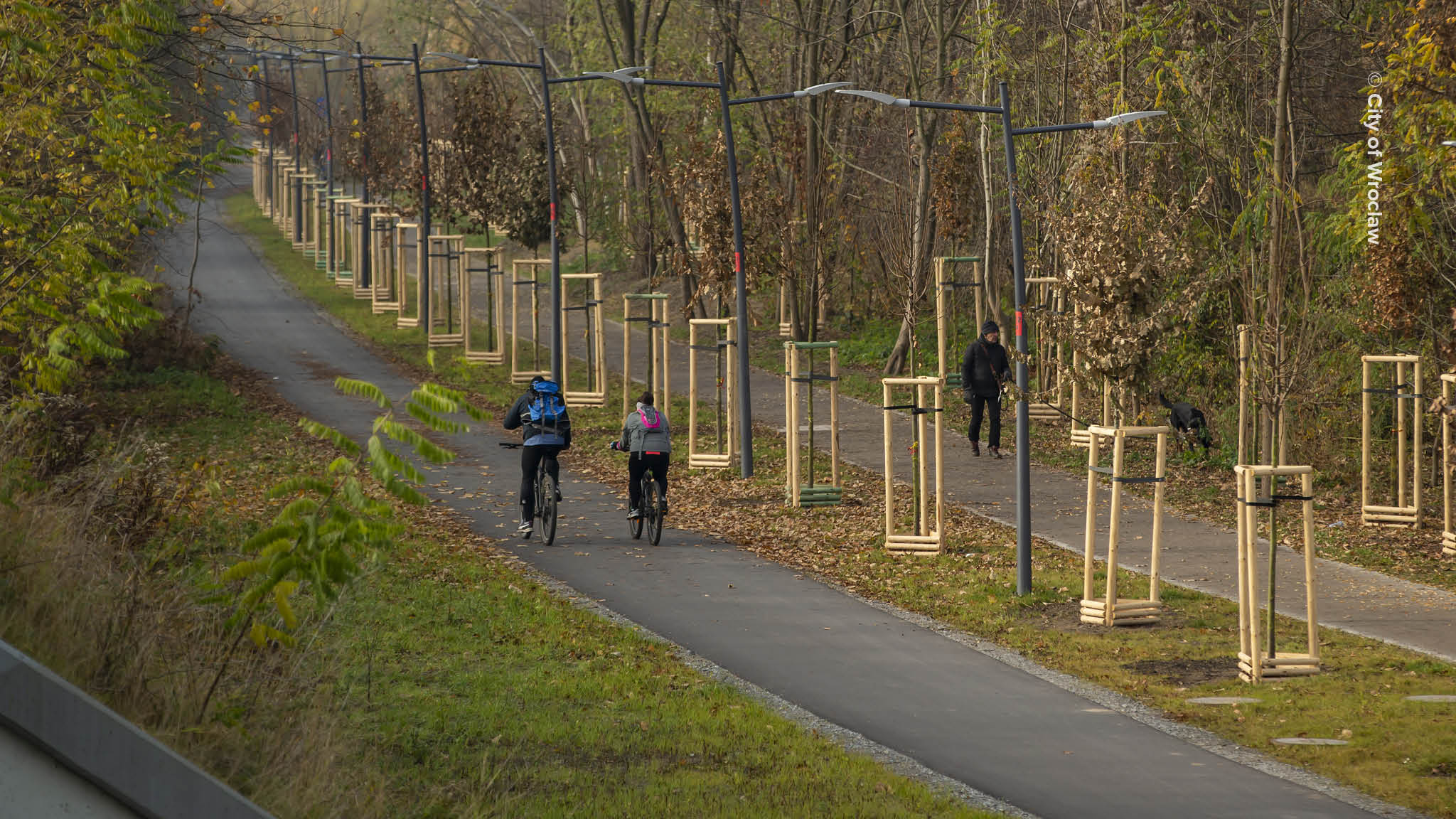
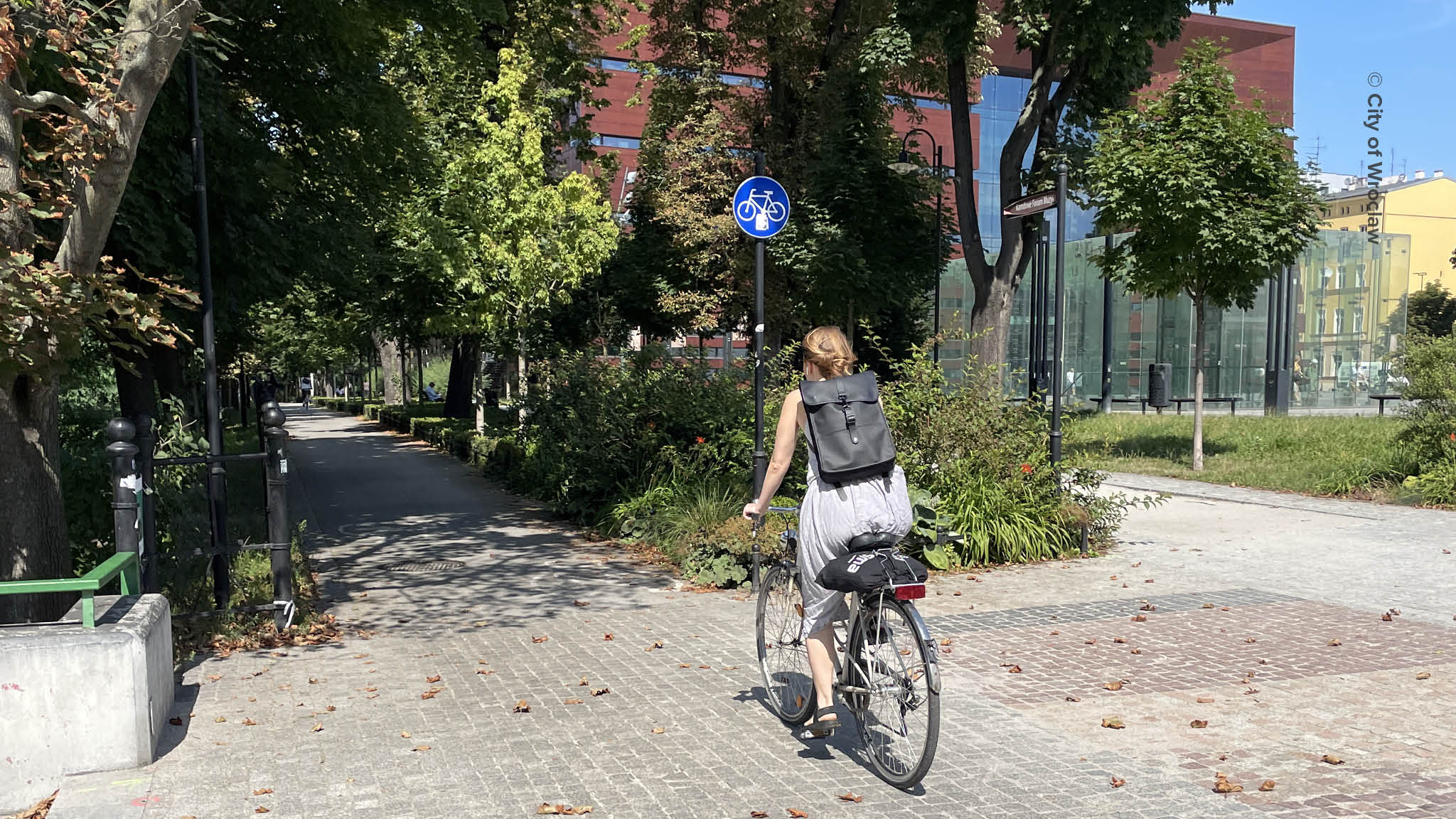
Wrocław’s extensive bicycle network – framed by the region’s Dutch-inspired cycling design guidelines – has equipped residents with 428 km of cycling routes which have successfully linked parks, universities, and business centers. Although the network has certainly excelled in quantity, the quality of the cycling infrastructure still varies: for instance, many links consist of just painted lanes or narrow 2–2.5 m bidirectional strips close to motorized traffic, which explains the modest and slipping bike share. Today, cyclists make up 5% of daily traffic, a slight decrease from the 6.3% in 2019. Recent projects are raising the bar, notably the new bicycle tracks alongside streetcar corridors, which demonstrate improved width, placement, and separation as well as a hint at the city-wide adoption of more comfortable, coherent and safe standards.
Wrocław couples infrastructure with pragmatic solutions and education. Opened in June 2025, Mikrohub Wrocław is Poland’s first cycling logistics hub, and it is centrally located in a re-purposed underground car parking garage. The logistics hub has enabled six operators to deliver goods across the city by cargo bike. This is a sustainable, healthy and financially viable system for a city that halts motorized deliveries after 10 AM. During the Covid pandemic, cyclists were re-admitted into the historic city center and helped to spur this change. A pedagogical “Slow Zone” was established. The successful trial, which turned permanent and remains to this day, is creatively signaled by pictograms of a cyclist carrying a snail shell to raise awareness and slow the speed of traffic. For children and families, the city launched “Młodzi – Aktywnie zMOBILizowaNi” (« Young People – Actively Mobilized ») in 2021, a program that has provided school courses, teacher training, a Dutch-style student bicycle licence, and school street initiatives. In August 2025, Wrocław successfully re-launched its bikeshare system, giving residents access to over 2,534 bicycles including e-bikes, cargo bikes, tandems, handbikes, and children’s bicycles. In just six months, the city has logged 1 million rides, underscoring how strongly residents prefer traveling by bicycle.