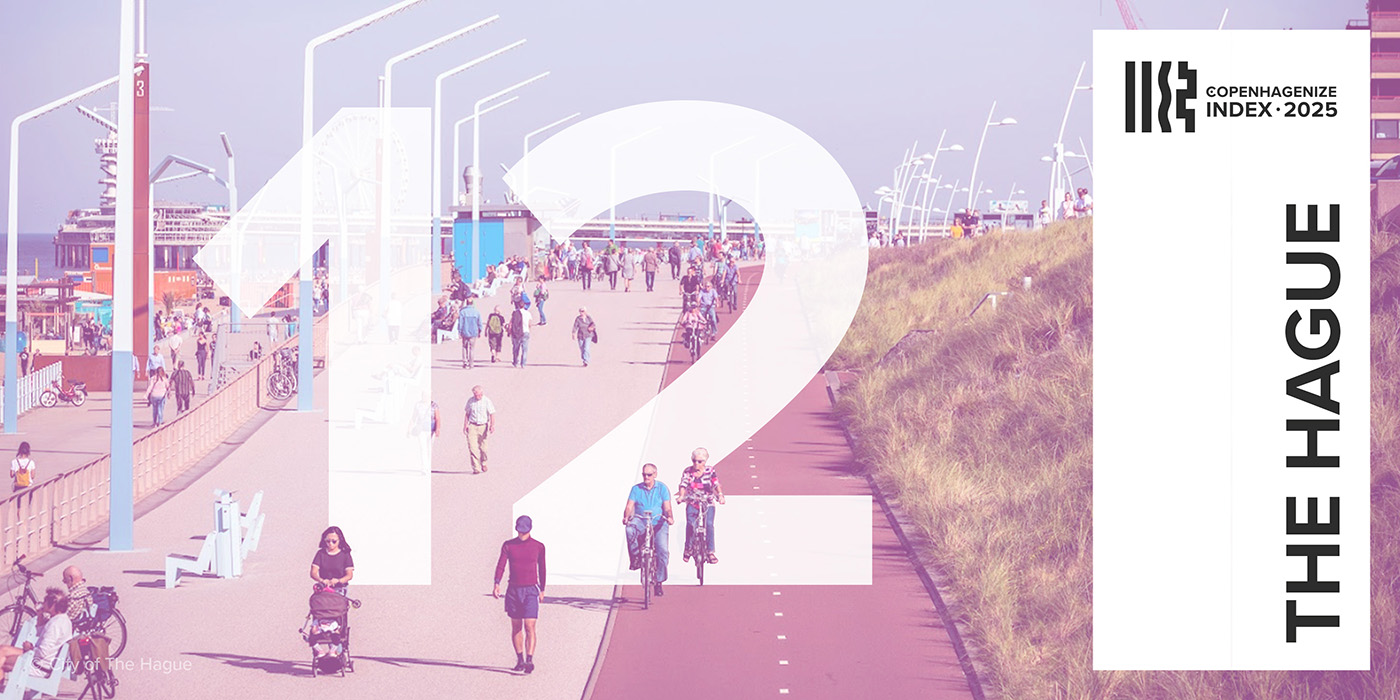
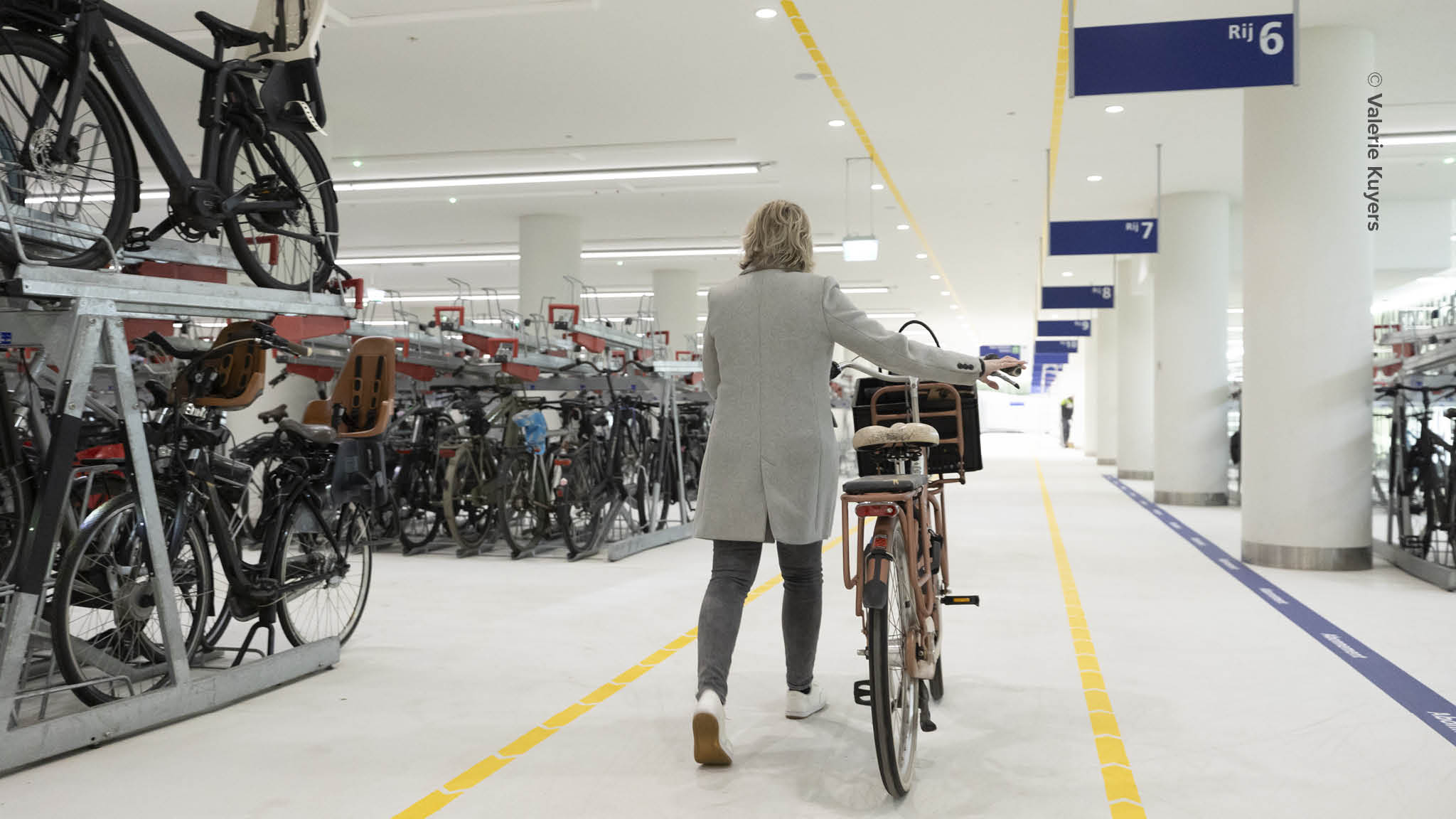
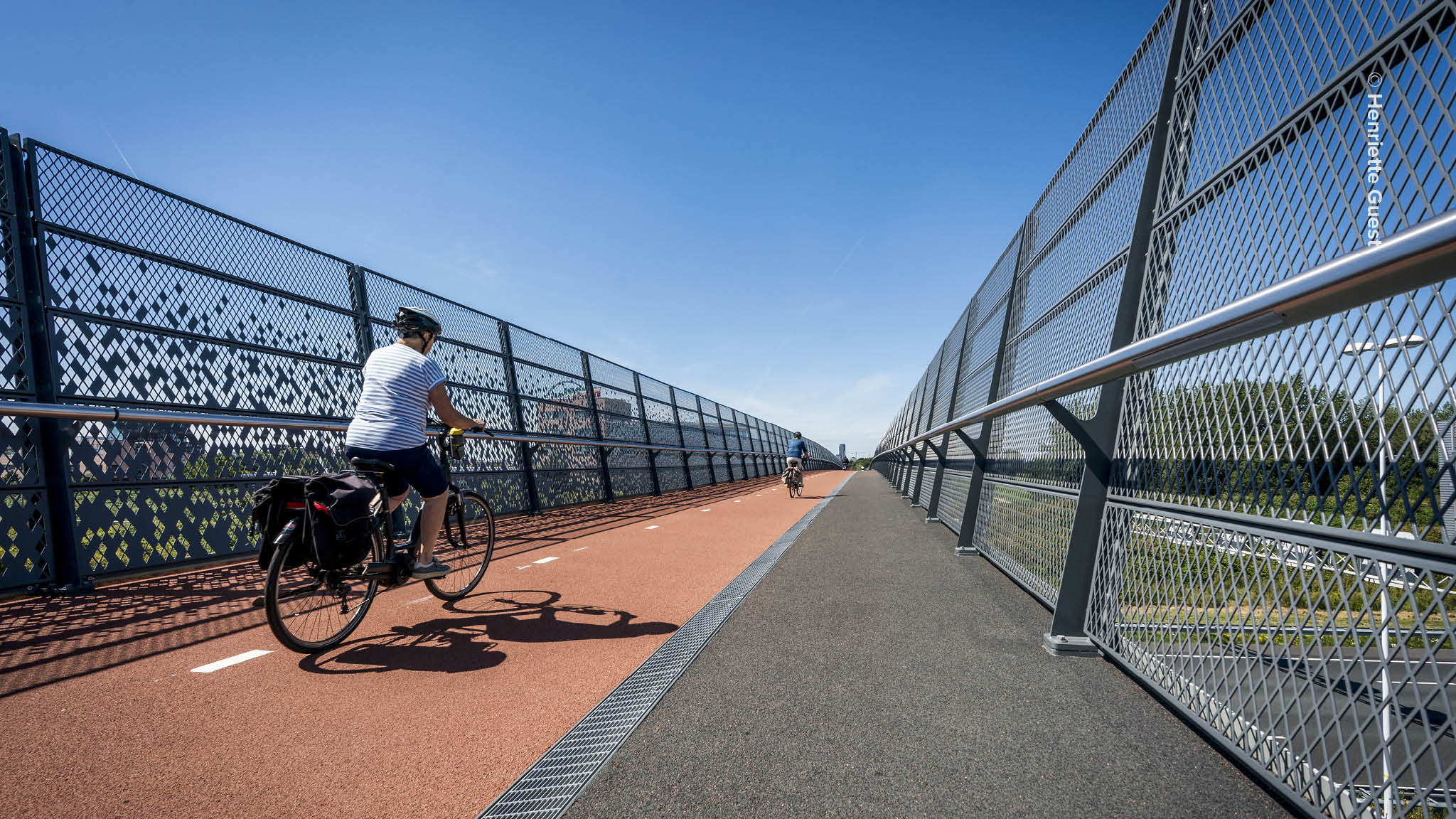
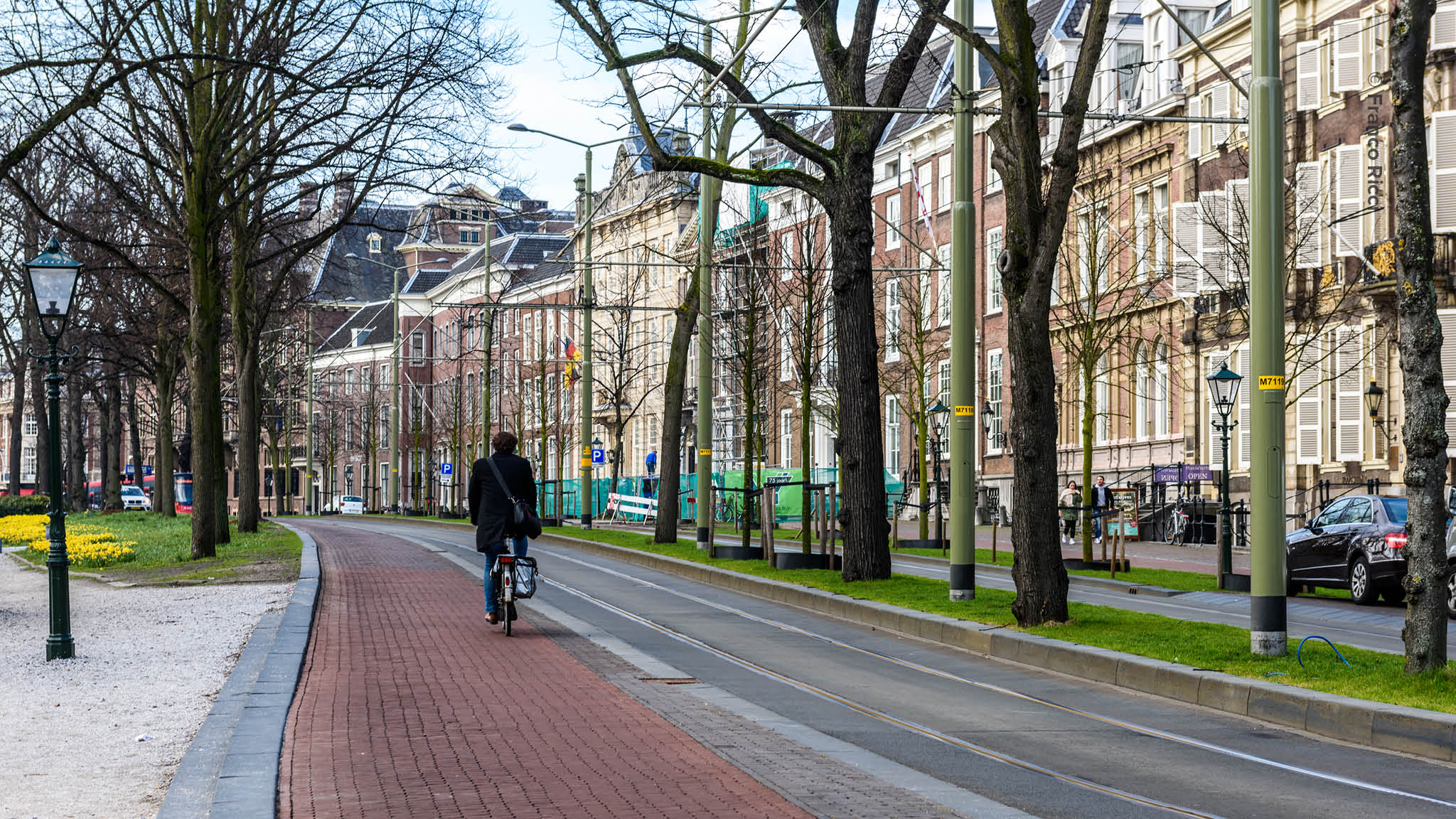
The Hague, the country’s administrative center and its seat of government, boasts a comprehensive network of protected cycling routes supported by a road network where around 60% of streets have speed limits at or under 30 km/h. An impressive investment of €65 million since 2020, the Ruim baan voor de fiets (“Make way for bikes”) program, has driven systematic upgrades across the city, integrating cycling into every layer of mobility planning. Parking is anchored by the monumental 8500-space KJ-stalling at the Central Station and nearly 47,000 street racks. This means the cycling infrastructure is functional, abundant, and architectural. The steady expansion of cycling is reflected in a pragmatic approach: improving existing streets, linking suburbs by projects like the Starroute network, and integrating cycling in all urban transformation projects. The Jan Linzel viaduct, a 335-metre cycling bridge spanning the A4 motorway, and the Stationsbuurt/Schildersbuurt traffic-calming plan demonstrate how cycling projects now double as urban design initiatives.
The Hague’s cycling identity, Den Haag Fietst!, is a unifying brand that brings cycling to every age group and neighborhood. The Children’s Bicycle Plan provides 1,500 bikes yearly to kids who otherwise would not be able afford one, while programs like Veilig leren fietsen (“Learn to ride safely”) bring together cycling lessons from age two to seventeen. Festive events such as the Fietslichtjesparade bike ride make visibility fun, while shared and cargo-bike subsidies encourage both family and business mobility shifts. Together, these actions shape a city where cycling is not an ideology, but a normalized and celebrated part of daily life.