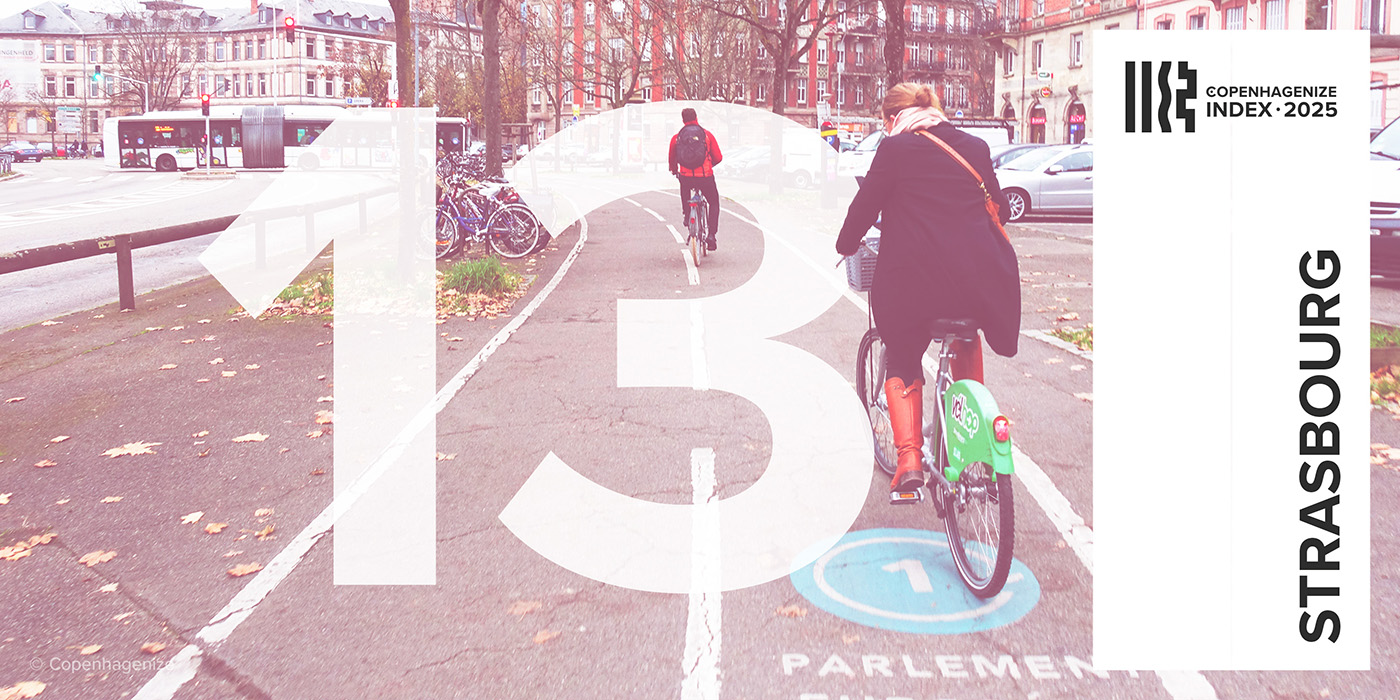
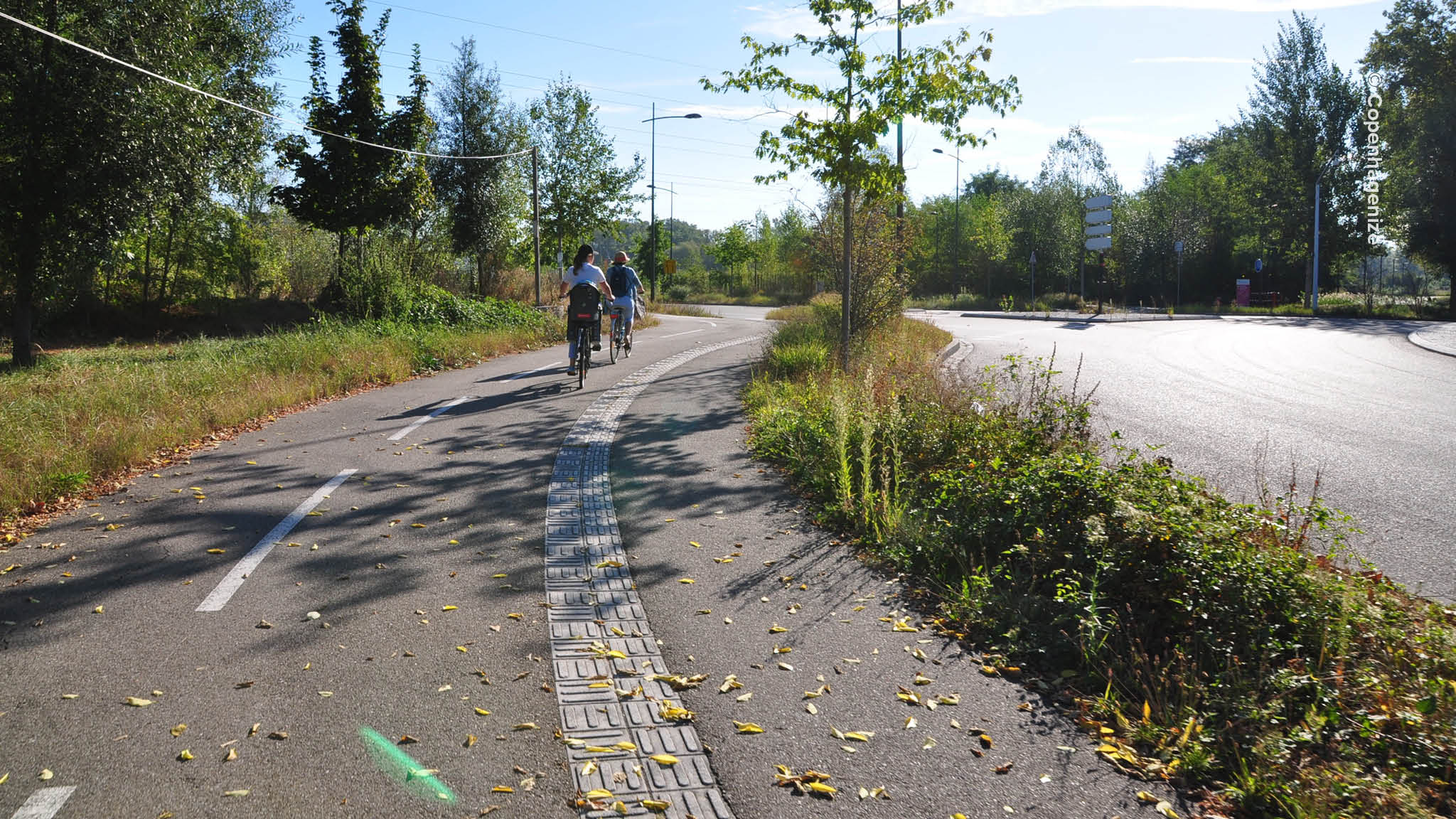
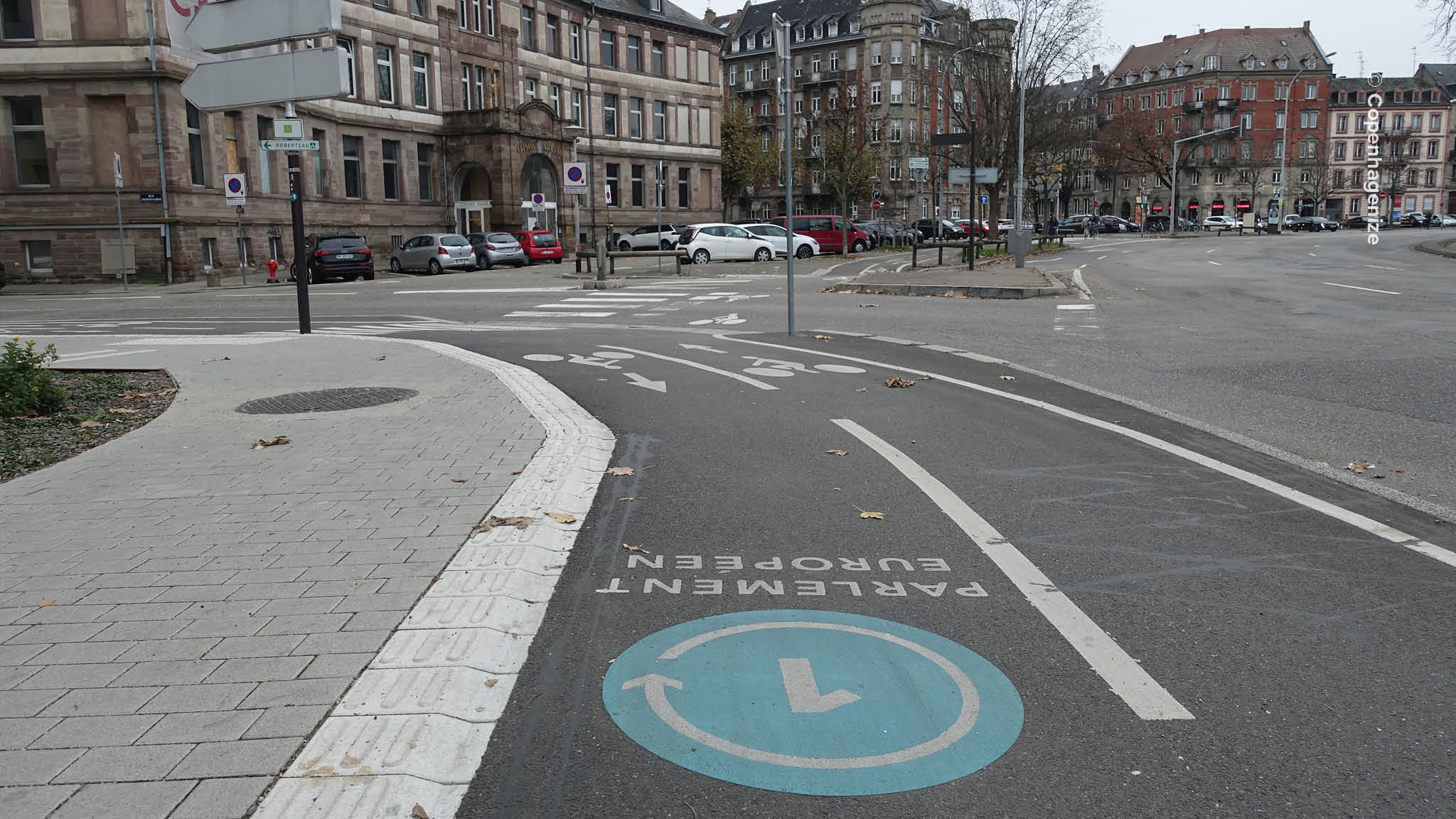
Strasbourg’s cycling policy is one of legacy and being at the vanguard of innovation. As one of France’s earliest laboratories for active mobility, the city has built a comprehensive cycling highway network, the Vélostras. This network not only connects the city to the rest of its metropolitan area, but it is indeed a symbol of the city’s ambition. By creating an improved and better-connected bicycle infrastructure, supported by recognizable wayfinding and a strong visual identity, the city is consistently working to enable its residents to get on bicycles for their daily travels. Nonetheless, while the Vélostras is the backbone of network development, it is paramount for the city to expand its 30 km/h speed limit zones and redesign streets to create a better safety and comfort balance. Actually, this is clearly non-negotiable if Strasbourg aims for a place among Europe’s top cycling cities.
Throughout the years, Strasbourg has managed to create a bicycle ecosystem that solidly relies on active organizations and institutions to keep momentum going forward. Local NGOs have played a vital role, operating learn-to-ride programs for people in different age groups, running awareness campaigns, and organizing the well-known and highly-effective Au boulot à vélo challenge, which started in 2009. Each year, thousands discover and rediscover cycling as a mode of transportation through this bike to work challenge. In 2024 alone, slightly more than 60% of first-time participants reported permanently taking on cycling for daily trips after participating in the challenge.
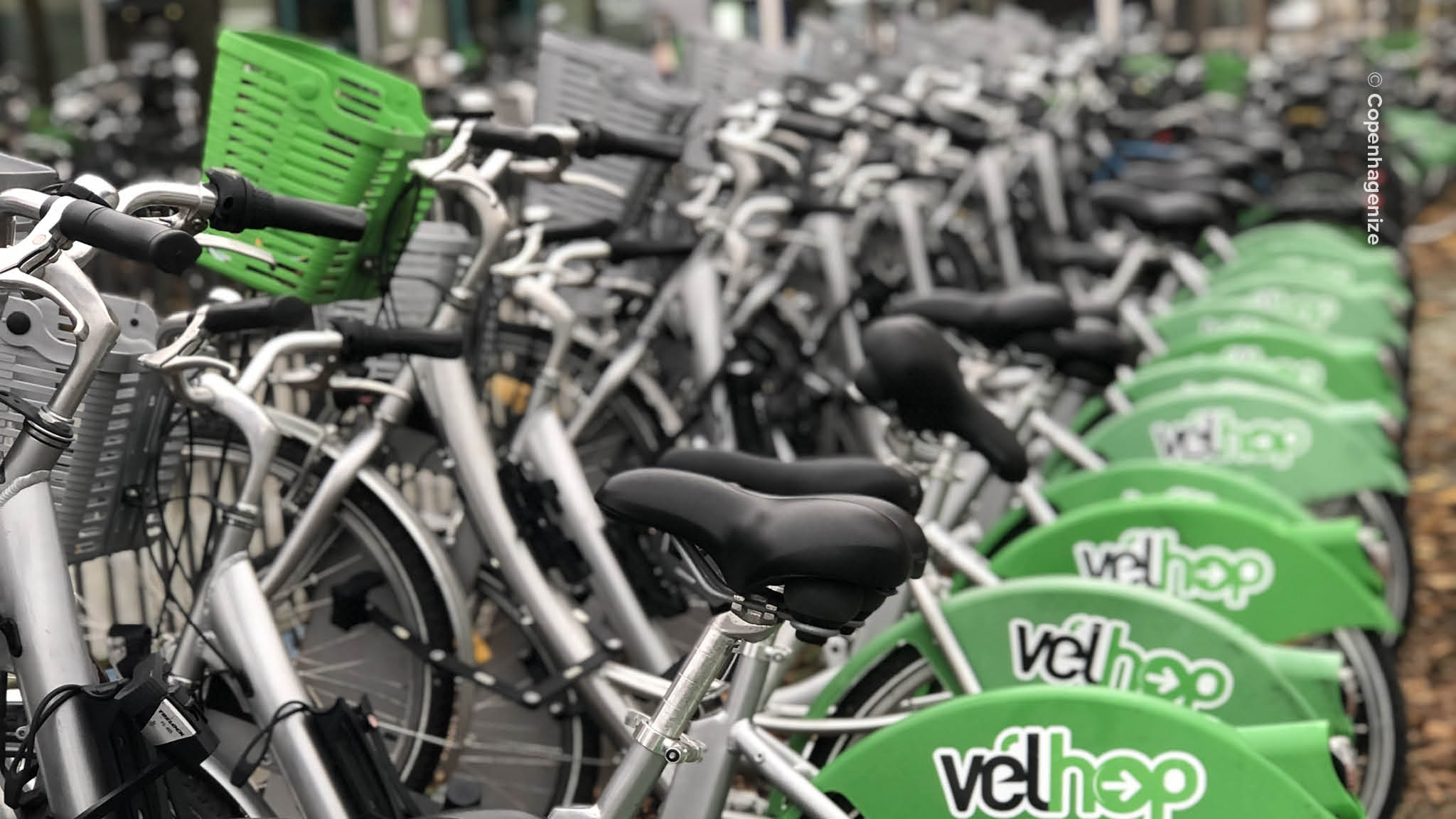
The city also stands out for an abundance of bicycle parking, both on-street and in access-controlled facilities near transportation hubs. Today, Strasbourg boasts more than 400 spaces per 1,000 inhabitants, one of the highest ratios in the world. Cargo bikes have also found their place into Strasbourg’s daily rhythm, supported by logistics programs that reduce motorized traffic in the city core and also contribute to creating more sustainable practices. Together, these elements have formed a cycling ecosystem that is blending infrastructure, education, and community action.