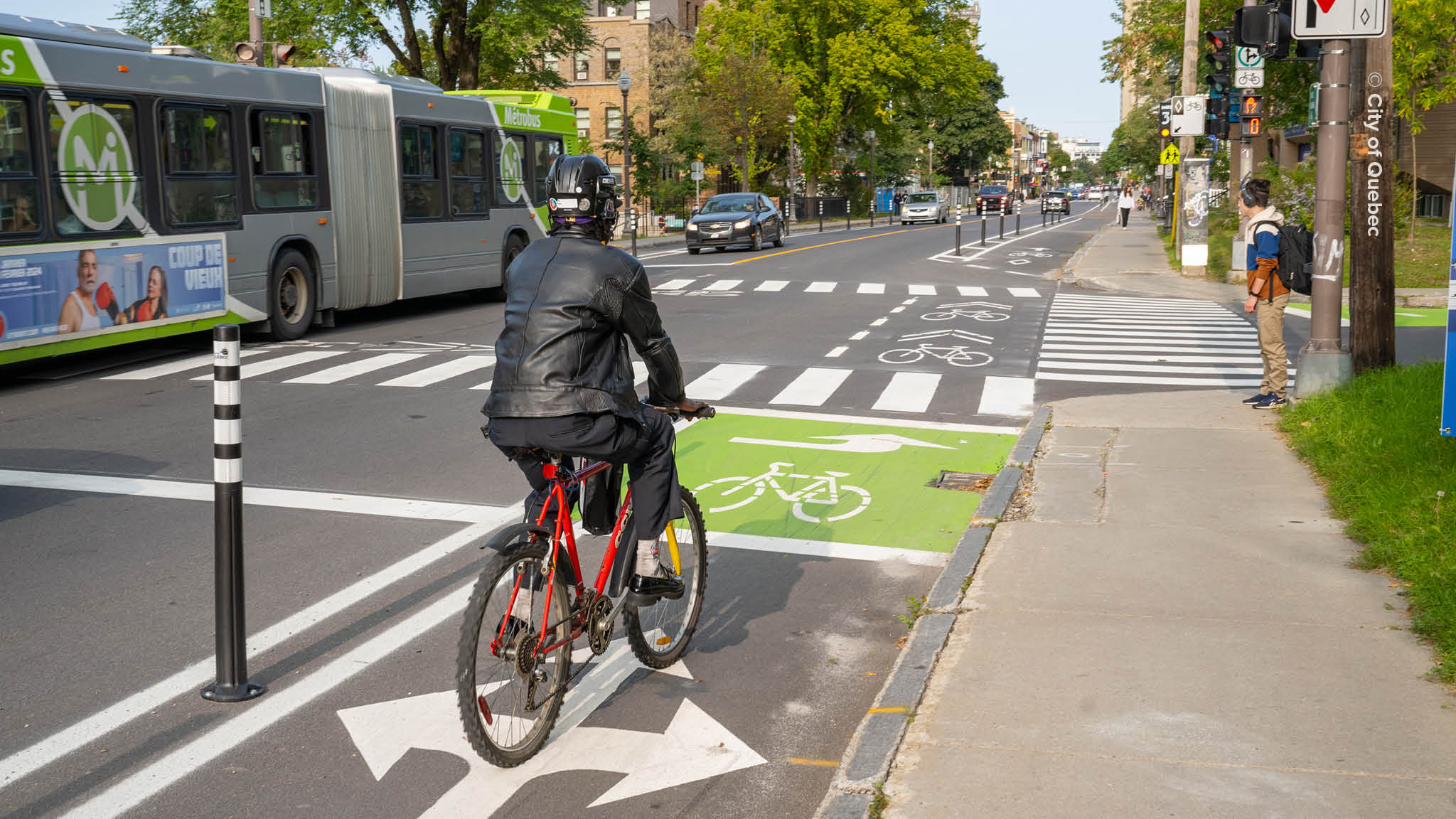
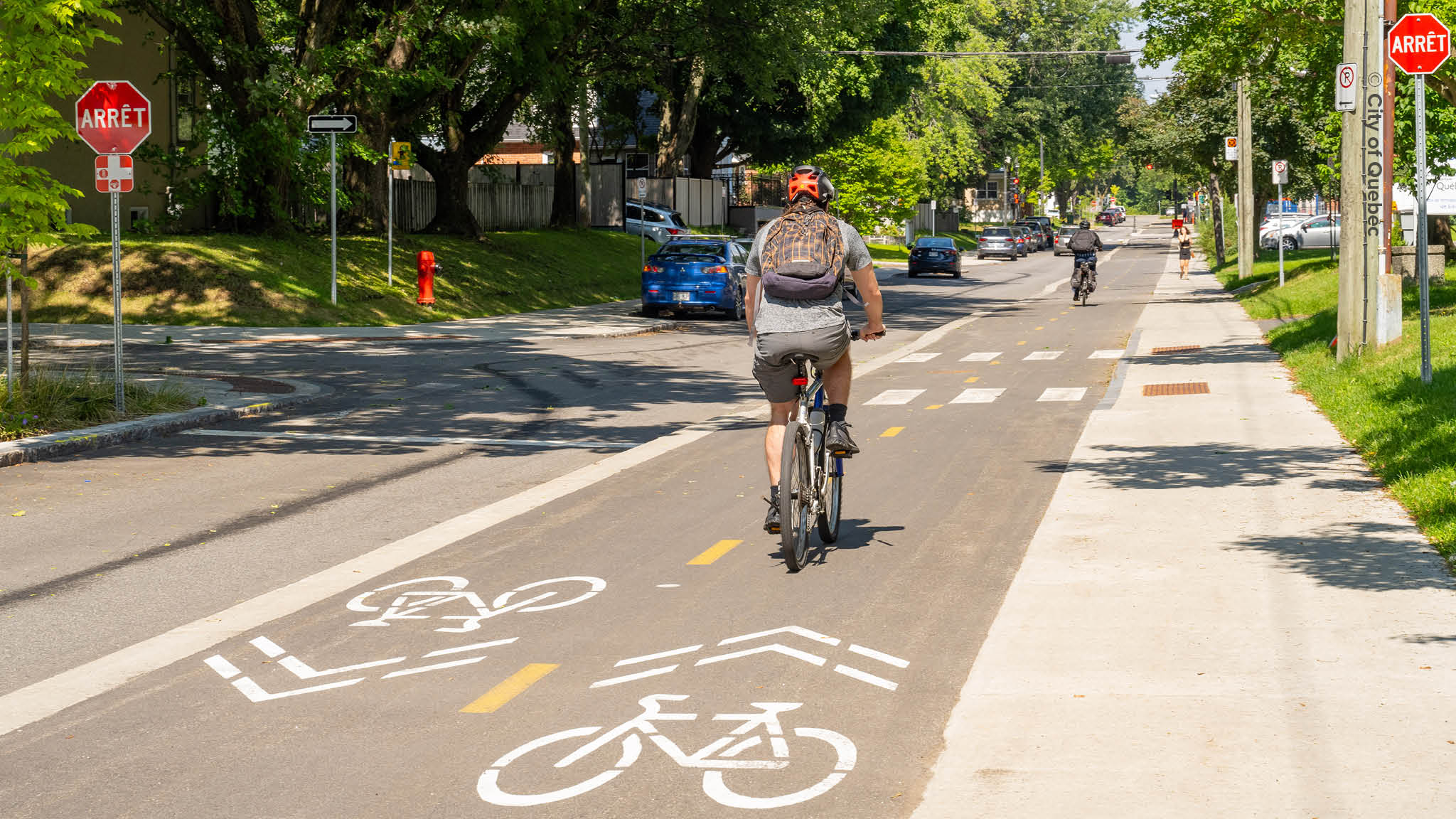
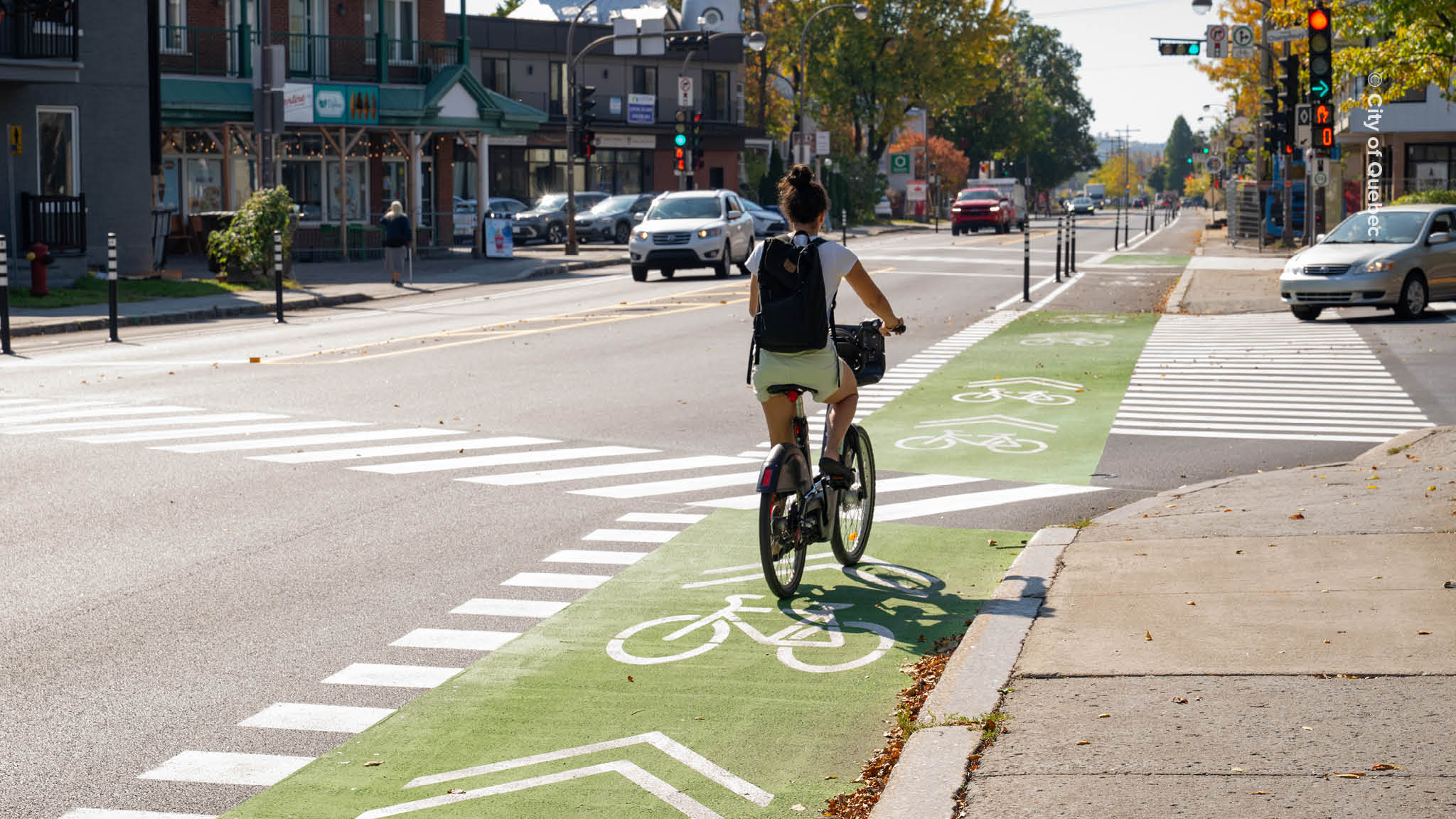
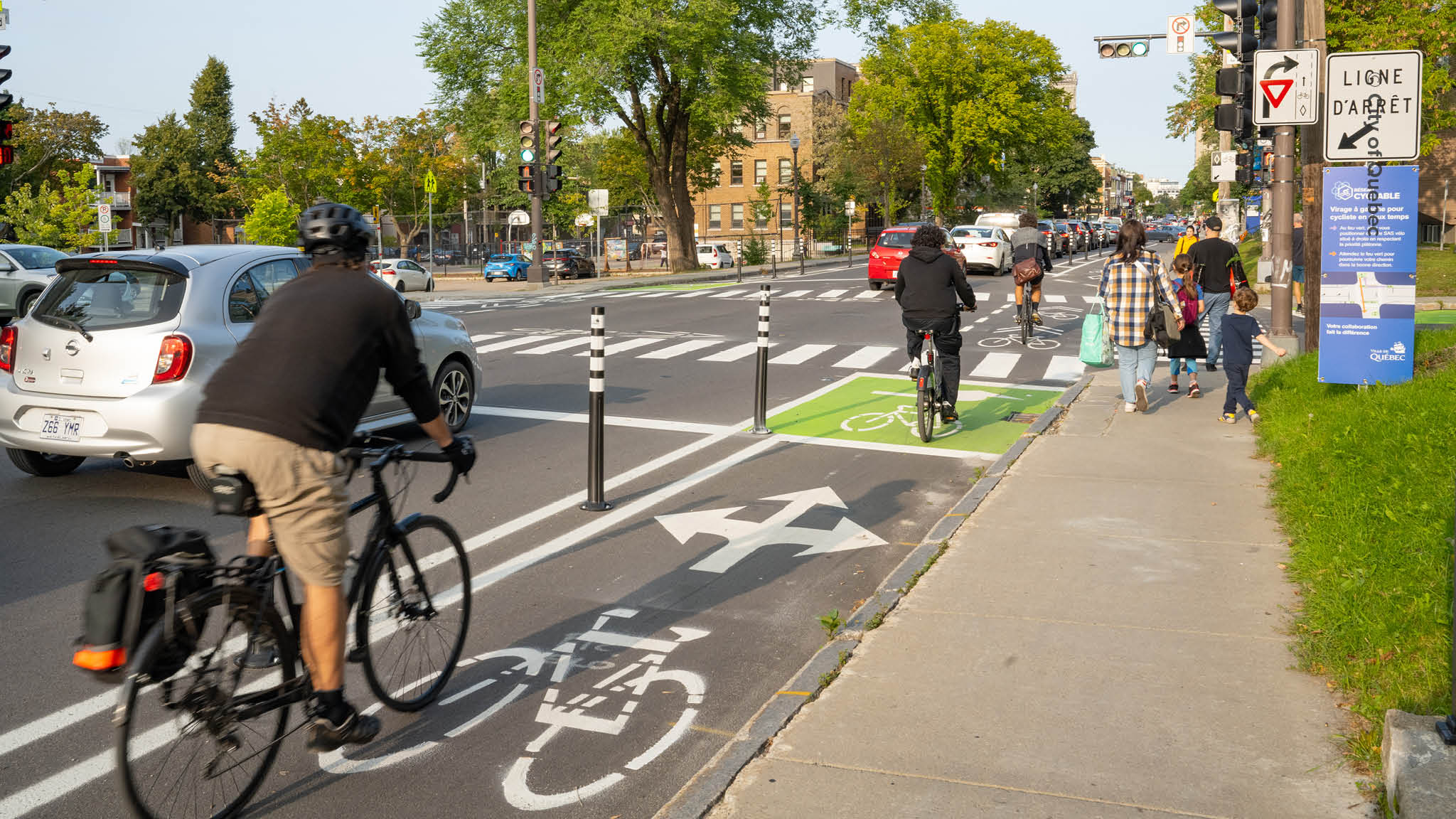
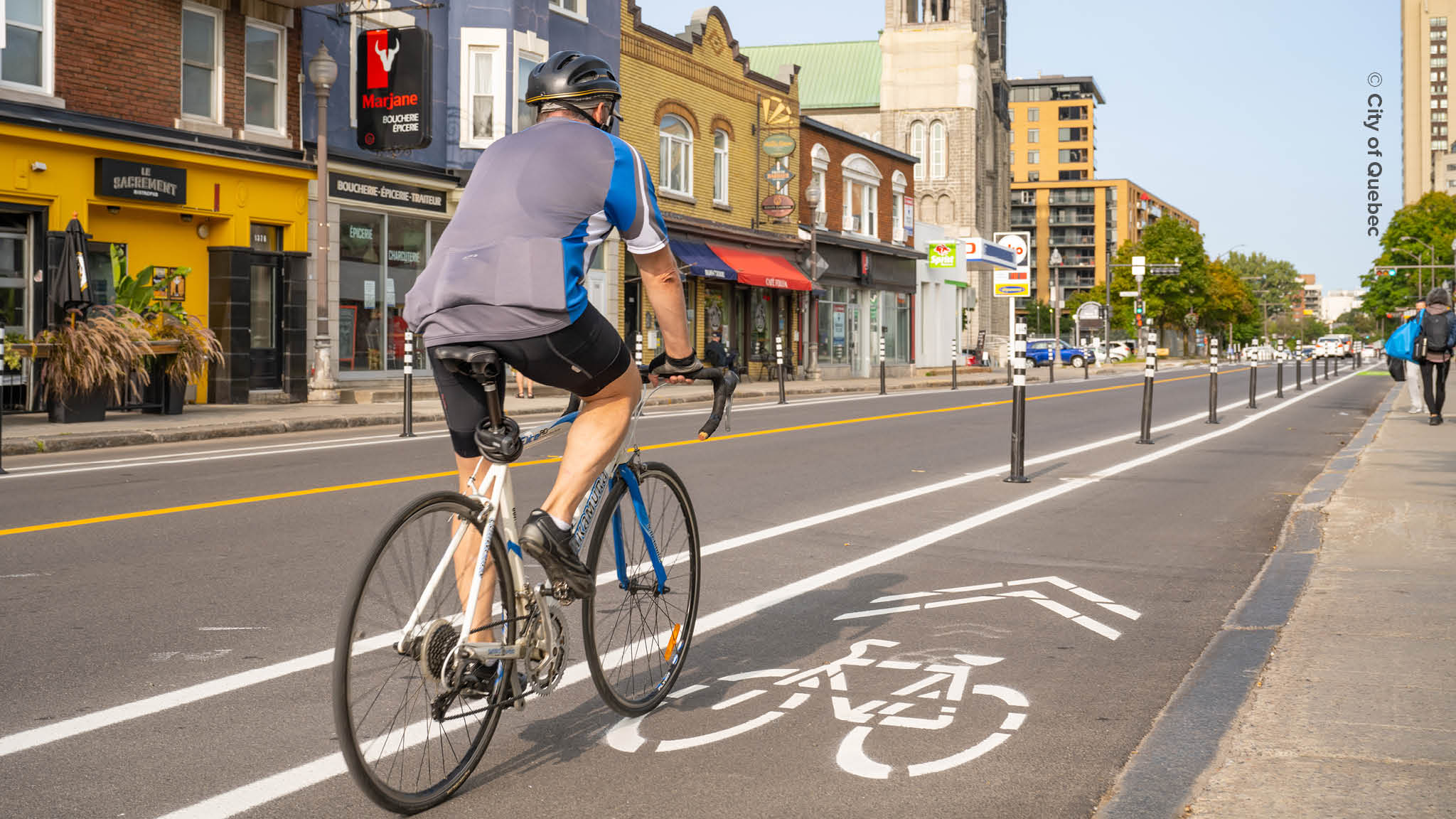
In 2023, the city announced it planned to create a 150 km network of safe, connected, and comfortable bicycle routes by 2034, a bold move in a city where every transportation project sparked bitter debate. Initially called Corridors Vélo cité, the infrastructure was renamed Corridors VivaCité (CVC) one year later to highlight its inclusiveness and broader social benefits which include public health and urban vitality. The impact was immediate: along the CVC Chemin Sainte-Foy, bicycle and pedestrian traffic rose by 6.9% and 94% respectively between 2023 and 2024, and retail sales climbed by nearly 10%.
In a city once known for having a rather mediocre quality cycling infrastructure, the CVC project has triggered a significant qualitative leap that has surpassed the “Corridors” themselves and includes transitional street design. By applying best practices and studying other cities’ experience and expertise, Québec is moving fast – as evidenced by the 16 km of separated infrastructure delivered between 2022 and 2024.
Another remarkable success is the rollout of the à Vélo bike-sharing system, featuring a fully electric fleet adapted to the city’s challenging topography. With affordable pricing and year-on-year growth, the service has quickly gained popularity, even creating peak hour bicycle traffic jams – despite a mandatory helmet rule. Since its pilot launch in 2021 with just 10 stations and 100 bikes, the system grew to 115 stations and 1300 bikes in 2024, with ridership soaring from 29,000 trips to nearly 1,3 million over the same period. With an additional 50 stations and 500 bikes, plus an extra 15 days of operation, 2025 is shaping up to be a big year for the service.