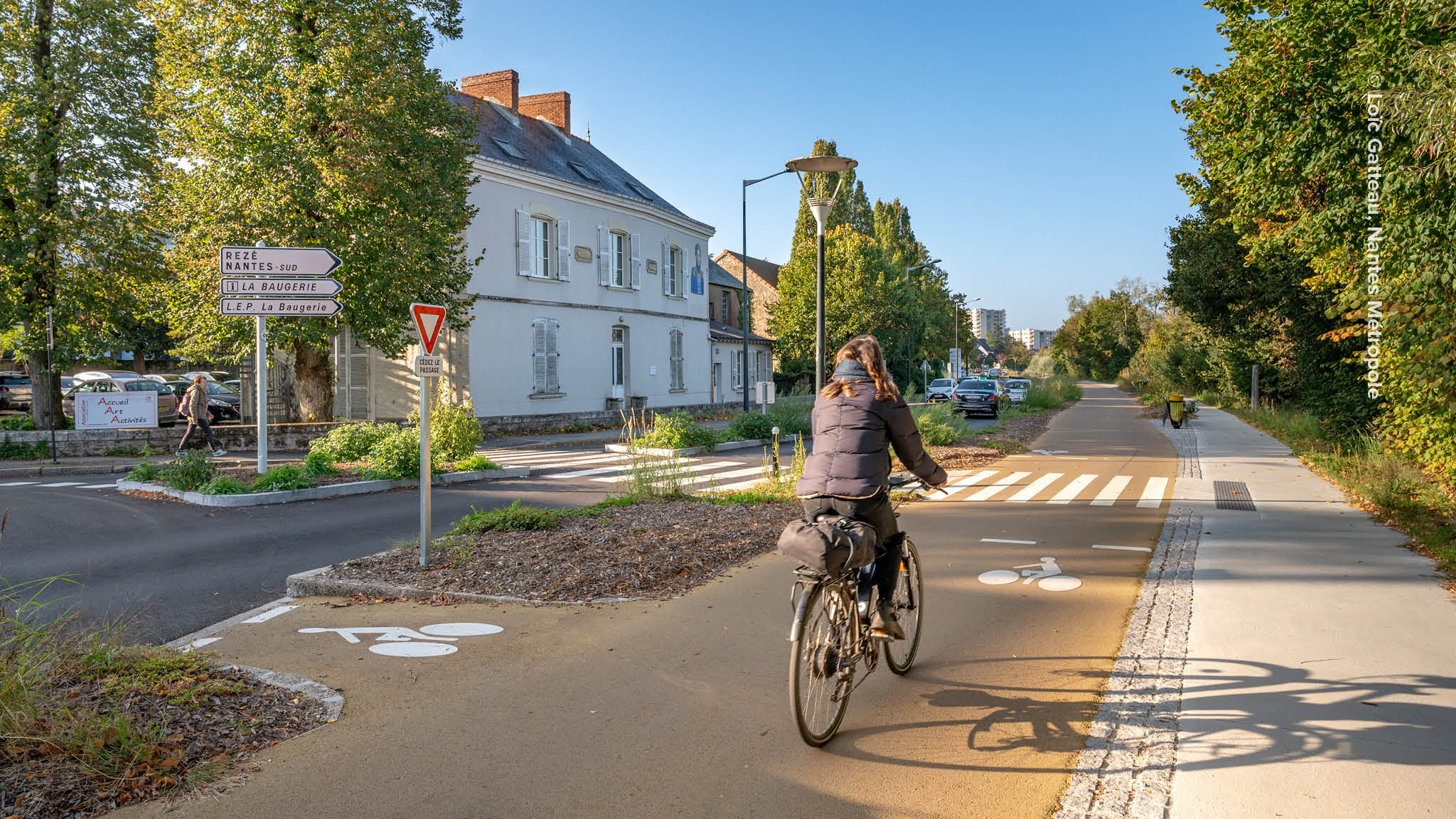
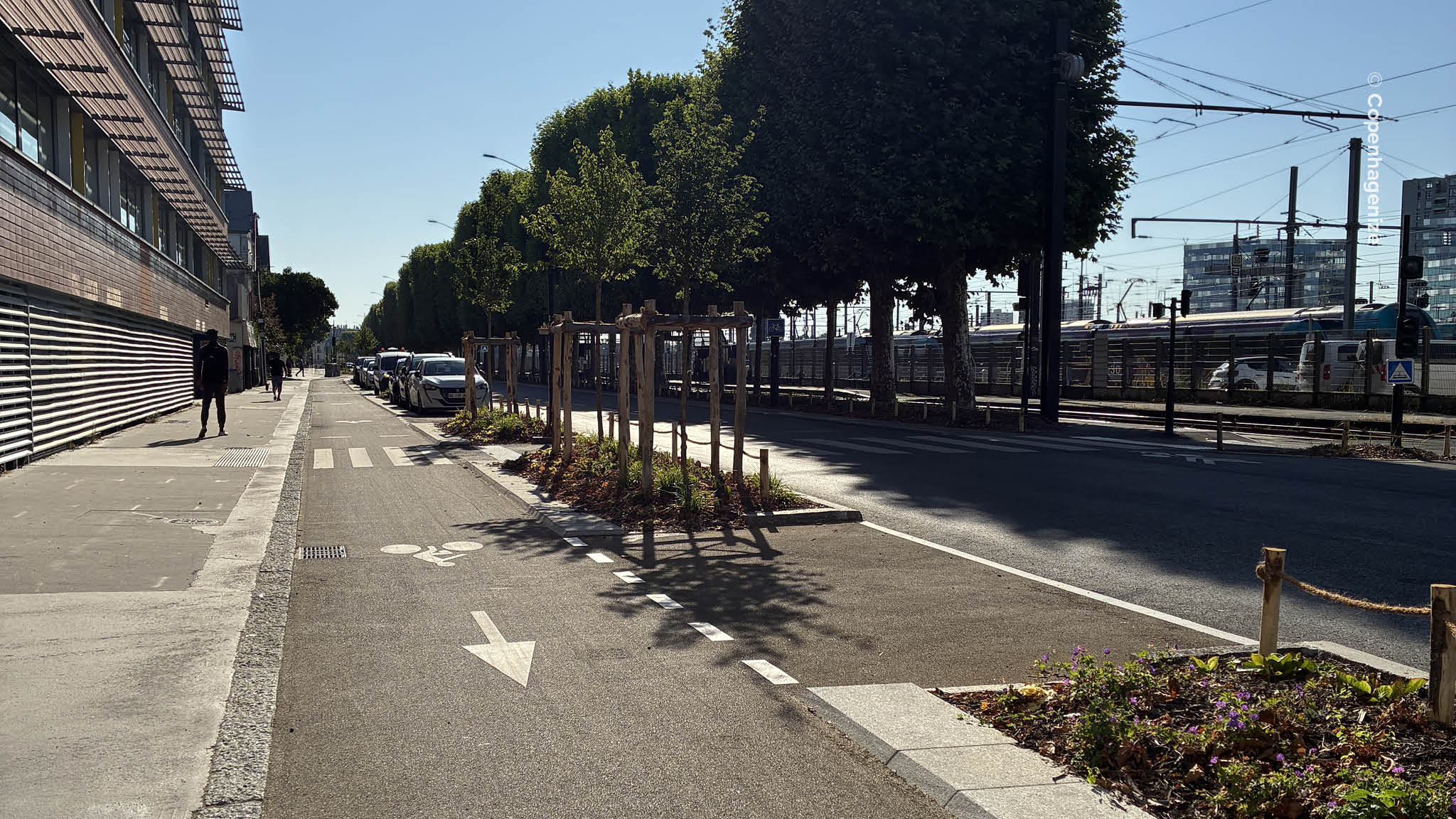
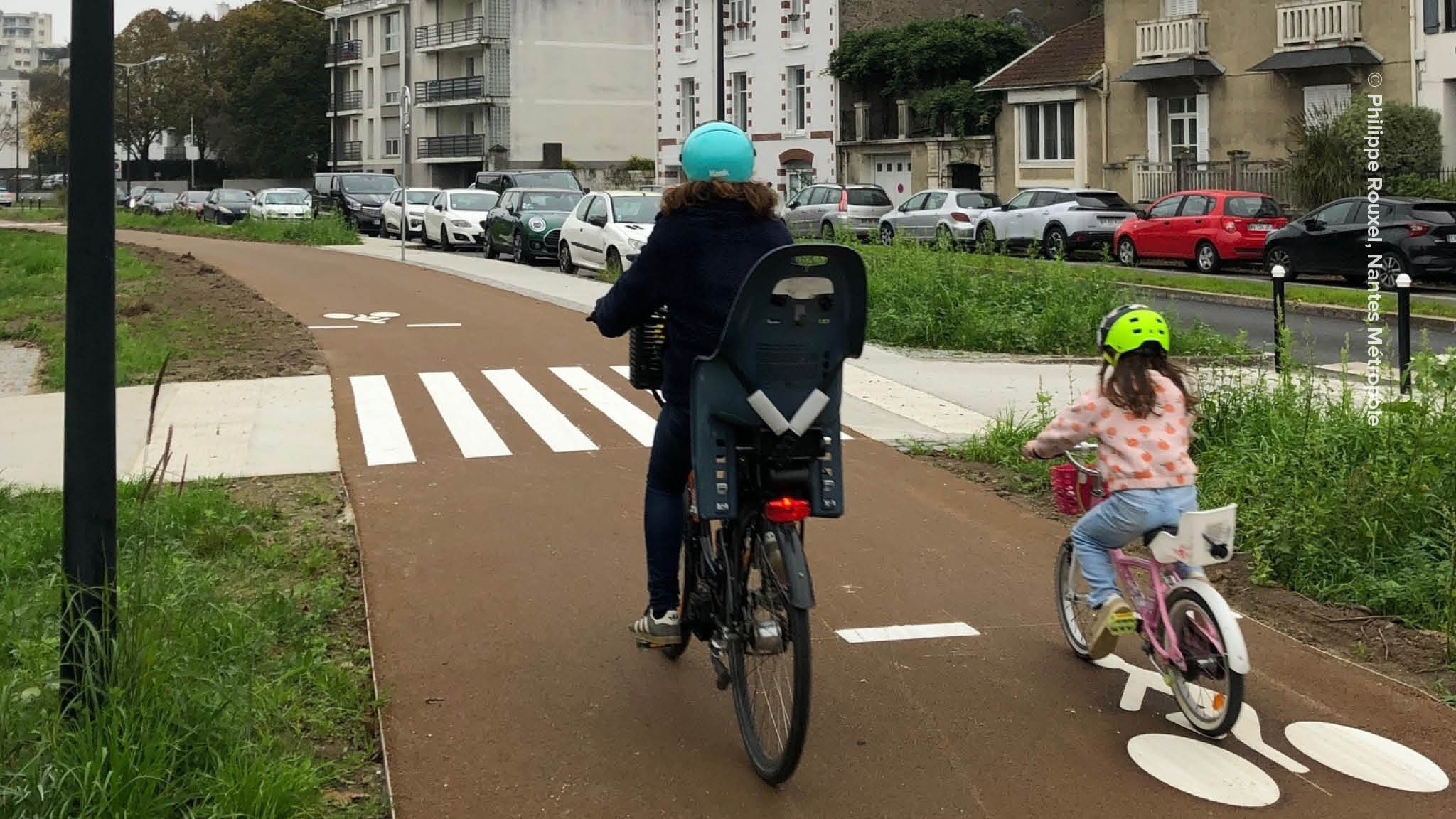
Nantes is demonstrating that building a cycling city is about ambition, consistency, and courage. After a period of well-intentioned but fragmented initiatives, the city chose to accelerate its transformation by developing the Grandes Voies Vélo, a bicycle infrastructure network designed to make daily bicycle trips safe and comfortable for everyone. Reinforced by a strong, etched identity that plays a crucial role in wayfinding, these corridors have been built to a high standard. This approach states a clear philosophy: cyclists deserve a quality infrastructure that values them. The city’s streetscape is rapidly evolving, creating neighborhood and suburban connections that feel efficient and safe for bicycle users.
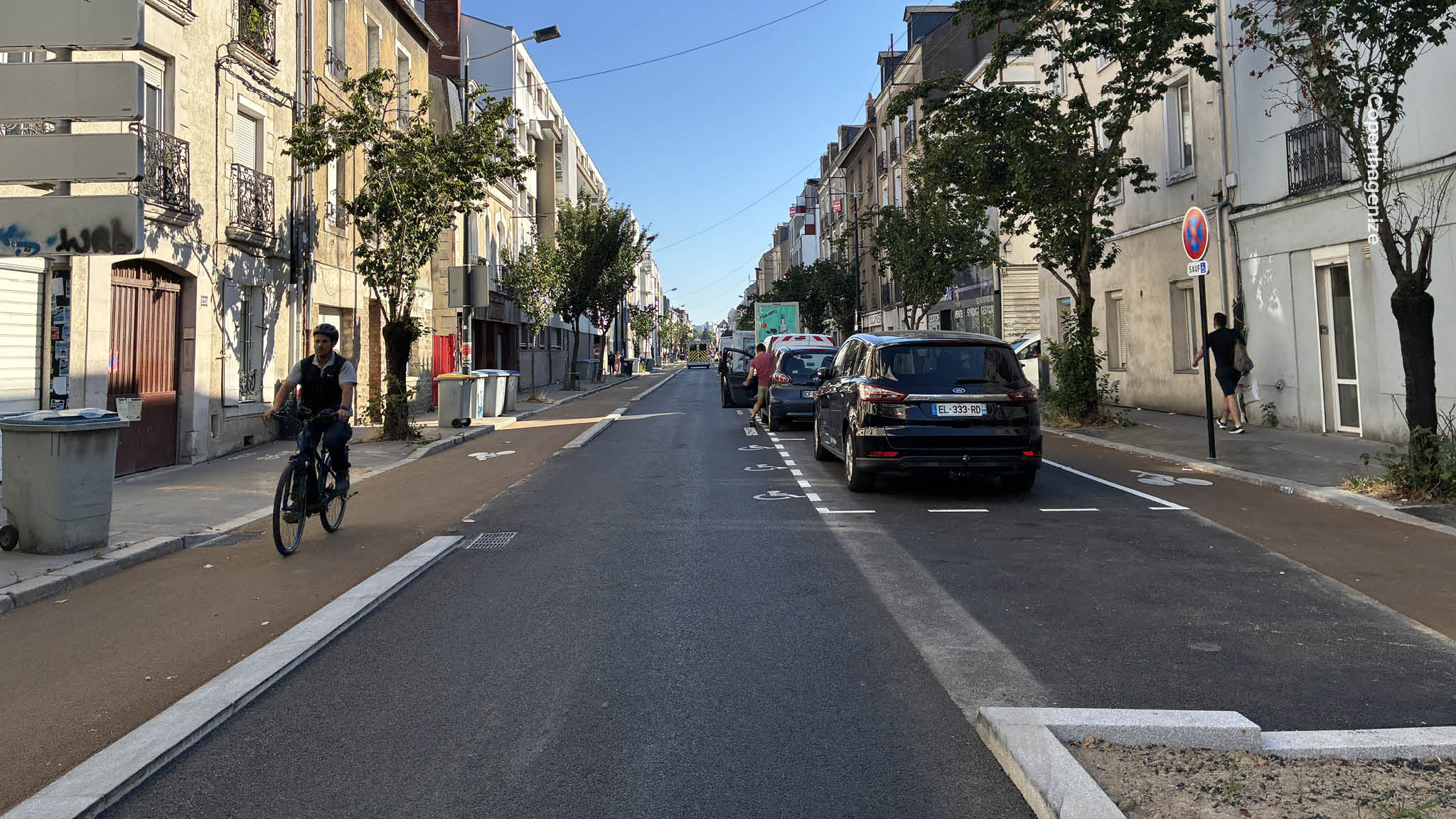
Street by street, Nantes has also been redefining its relationship with cars. By limiting nearly 90% of its roads to 30 km/h or less, the city is making cycling more inviting for current and potential users across the city. Car-free zones, shared streets, and low-traffic neighborhoods are reshaping local life, turning once car-dominated corridors into spaces scaled for humans. Using incremental steps to guide changes in mobility patterns demonstrates an approach that is both pragmatic and upbeat.
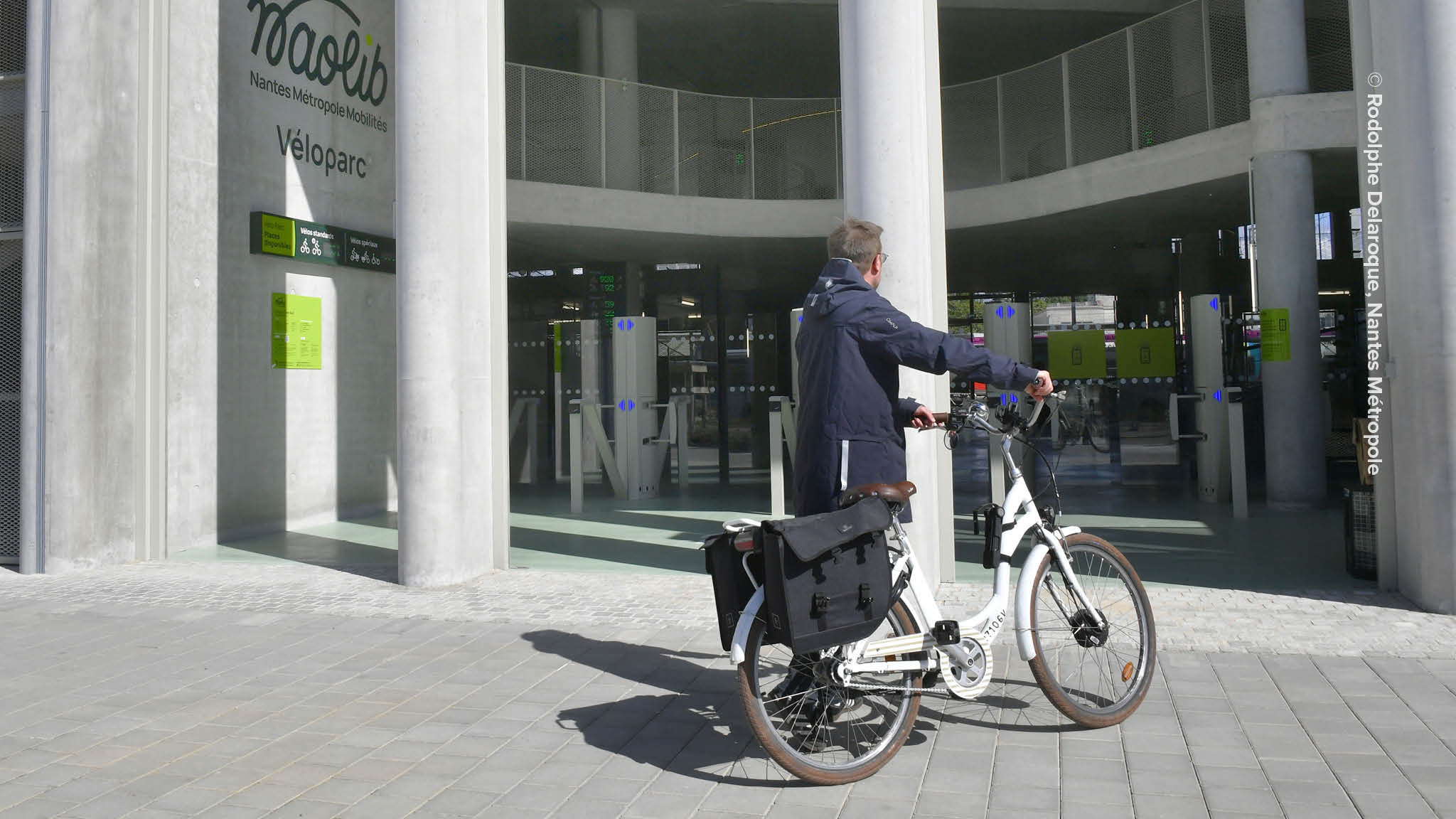
The city’s intermodality strategy adds another key layer to this transformation. The main train station is now home to one of France’s most attractive bicycle parking facilities, with 1,200 secure spaces and a range of services for commuters. It complements a growing offer of on-street parking and other intermodality services making cycling a seamless part of daily travel. Meanwhile, focused awareness campaigns and community events are highlighting all the benefits a bicycle has to offer. The city is nurturing a collective state of mind to celebrate cycling as both a mode of transport and a lifestyle.