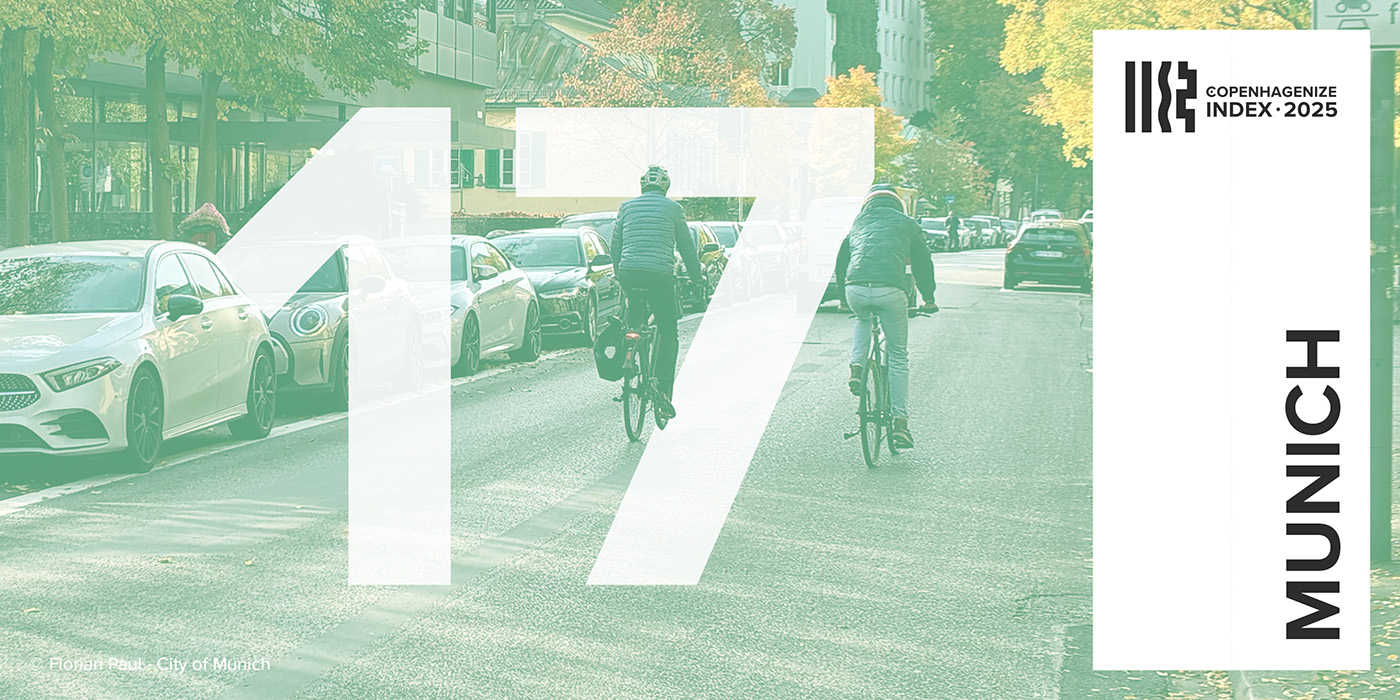
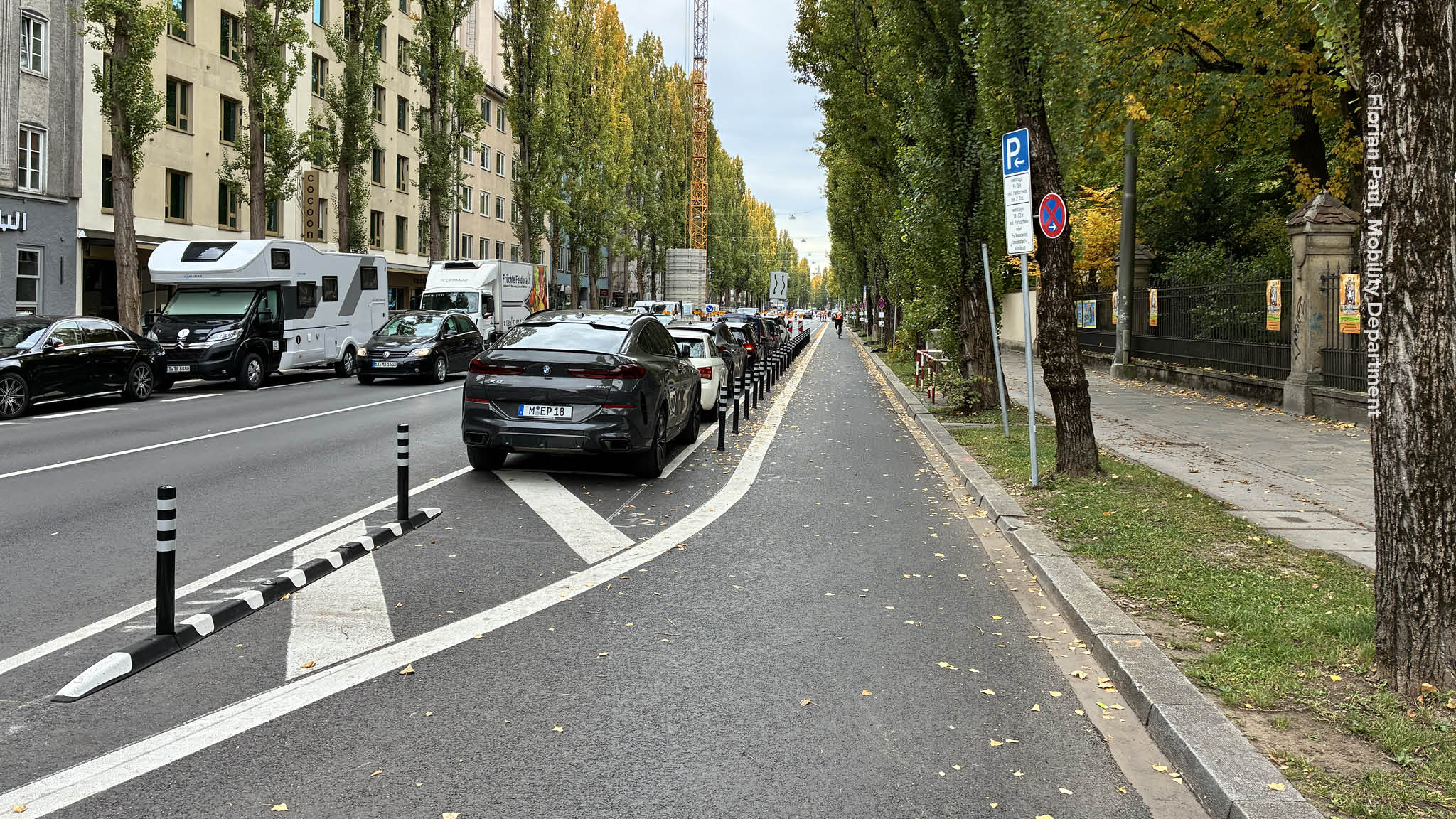
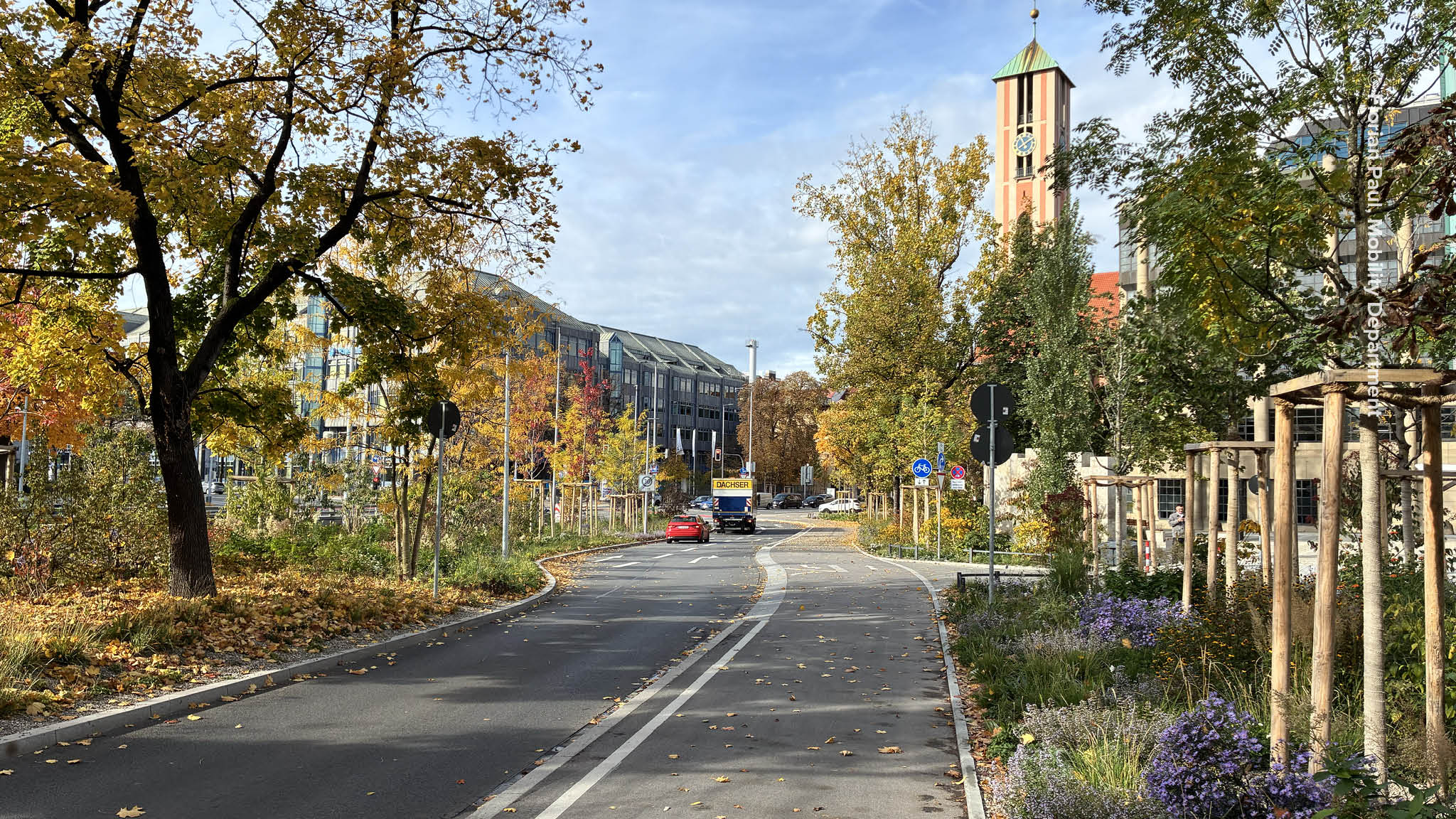
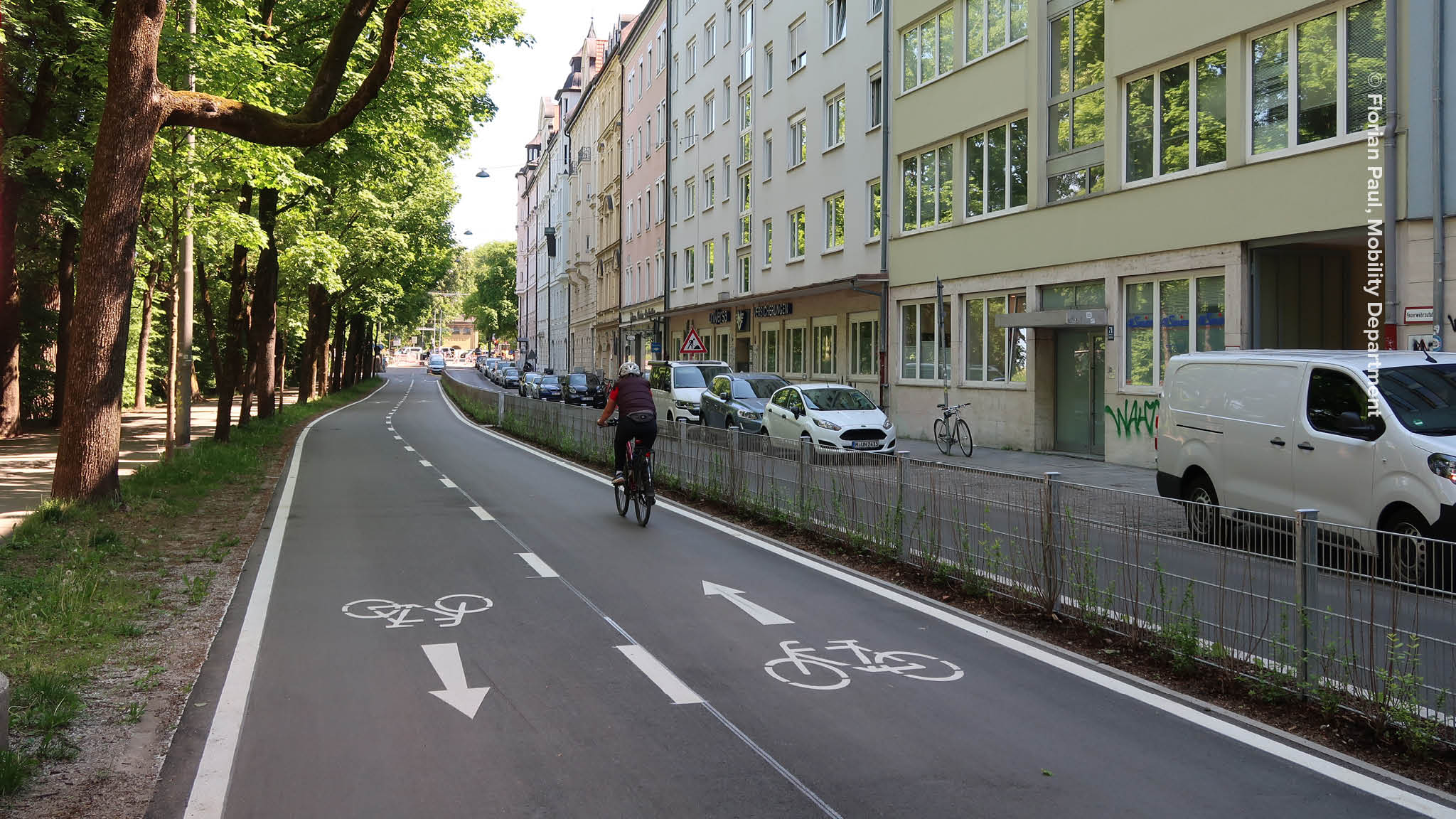
Like many German cities, bicyclists of Munich have long relied on erratic, unprotected facilities: narrow, painted lanes, often shared or unprotected from pedestrians, providing limited safety to all road users. Since the pandemic, the Bavarian capital has committed €25 million per year to a new standard: 3 meter-wide, newly-paved, protected bicycle tracks. Today, the “Inner-City Ring” is equipped with corridors that are grade-separated from both pedestrians and motorists and often buffered with trees and greenery. Crucially, gained space comes from car lanes and parking rather than footways, improving comfort for people walking as well as riding. Beyond the city-center, a bicycle highway network (Radschnellverbindungen) is underway. Over a third of the streets now have protected cycle tracks, and a large majority limit speeds to 30 km/h for motorists, and have transformed downtown Munich into a calm streetscape. As safety improves for cyclists and pedestrians, continuity is crucial beyond the inner-ring and at complex intersections to guarantee city-wide safety and bikeability.
Munich is pairing infrastructure with visibility. Dedicated bicycle signals now guide riders through street crossings, the intersections are highlighted in red paint, and the new re-developed cycle tracks have adopted a unique distinctive green asphalt—an in-pavement treatment rather than slippery, short-lived paint. With this, bicycle usage has been edging upward: cycling’s modal share grew from about 18% in 2019 to 21% in 2023. In parallel, the city faces a significant service shortfall: the decade-old bikeshare provider, “MVG Rad” ended its contract and service halted in September 2025. In a heavily tourist city, a reliable, integrated bikeshare is more than a convenience, and a successful new launch is vital for the imminent modal shift towards bicycles.