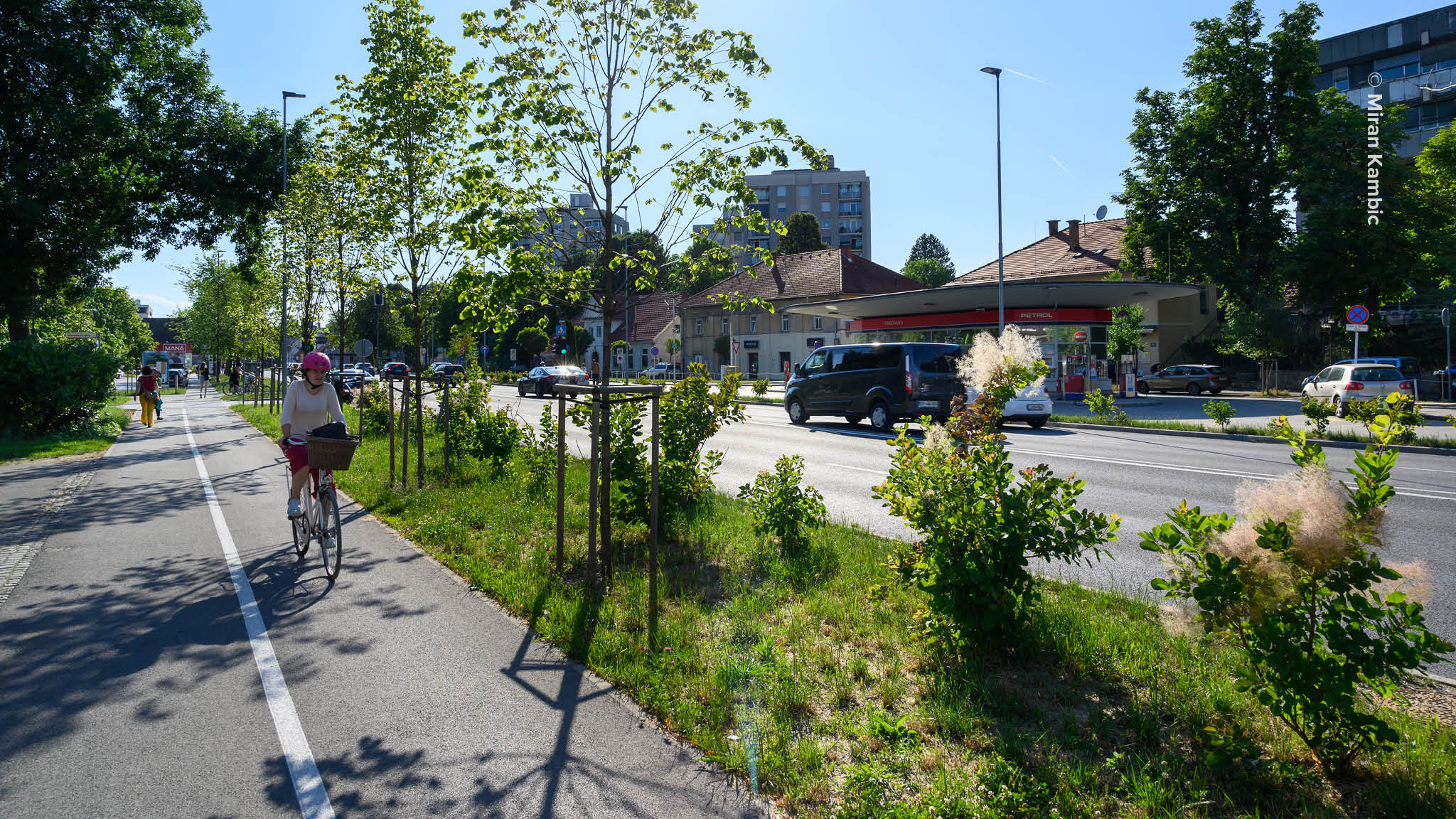
Ljubljana sets itself apart from other cities with a 20-hectare car-free city center, where pedestrians and cyclists are truly the priority. Where 30 km/h or less speed limits are enforced, contraflow lanes for cyclists are in place. Notably, there is significant potential to create more livable streets in residential districts, as only 35% of the city’s streets enforce such traffic calming for motorists. The cycling network is continuous and comparatively strong, with roughly 22 km of separated tracks per 100 km of roadway, yet many segments still follow older design standards that could cap future growth and stifle the growing cyclist population. Nonetheless, recent upgrades point to a shift in design standards: renovations on Tržaška and Dunajska Roads in 2021 introduced higher standards of bicycle infrastructure, greenery, and public-transport improvements, creating more connected, pleasant, and safer corridors for cyclists and pedestrians.
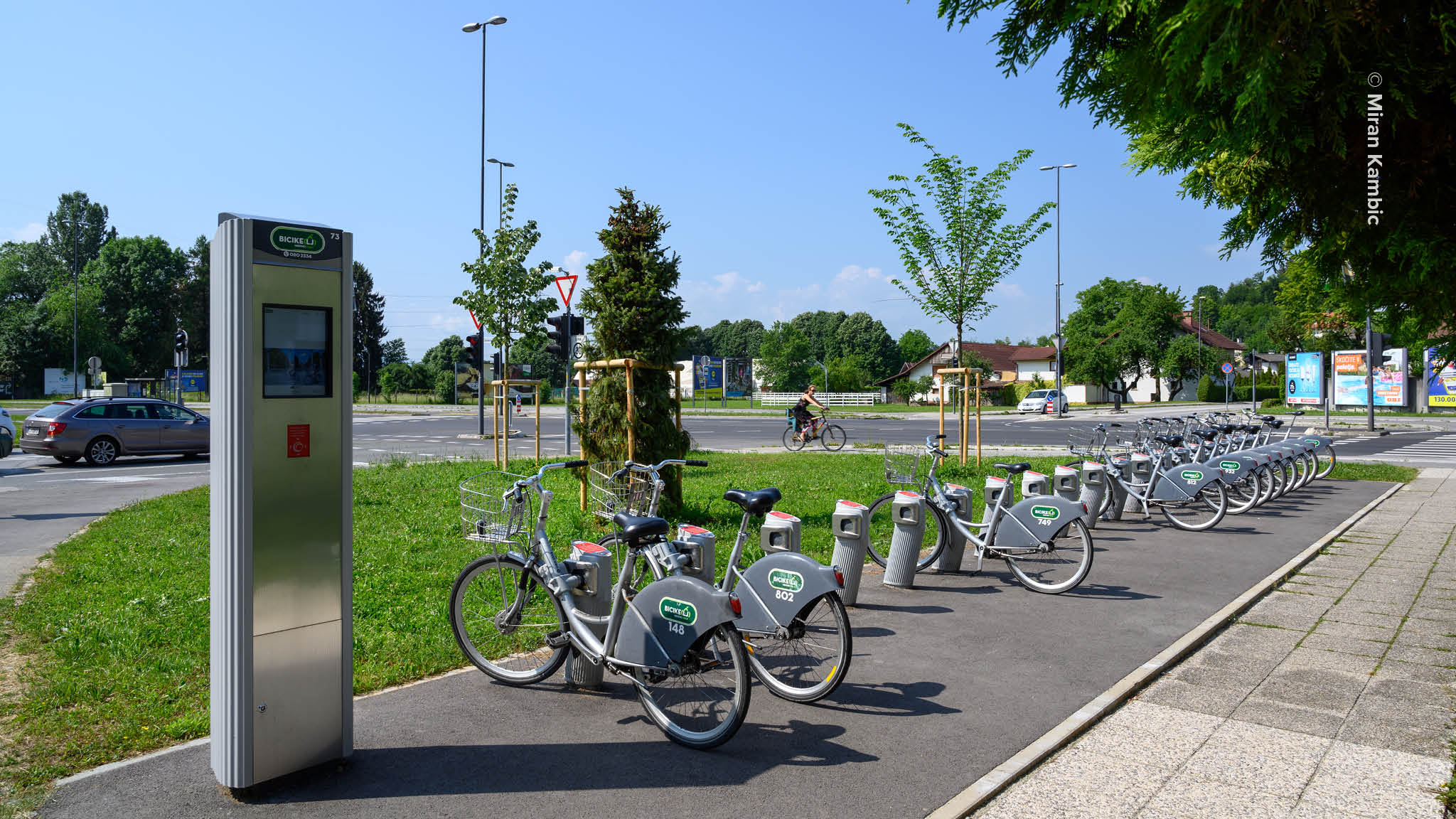
With a 14% modal share in 2024, cycling is clearly growing and a majority of cyclists are women, a clear indicator that Ljubljana is perceived as safe and comfortable to ride in. The city backs their modal shift and infrastructural improvement with traffic education and age-specific campaigns, including dedicated programs in kindergartens, and an NGO-run “Safe Mobility Park” where children practice cycling and road safety within a safe environment. The Ljubljana Cyclist Network (LKM) provides active cycling advocacy, shapes policy through municipal public debates and is participating in the think tanks that developed the 2025–2032 Sustainable Urban Mobility Plan. Adding to the bicycle ecosystem, the public bikeshare scheme is linked to the city’s “multipurpose card”, and cyclists are given security with the abundant bicycle racks available on the streets, and although a free – albeit limited – secure parking facility.