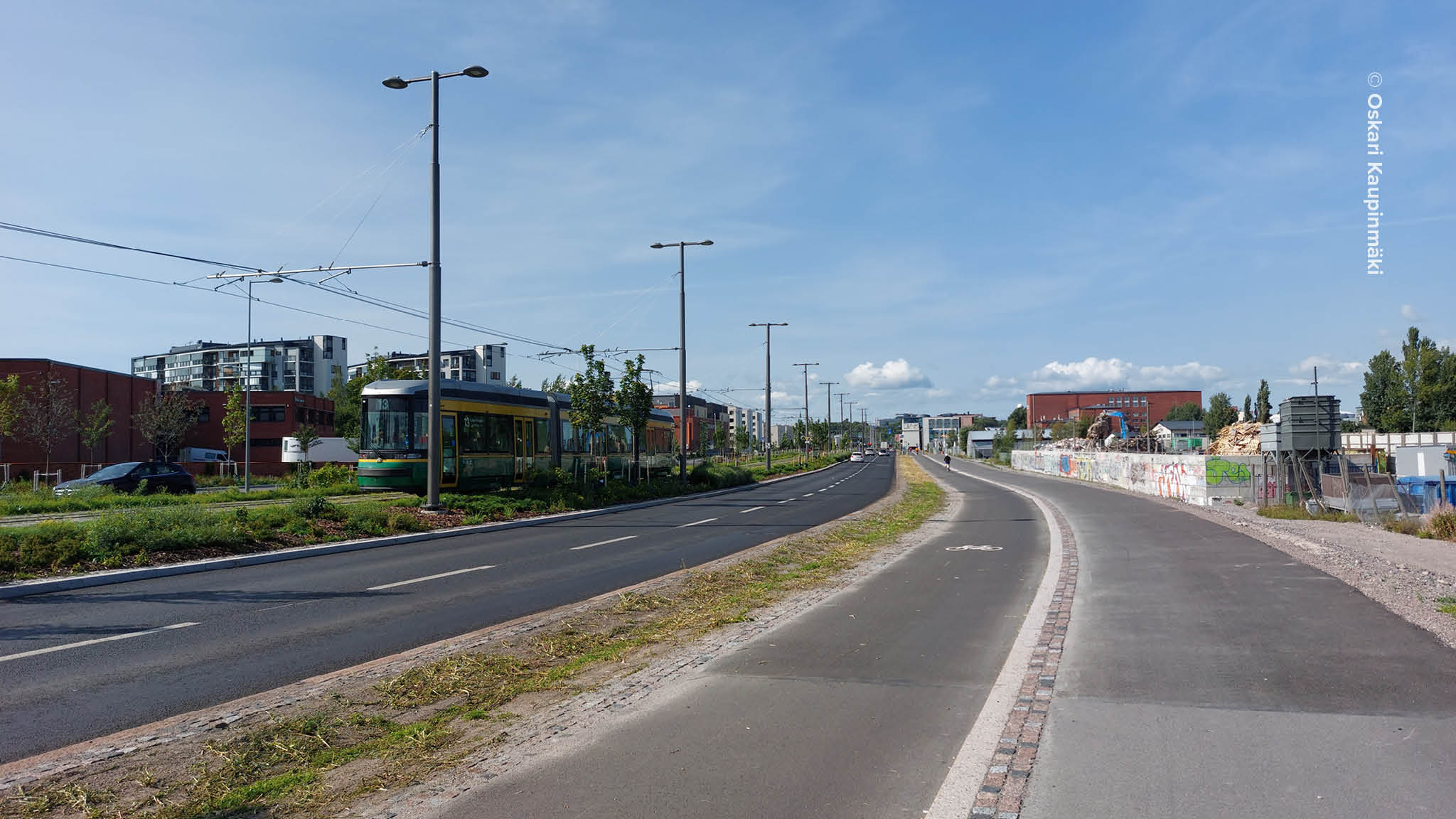
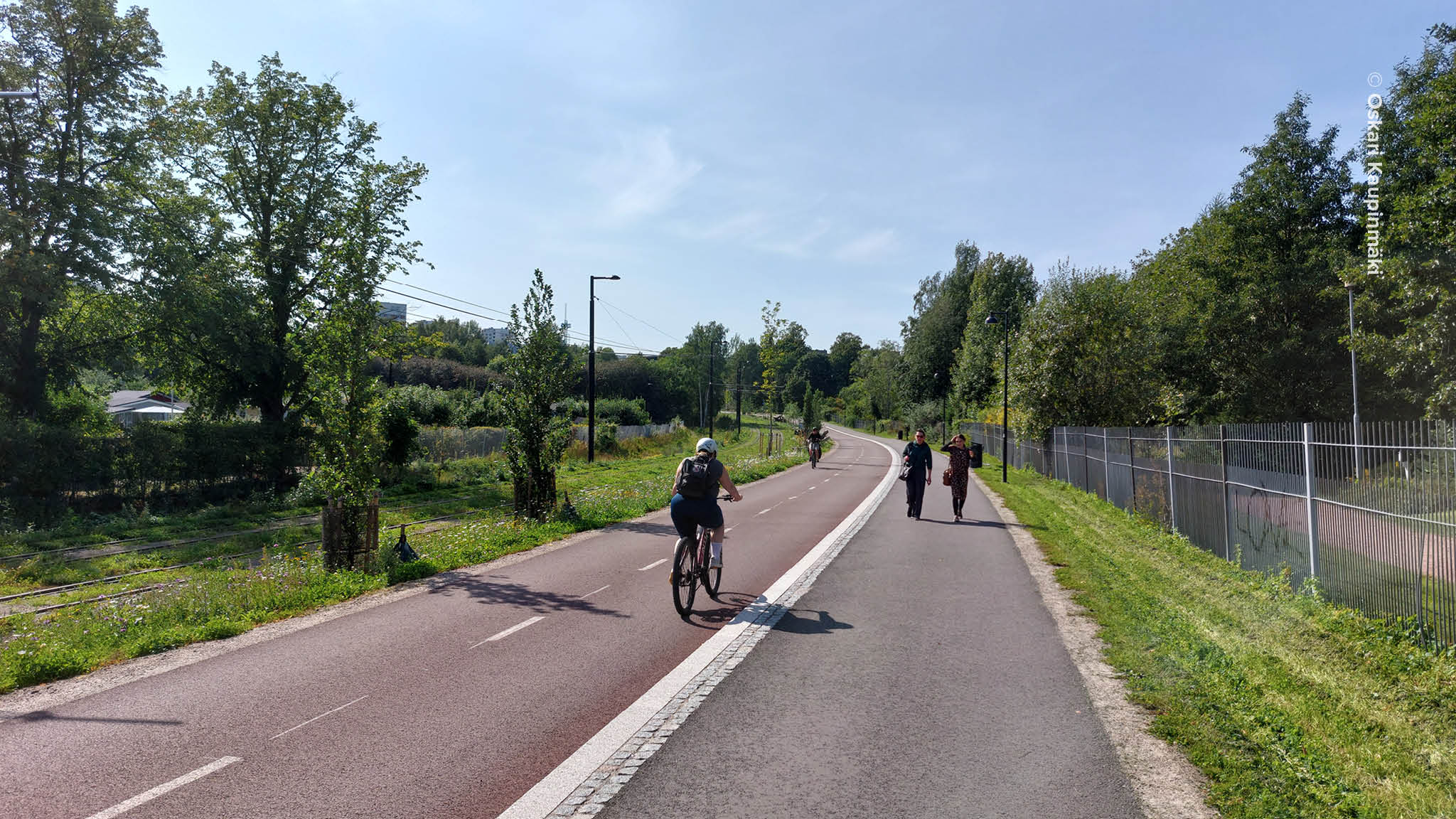
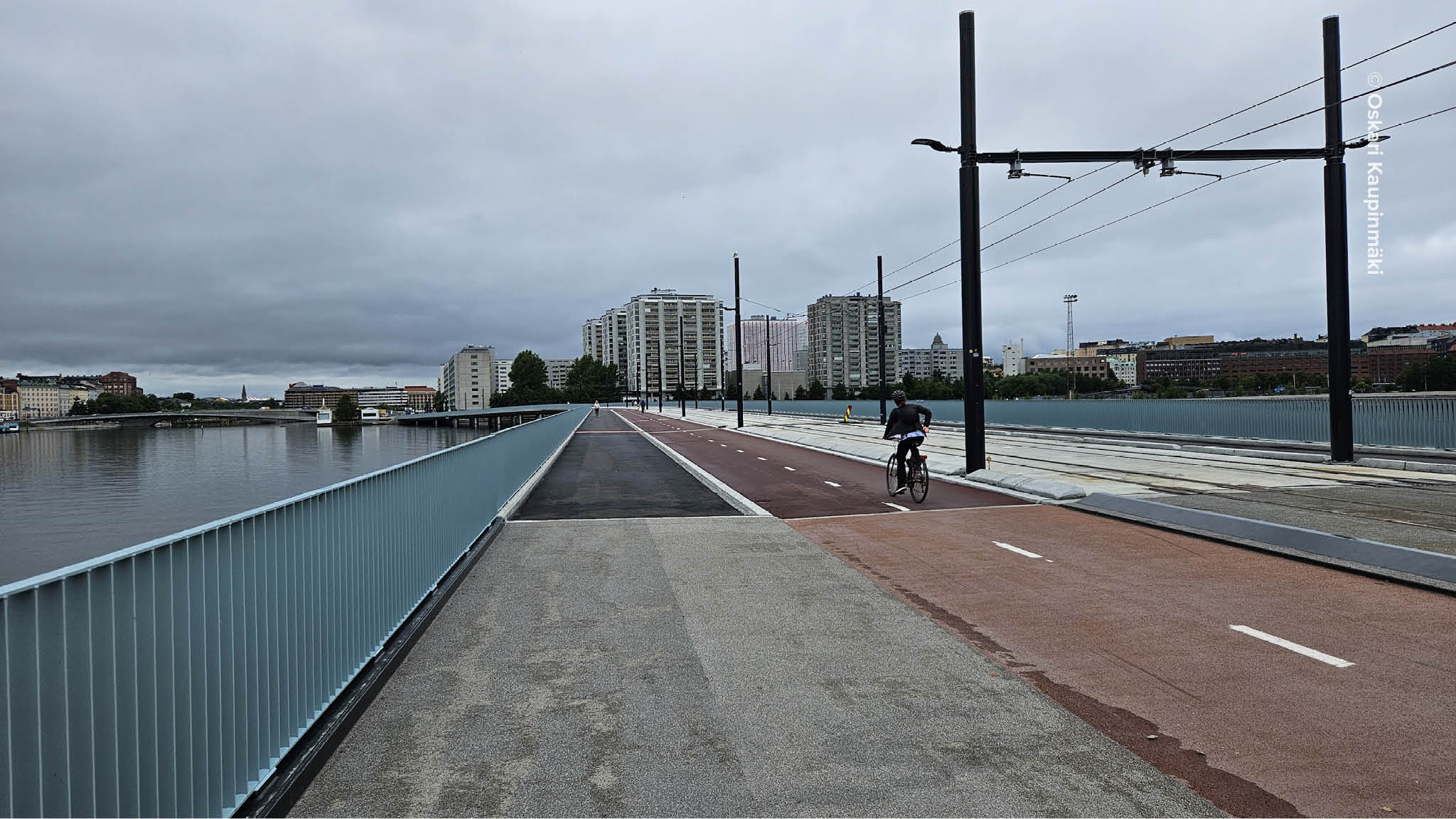
In recent years, Helsinki has made steady progress in shaping a cycling network that reflects both ambition and attention to detail. The expansion of its flagship project, the Baana network, has accelerated with emblematic sections such as Pohjoisbaana, and the new Merihaansilta and Hakaniemi bridges, key links that are transforming the cycling experience across the city and its metropolitan area. Importantly, the city’s commitment to long-term investment is now bearing its fruit. In 2020, Helsinki reached its target of €20 million in annual funding for cycling infrastructure for the first time, a symbolic milestone that underscored a clear political and financial commitment to active mobility.
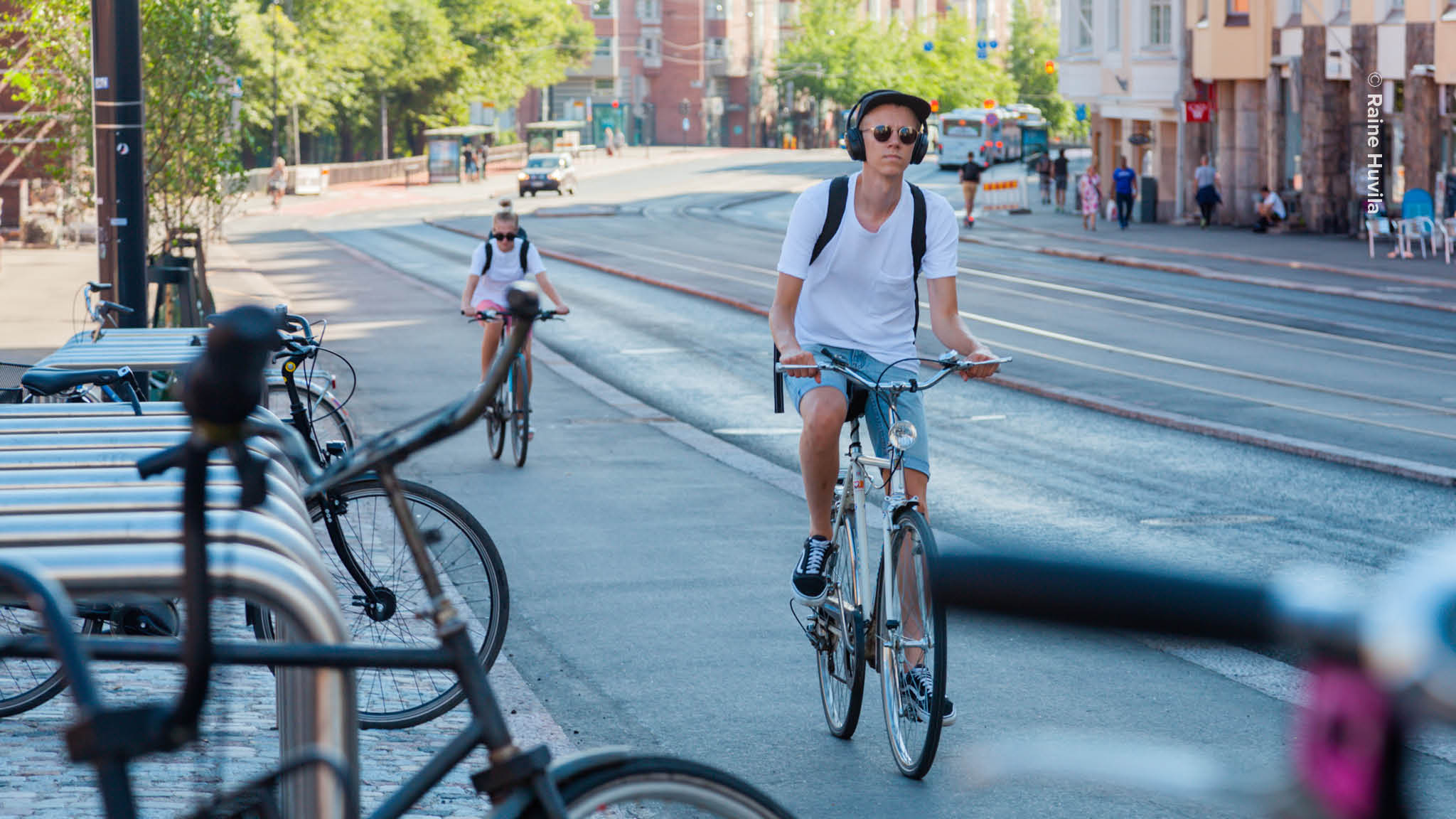
New design standards, inspired by international best practices, are raising the bar for cycling infrastructure. Wider, mainly unidirectional bicycle paths, redesigned curbs, and distinctive colored markings at major intersections are now defining the next generation of Helsinki’s bicycle routes. The city is also expanding winter maintenance efforts, extending the cleared network from 105 to 150 km in 2025. This work is possible by a cooperation with HEPO, a local cycling NGO whose volunteers help fine-tune maintenance practices through on-the-ground work and feedback.
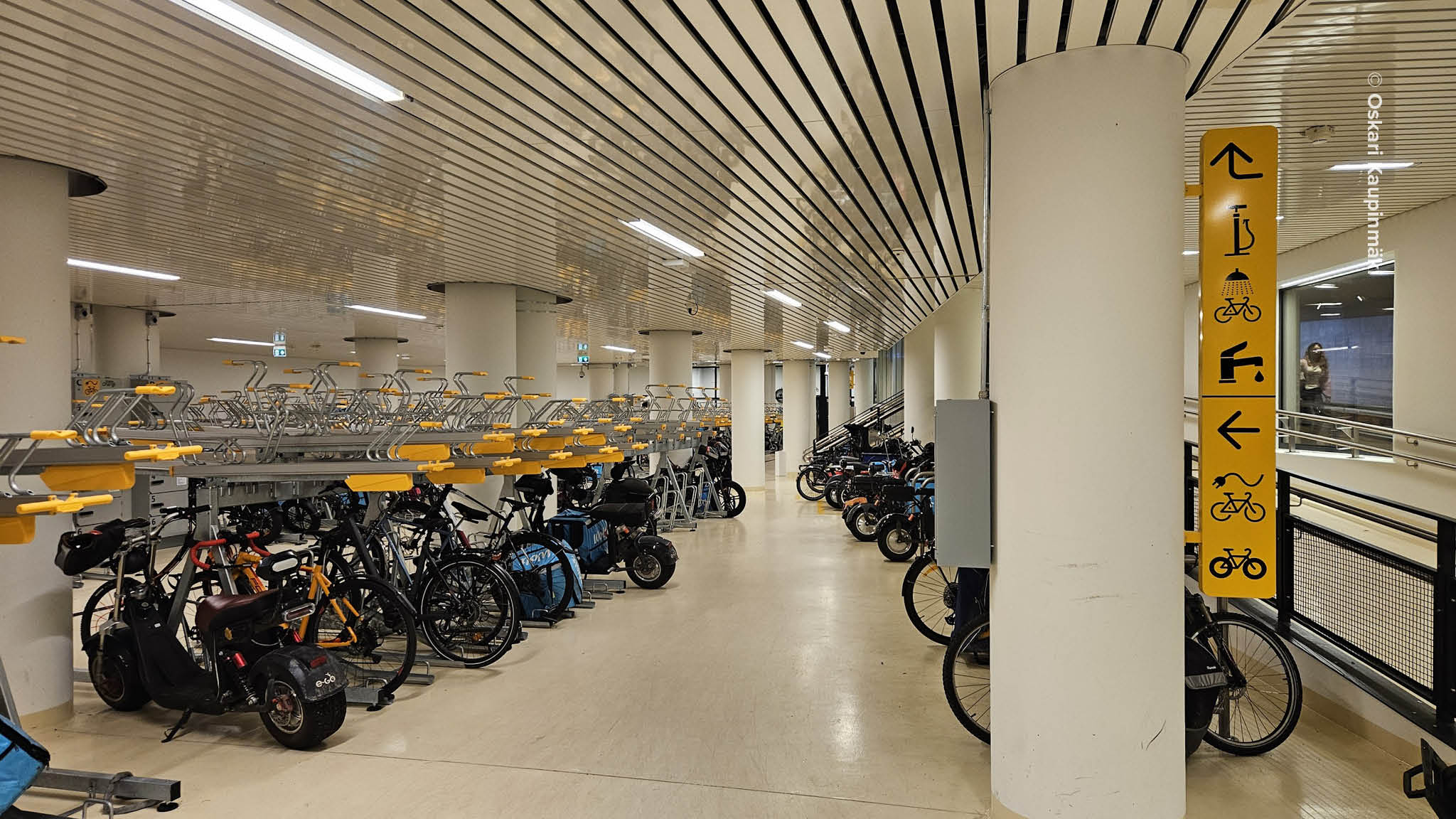
Safety remains a cornerstone of Helsinki’s approach. In order to address the number of cyclists involved in road accidents, key measures such as traffic calming, intersection redesign, and strengthened awareness campaigns have been implemented to pave the way toward safer streets for all users. Beyond infrastructure, the city continues investing in services and convenience: new parking facilities such as the Kaisantunneli Bicycle Garage at the Central Station offer nearly 900 spaces, whereas 3,4000 spaces are now available at Pasila railway station. This emphasis on providing accessible and efficient parking options clearly showcases Helsinki’s effort to anchor cycling firmly into its daily mobility patterns.