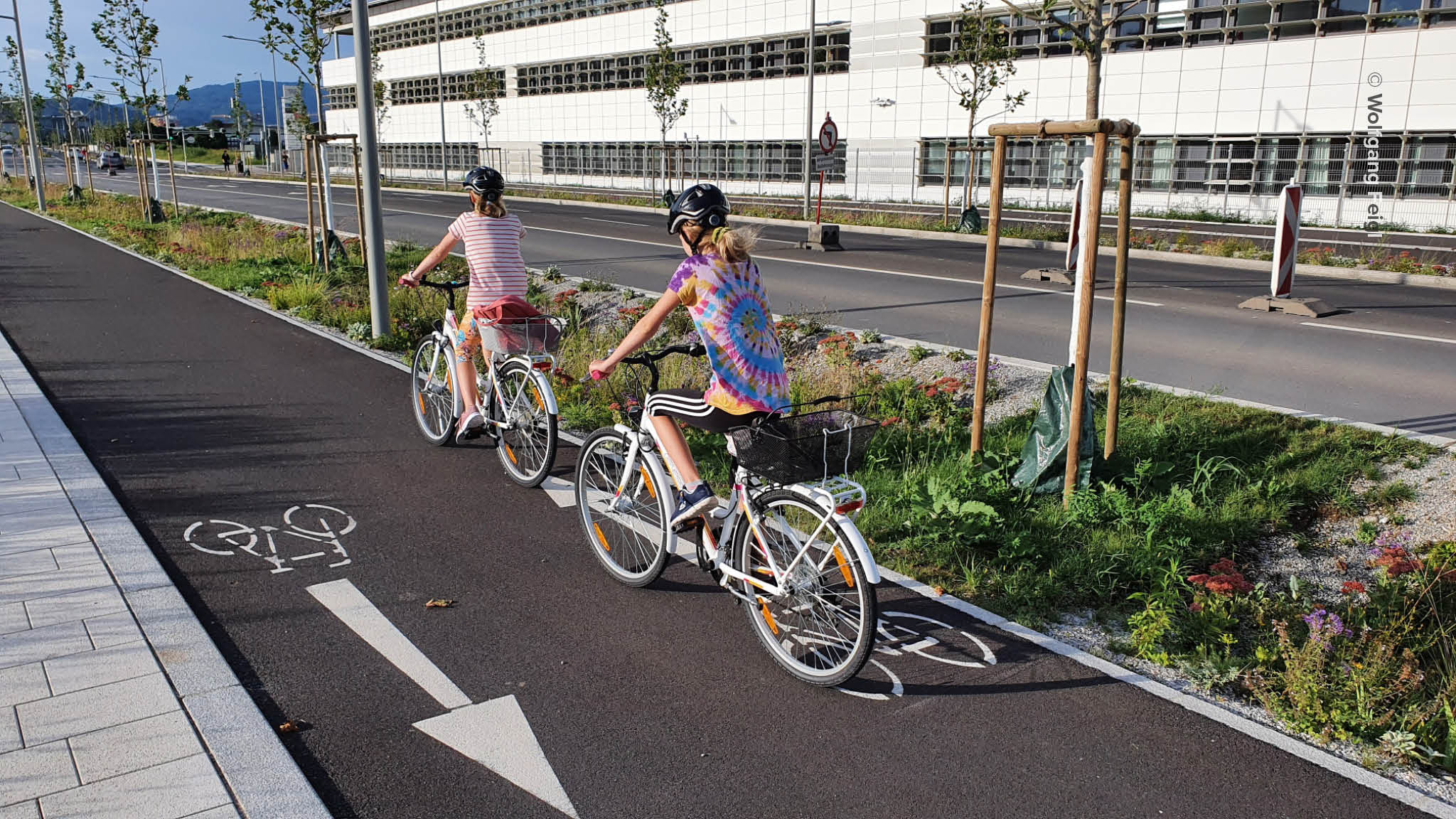
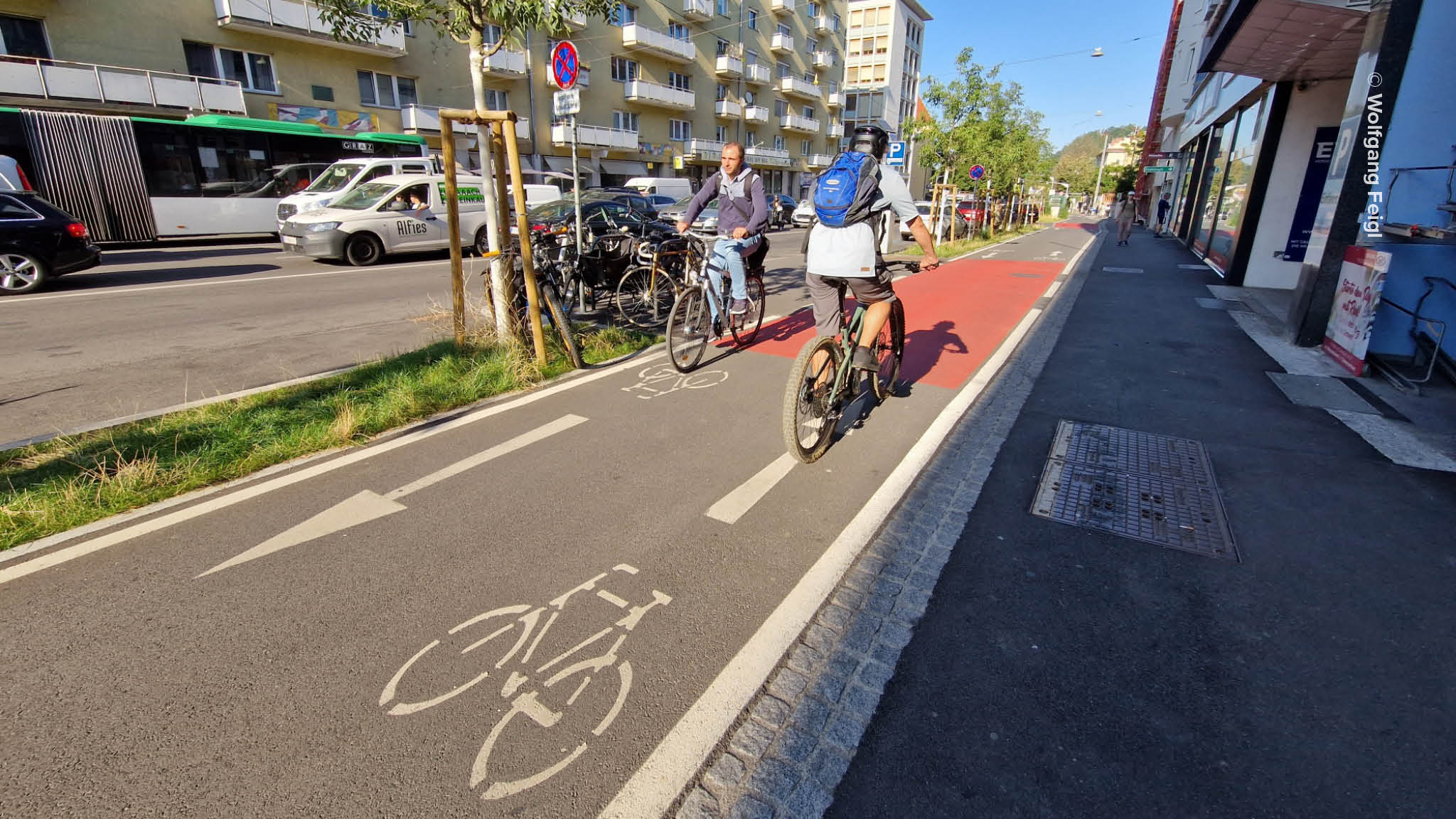
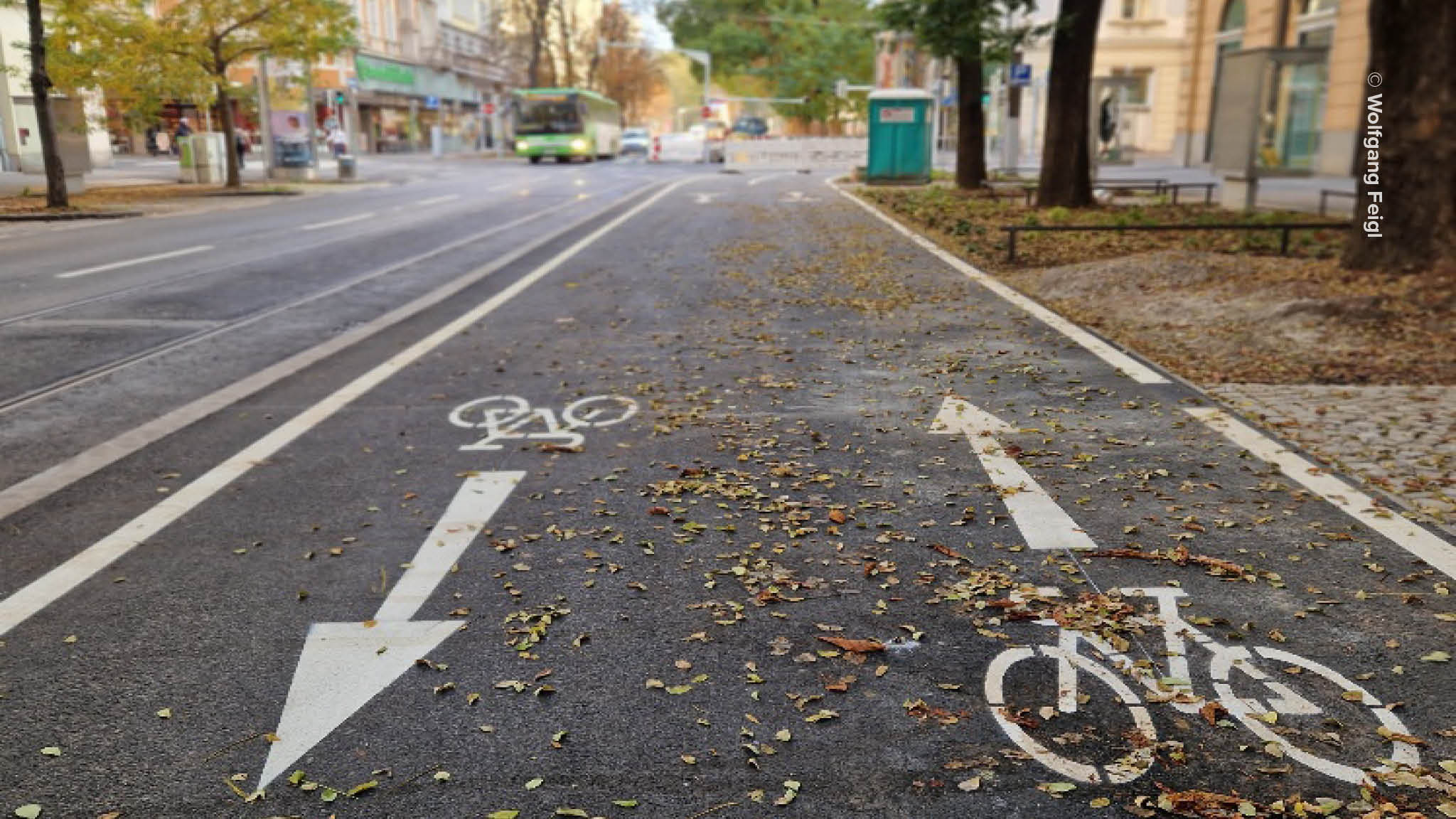
Through the Masterplan Radoffensive 2030 launched in 2019, Graz and the wider region adopted high-quality, best-practice standards intended for all cyclists, including vulnerable users and cargo bike riders. In order to increase cycling safety and efficiency, the city has rolled out a 30 km/h urban speed limit for two thirds of the city streets, delivered 130 km of cycle paths, and added 26,000 bicycle parking spaces. In parallel, the city has matched improvements in conditions for cyclists with comfort for pedestrians and developed quality public areas along the way. Next on the agenda is creating a major pedestrian and bicycle bridge linking the south-west and south-east neighborhoods, This will enable direct access to an important employment district and turn commutes into simple, direct bicycle rides.
Graz has combined infrastructure with support, education initiatives, subsidies and clear communication. Two decades of education and support have emphasized these aspects. The city established balance-bike training in kindergartens, a school mobility management program, bicycle playgrounds, and grants helping pupils purchase bicycles. They likewise implemented senior-focused cycling courses as they strived for cycling education to become clearly engrained as an important pillar across each generation. Clear, ongoing communication has kept residents involved via a dedicated city run website and newsletter which tracks projects, upcoming events and cycling updates. Recognizing that cycling is also about joy and placemaking, Graz created warm seasonal monthly group rides known as CityRadeln for 16 years starting in 2009 and drawing 39,000 participants. This year, the city official discontinued the event, announcing that its large scale had outgrown safe management, but noting it had met its goal to normalize everyday bicycle use in the city.