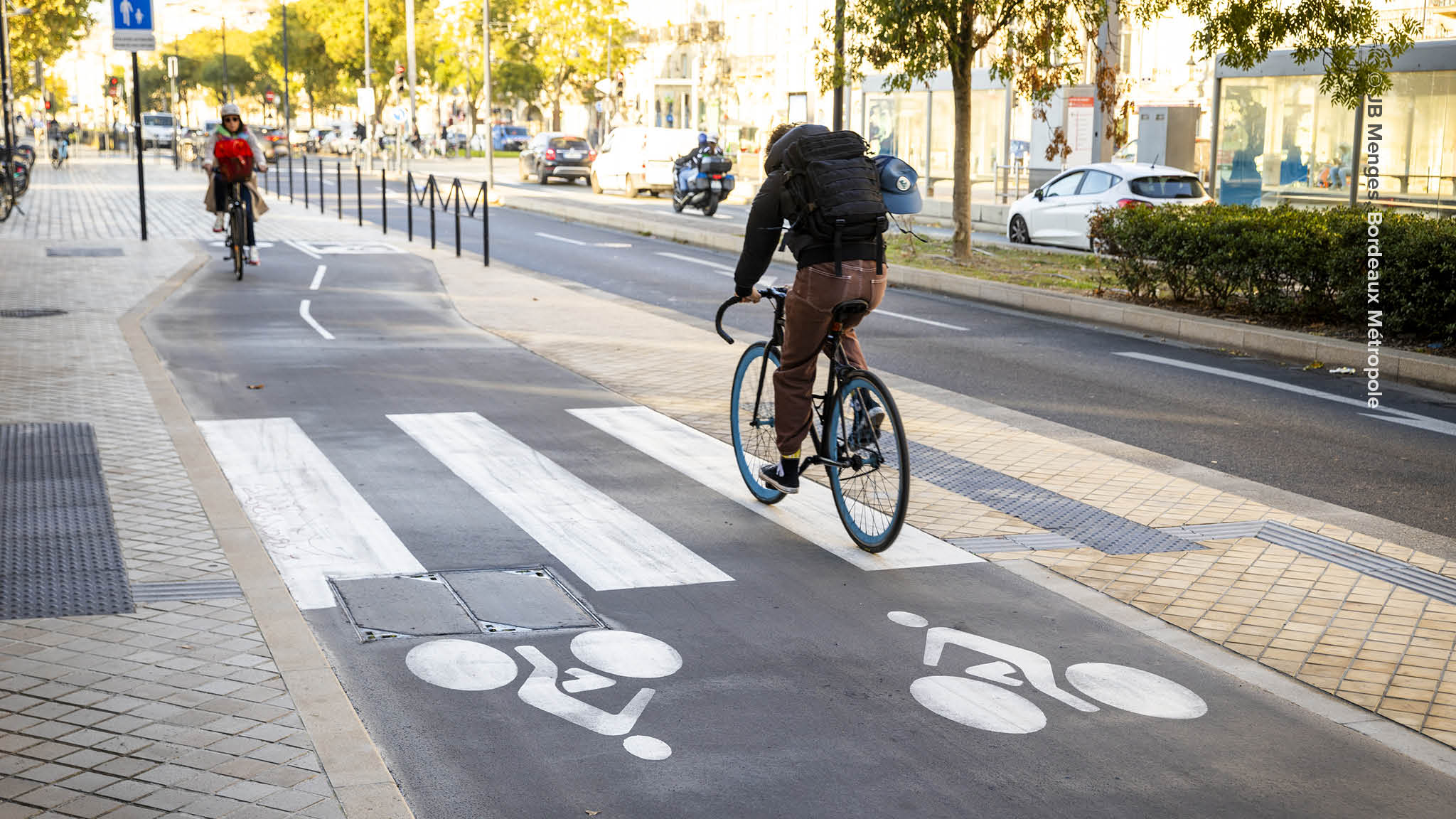
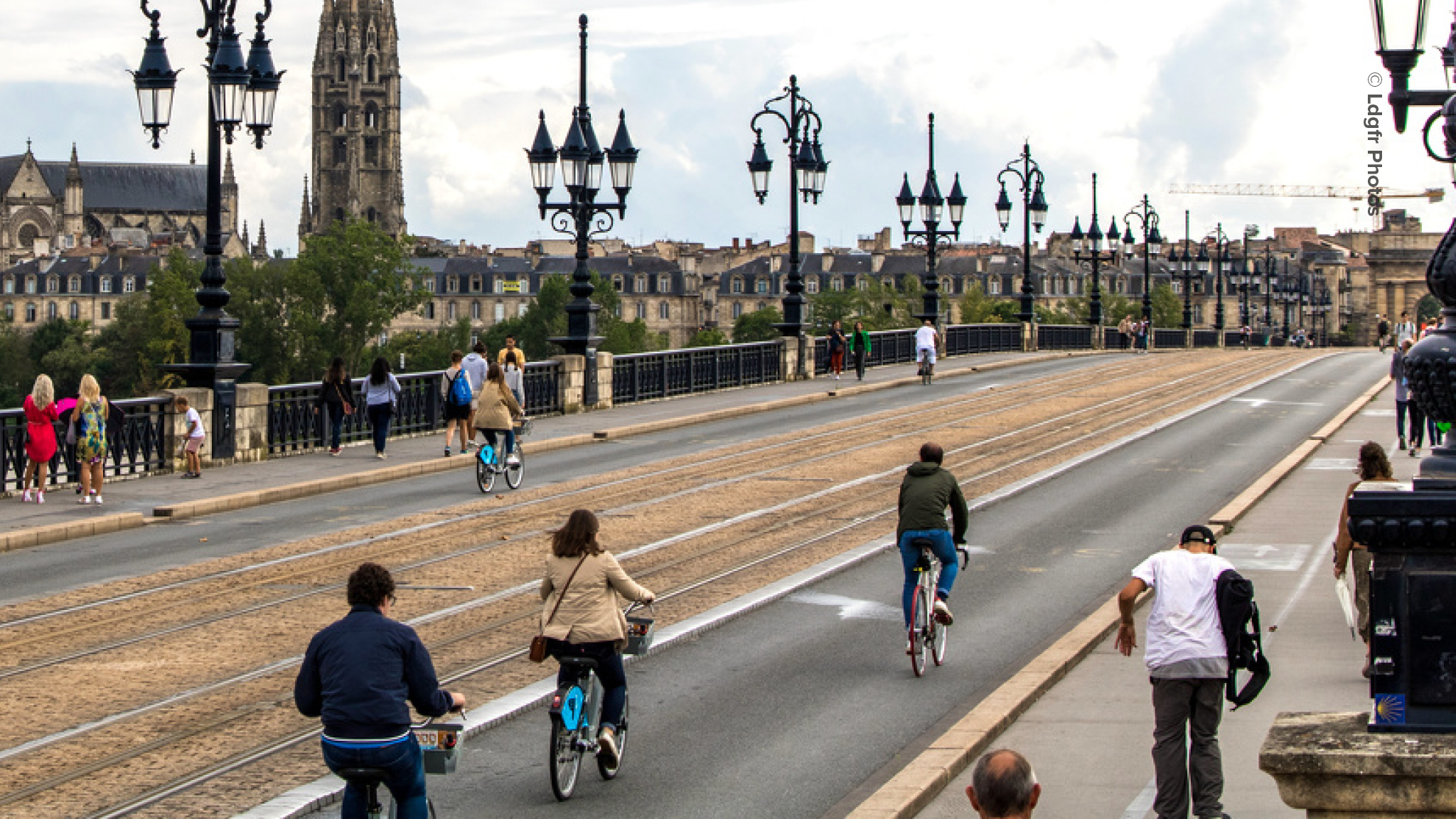
Bordeaux has doubled down on traffic calming to promote a modal shift – nearly 90% of its streets are now limited to 30 km/h or less – ensuring that cyclists feel safer even in areas where full separation is sparse. While only a modest number of fully protected kilometres were added in recent years, ridership has grown on the back of a circulation plan that reallocates space and priority to bicycles. A showcase is the Quai des Queyries, where a former car service lane has been turned into a continuous cycle track framed and protected by greenery. The running development of the “Réseau Vélo Express” (ReVE) continues to close gaps in the cycling network, particularly along both banks of the Garonne River. The greatest achievement, the Simone Veil Bridge and its bidirectional cycle tracks, serves as an emblematic piece of its infrastructure. At a key point in the city, it is a milestone in the forthcoming completion of Bordeaux’s extensive bikeway in conjunction with its urban boulevards.
Beyond its network, Bordeaux is carefully crafting a complete cycling ecosystem. As safe and secure parking demands increase, “Bicycletteries” have been allocated to residents on the ground floor of buildings in the historic city-center. Four “Metstations” aim to reinvent the experience of bike parking with identity-rich facilities for cyclists. Bordeaux also fosters cargo bike uptake and urban cycle logistics. From waste and compost collection to artisan services and parcel delivery, cargo bikes have proved to be well suited to the compact, calmed street grid. Micro-logistics hubs and river-based freight pilots, with bicycles as the last-mile backbone, demonstrate a pragmatic, forward-looking approach that can tie everyday cycling to sustainable city operations.