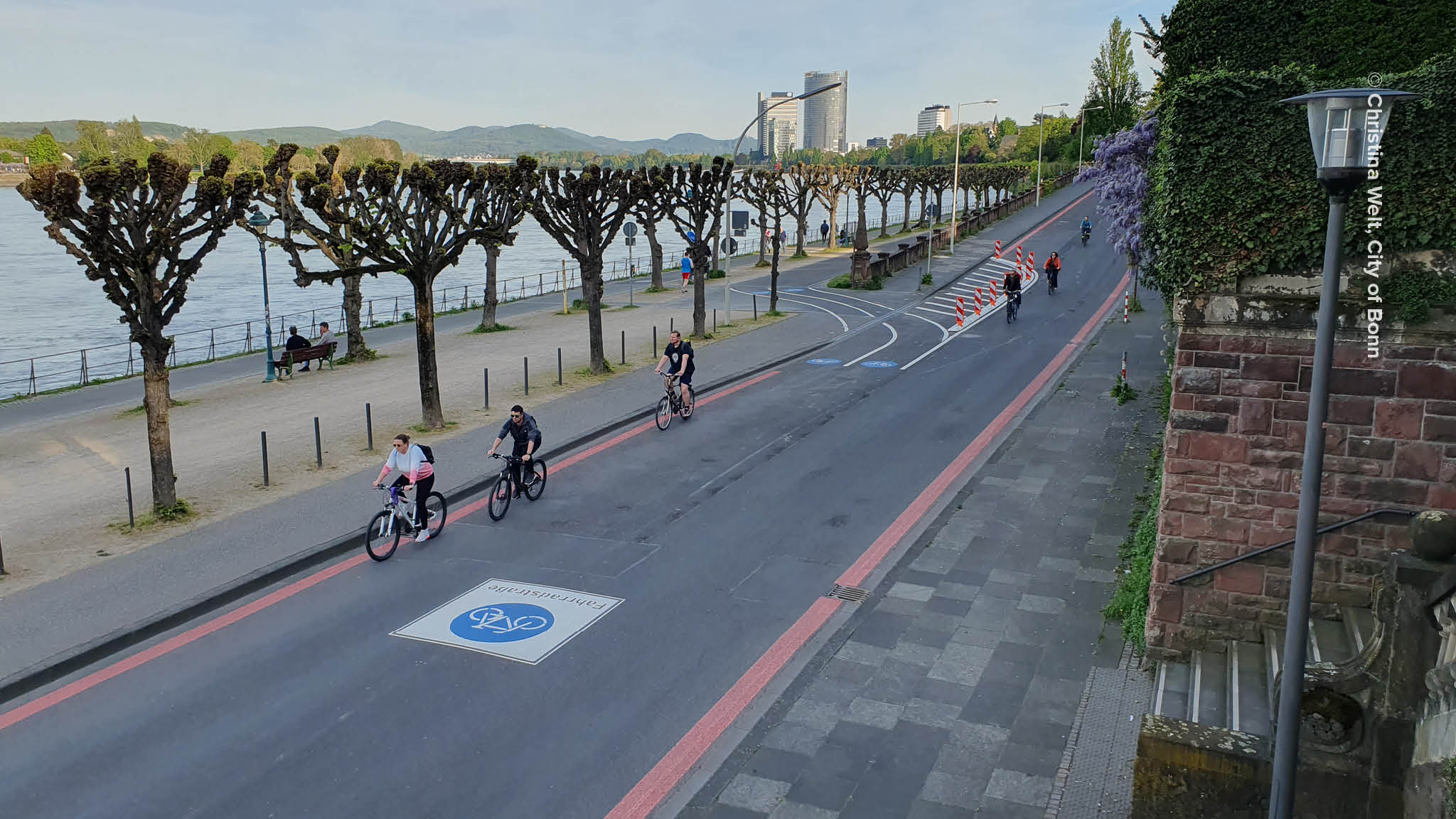
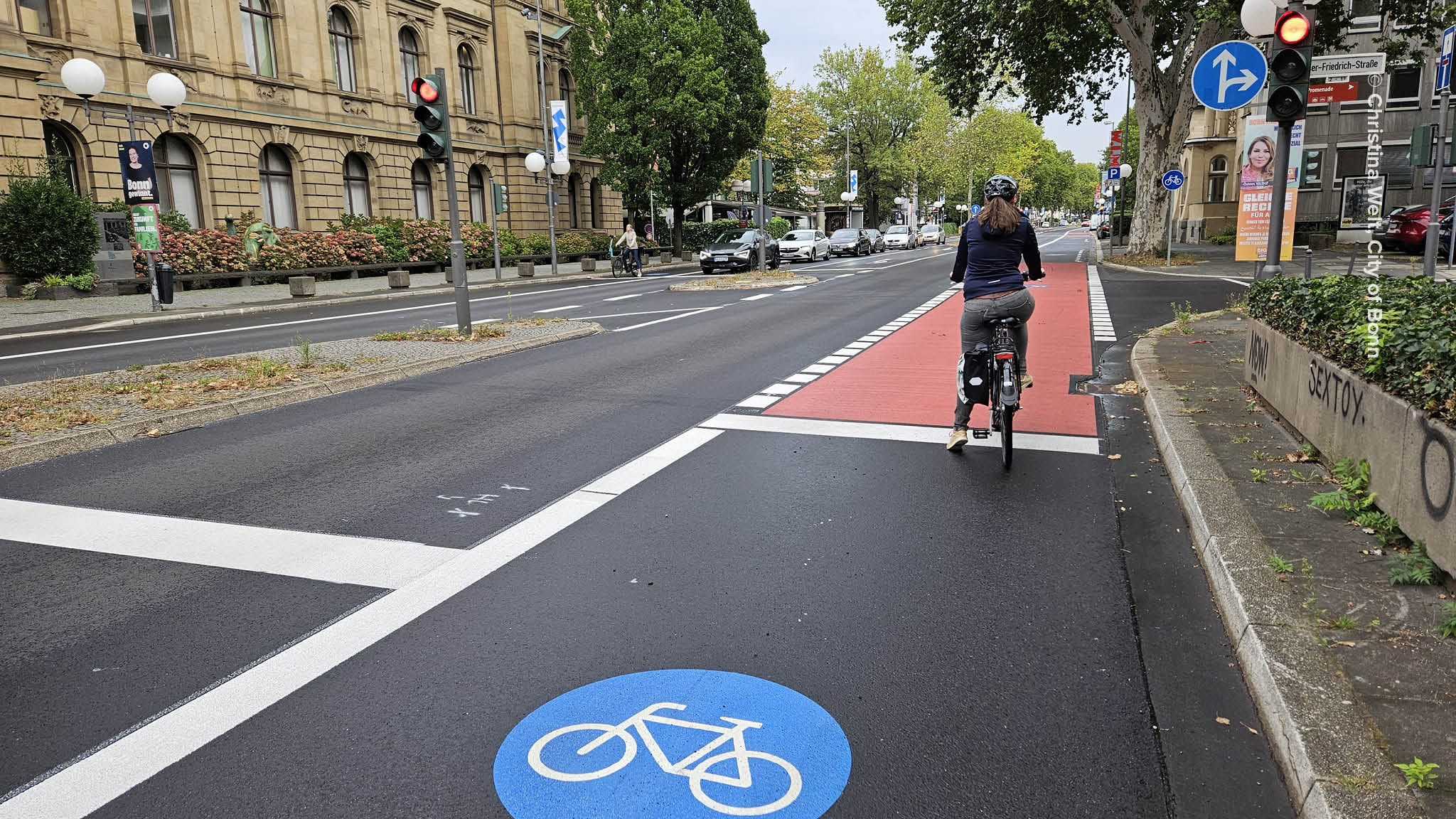
Bonn’s cycling network is transitioning from fragmented, paint-only lanes to a more coherent, protected network. Currently, 20% of Bonn’s streets are equipped with protected bicycle tracks, and more than half of streets run at 30 km/h. Until recently, bicyclists relied on unprotected, painted lanes, and tracks often with little separation from pedestrians; mergers onto sidewalks and into general traffic left gaps in comfort and safety. Today, the city is adopting new standards beginning with the North-South and East-West axes, using a mix of solutions – some better than others: wider painted bicycle lanes, some protected cycle tracks, ‘environmental lanes’ reserved for buses and bikes, and designated “Fahrradstraße”. Although these new ‘environmental lanes’ and “Fahrradstraße” are bicycle-first streets supported by clear signage, motorists nevertheless drive alongside unprotected cyclists. In a city still relatively car-dependent, this can compromise cyclist safety.
Progress is also visible beyond infrastructure. Plans, maps, and project timelines are easy to follow on the city’s website, signalling transparency and engaging civil society. Bicycle counters make trends in usage tangible, and the cycling budget has risen sharply in the last five years. The payoff has been measurable: cycling’s modal share has risen from about 15% in 2017 to 21% in 2024, indicating that sustained investment and network development, in addition to clearer design, are all transforming the political will in Bonn into more daily bicycle rides.