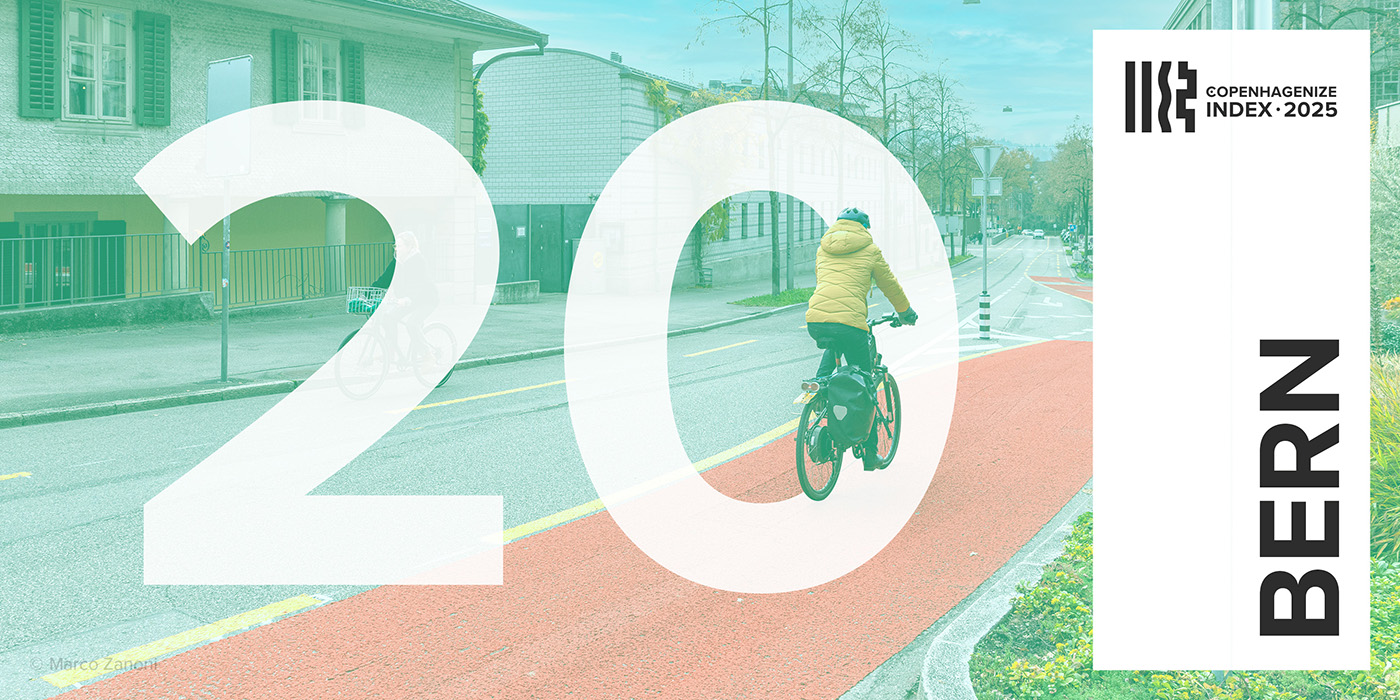
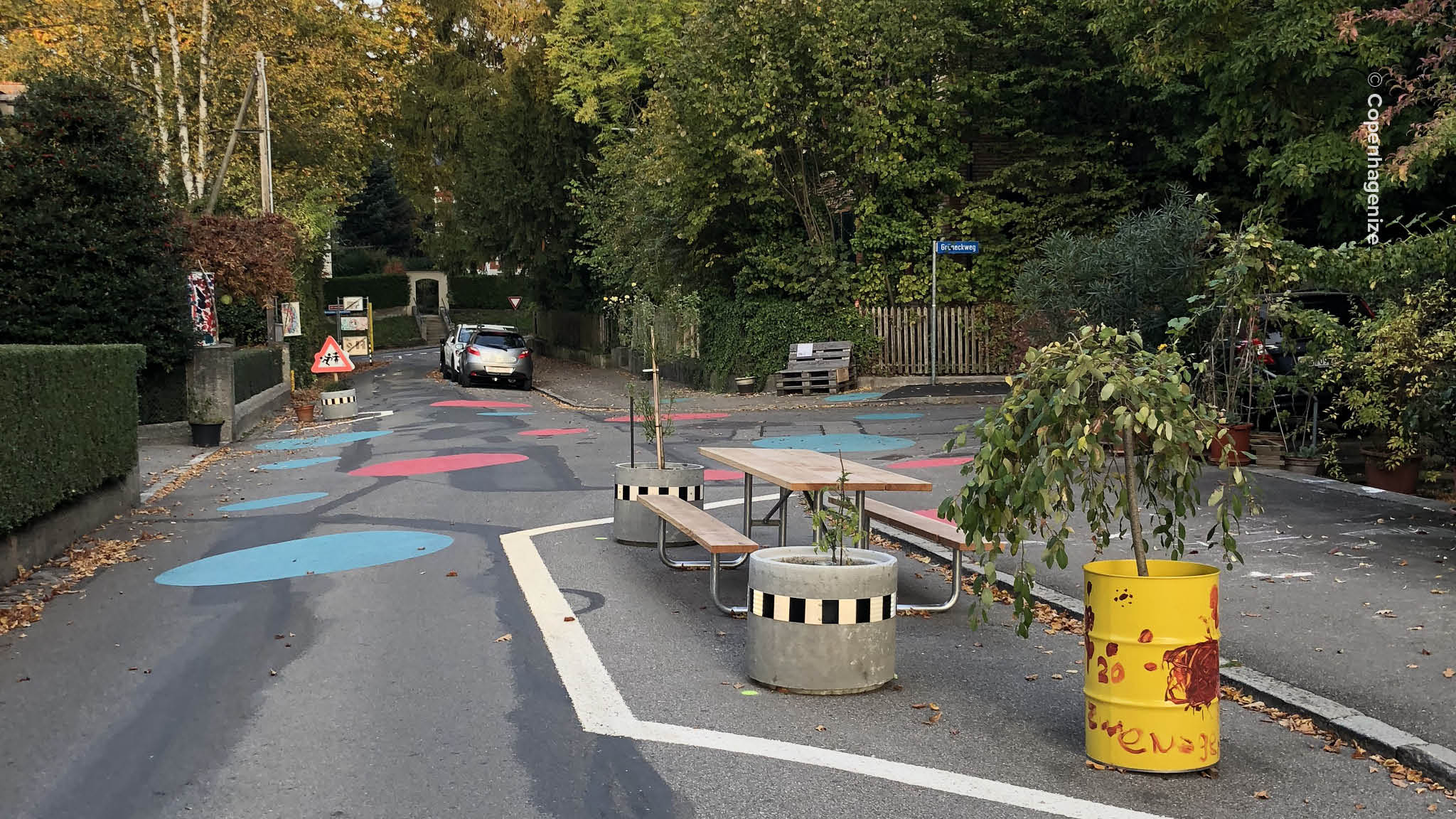
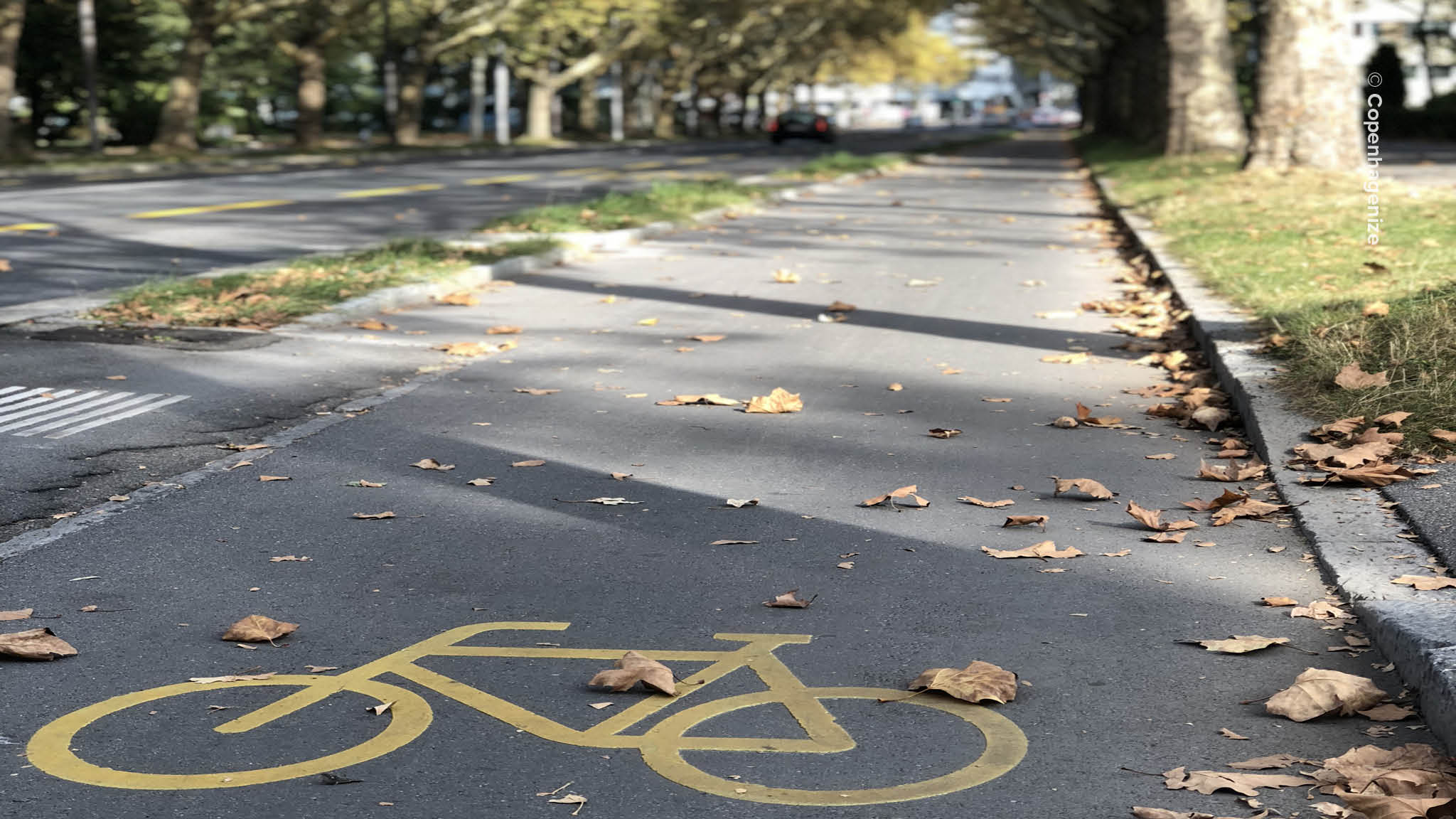
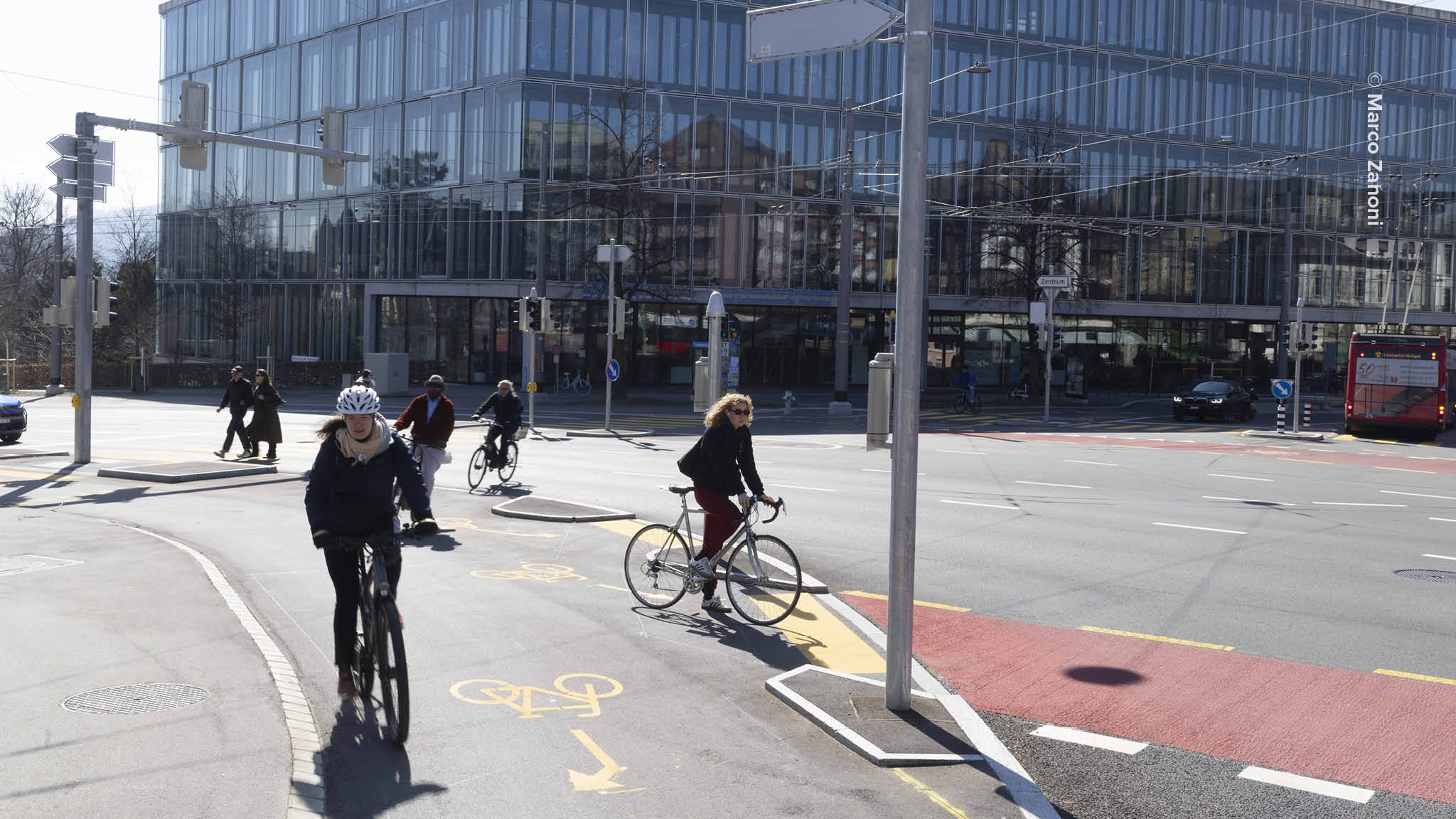
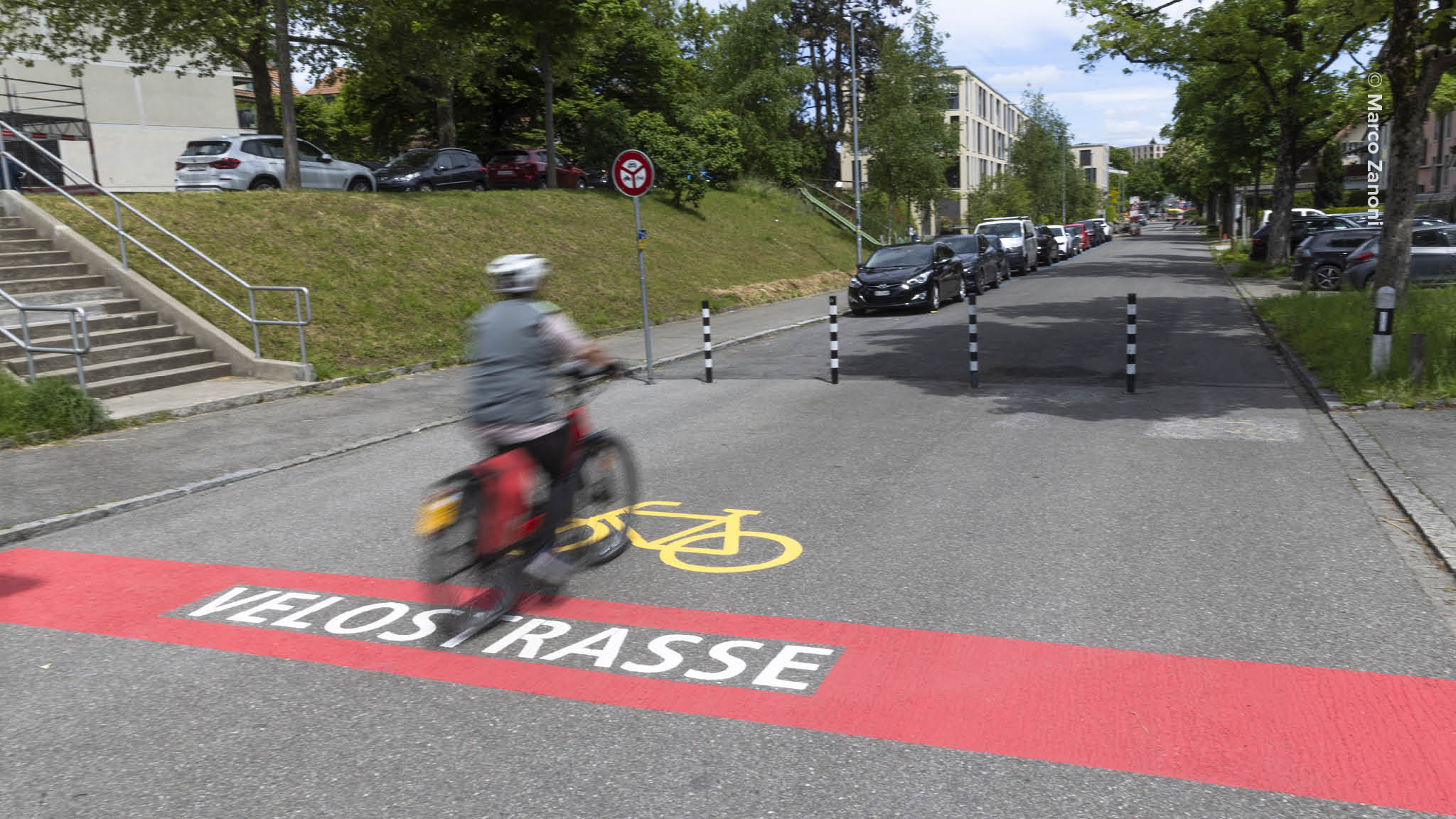
With a 19% cycling modal share and a quarter of residents commuting to work by bicycle, cycling is central to Bern’s daily mobility. The network offers a mix of painted lanes, bicycle streets, and protected cycling tracks spanning 18 kilometers, though the latter remain all too rare. A decade ago, the city set a Swiss benchmark by installing a 2.5-metre, curb-separated cycling track on a major boulevard, a best-practice design that effectively responded to user needs. Since then, however, new fully protected segments have not been a priority. Recent investment has instead pivoted toward long “Velostrassen” (bicycle streets) that provide cyclists with a direct route between districts. These corridors are easily recognisable thanks to clear signage, but they generally come without substantial street redesign or space reallocation and remain spaces adapted to cars, not people.
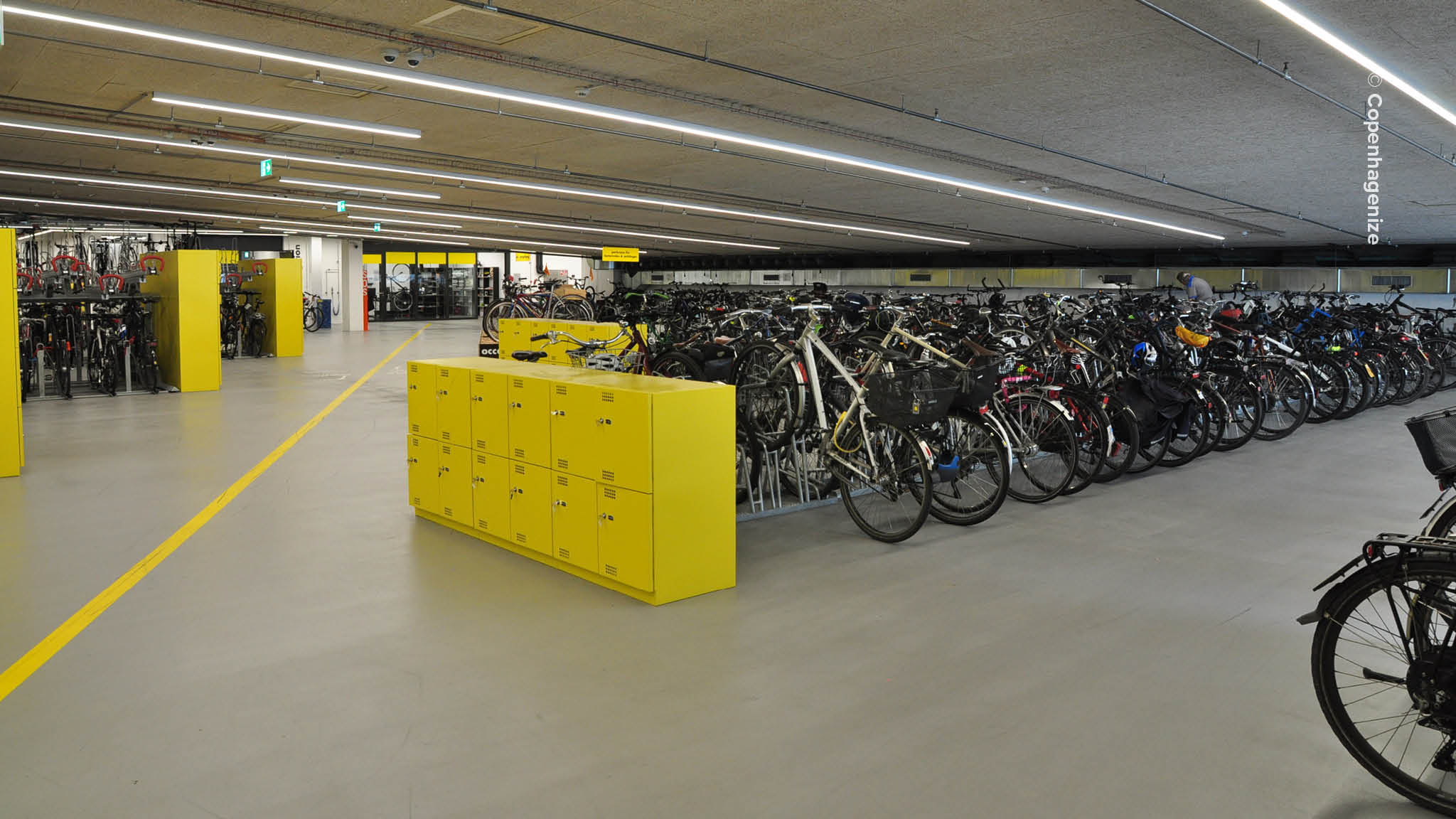
Bern is also making strides in bike-train intermodality. The main station offers around 2,660 secure parking spaces across high-quality “Velo-Station” facilities, and the “SwissPass” allows train passengers to rent a public bicycle for first-and-last-mile trips. Citywide, on-street bicycle parking is extensive but feels ever more limited as cycling is continuing to grow. Cargo bikes are part of everyday life for families and logistics alike; “Carvelo”, a cargo bike rental service, makes high-capacity bicycles easily available for interested families. Together, these services make cycling practical and reliable at homes, at stations, and for moving goods.