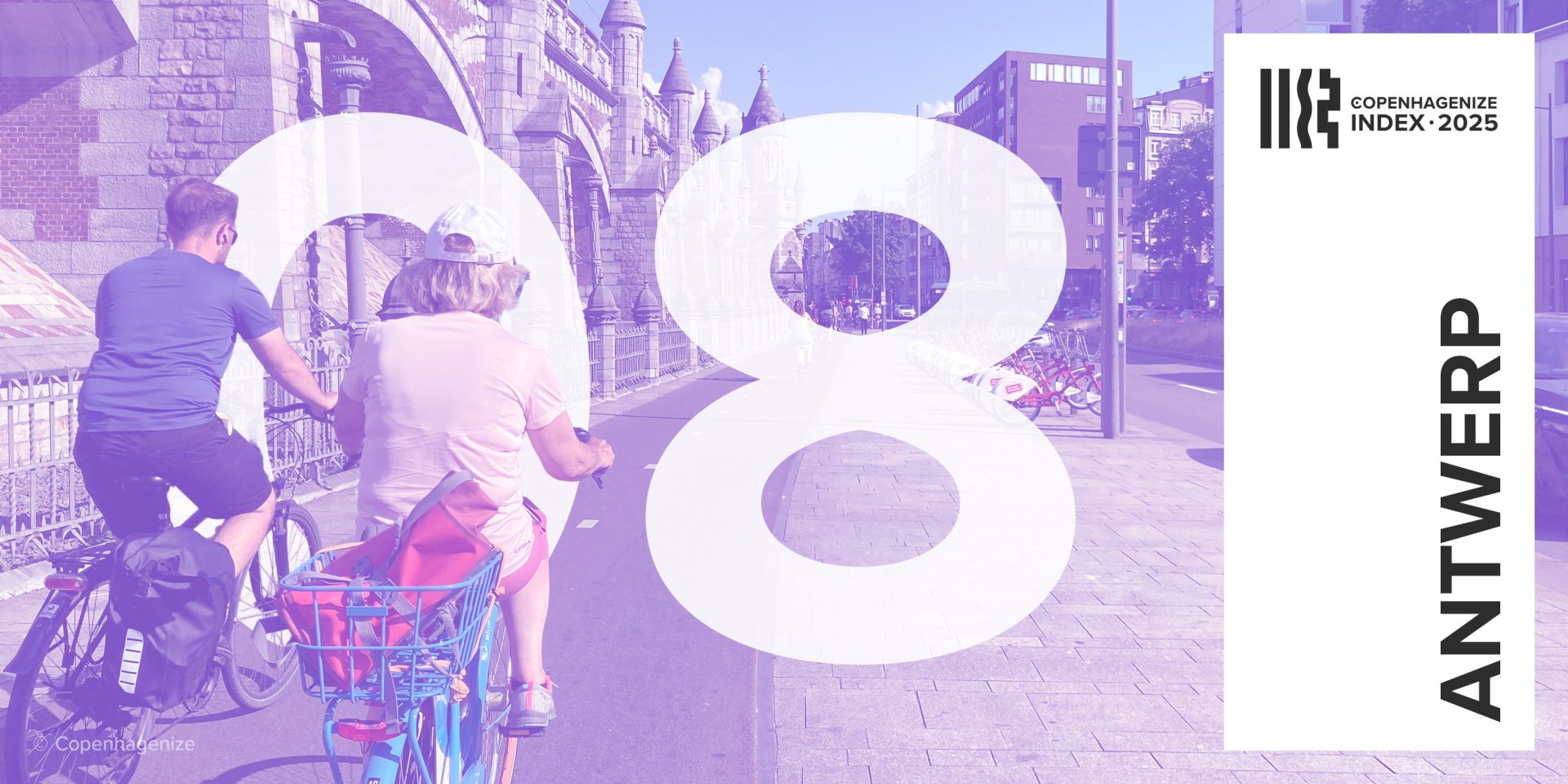
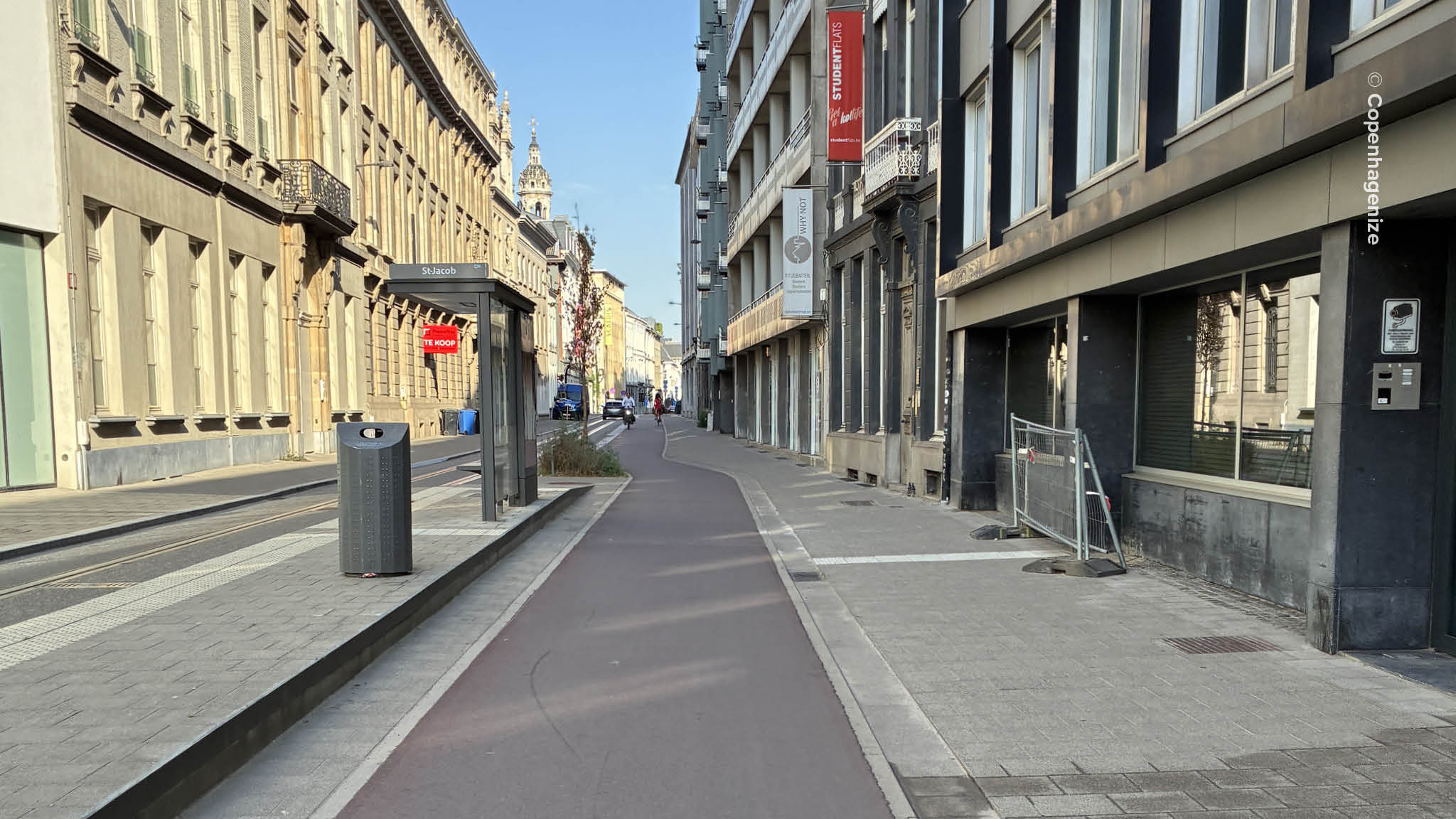
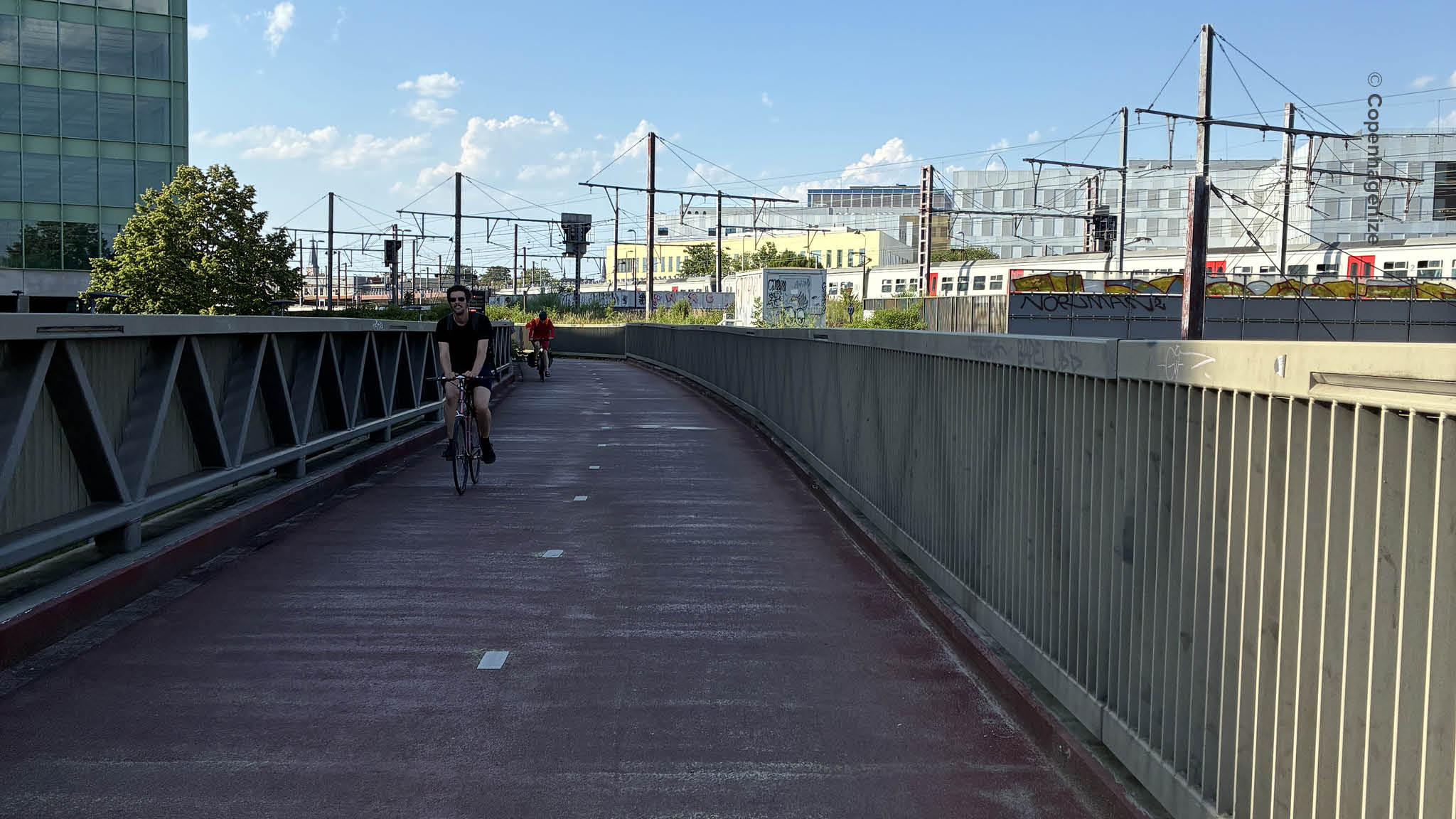
Antwerp’s policy and ambition is anchored in consistency and scale. With nearly 600 km of protected bicycle infrastructure and 22 km of bicycle streets, the city has built an extensive network that keeps on expanding. The city is implementing the “100 missing links” program, which is closing gaps by major investments in underpasses and bridges, and ensuring that routes are continuous, direct, and safe throughout the metropolitan area. Likewise, the city has continued to cement its bicycle policy by expanding 30 km/h zones to over 70% of its streets. This comprehensive approach, which is reclaiming residential streets for th people, is making cycling a safe and natural choice for everyday trips, and, most importantly, further improves the quality of life for all its residents.
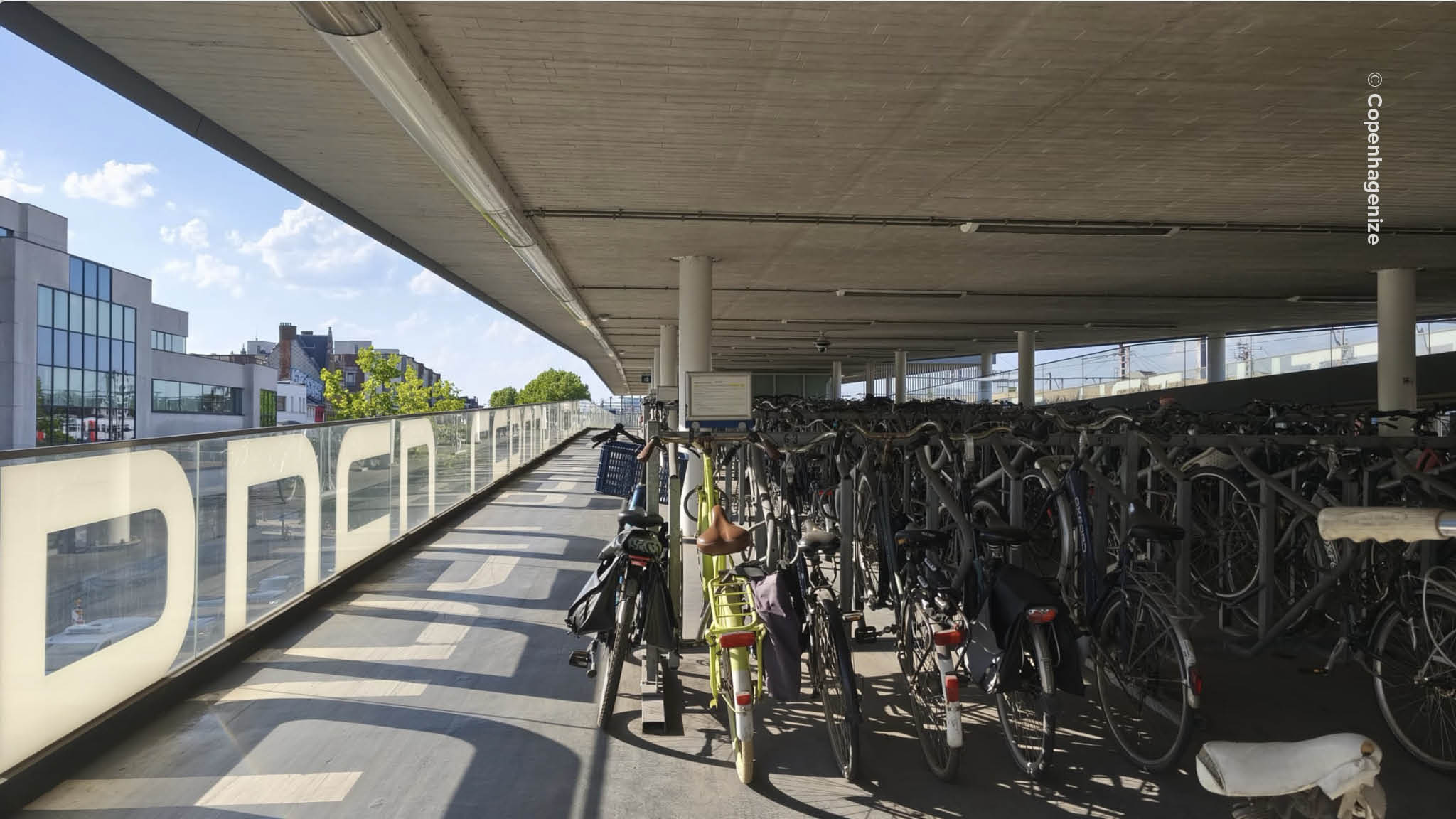
The city’s innovation also lies in how it has managed to reconceive the constructed space. Antwerp has implemented an innovative land-use strategy in order to provide solutions in a dense and historical urban framework where many homes lack bicycle storage. A dedicated team has been tasked with finding and converting underused premises into secure, practical, and subscription-based bicycle parking facilities. With more than 60 neighborhood parking sites and over 1,600 spaces already available, Antwerp has set a precedent in adaptive reuse for mobility, offering a transferable model for other cities facing similar challenges.
The strength of Antwerp’s cycling policies also lies in its inclusivity. Ranging from children to seniors, and men to women (who make up 55% of bicycle trips for daily commutes), a remarkably diverse population pedals through its streets. This everyday diversity reinforces the bicycle as an accessible and valid mode of transportation which has become a defining part of urban life.