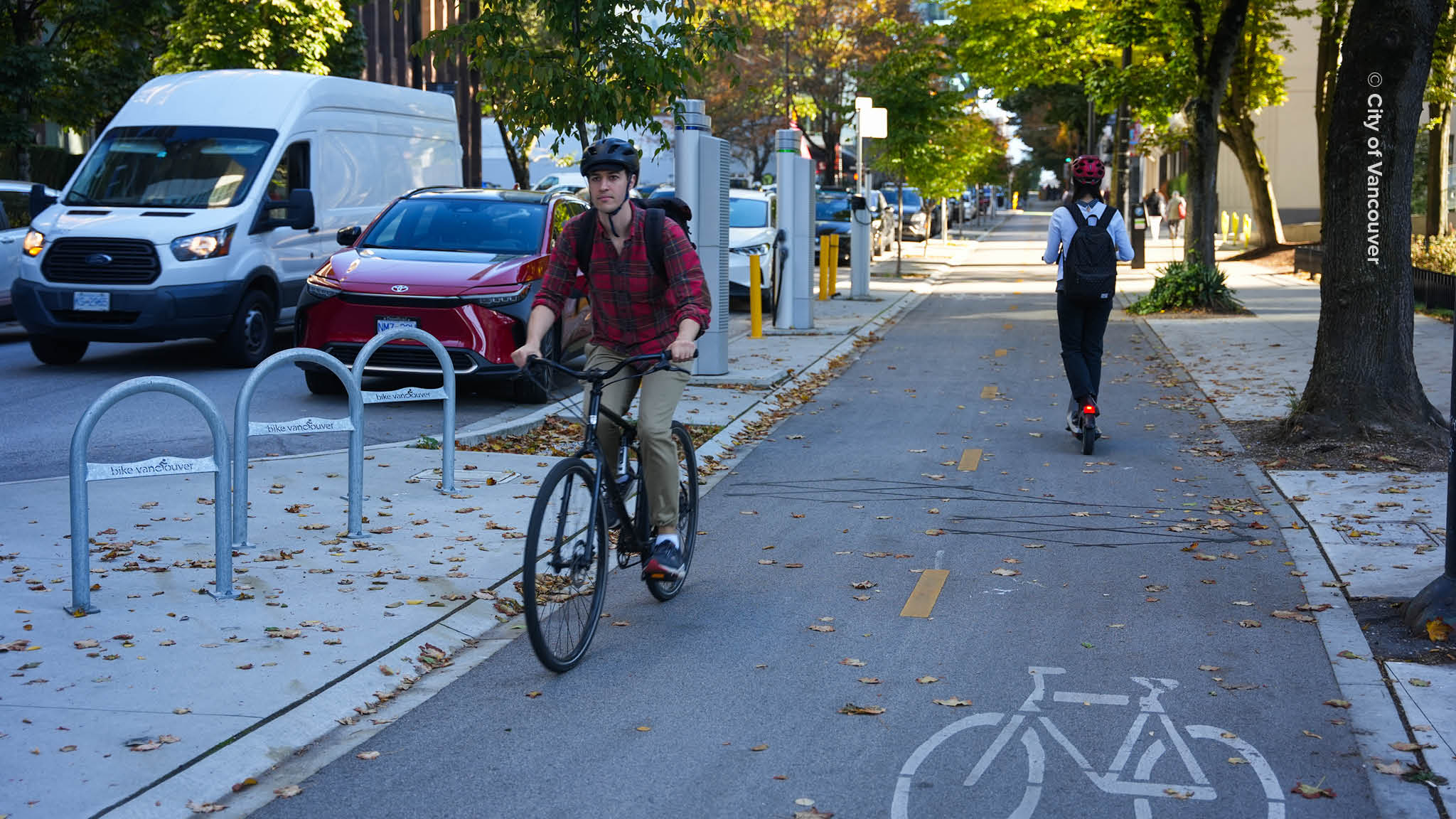
After cycling progress slowed during the pandemic years, Vancouver has resumed delivery with large infrastructure projects, while continuing to maintain an extensive 109 km network of protected lanes and off-street paths that meet the “All Ages & Abilities” (AAA) standards. The most recent flagship achievement is the $48M Granville Connector project, which introduced wide, fully separated walking and cycling paths, and removed two looping ramps, effectively unlocking city-owned land for future housing development. The emphasis on safety and comfort in the downtown area has led to the creation of bidirectional, protected tracks on Richards and Smithe Street, now extending along Drake Street as well. This is a monumental step for cyclist comfort in the city core, even though the emphasis and investment have remained concentrated in the downtown area. Consequently, outer neighborhoods and cross-city links have still been left waiting for their own AAA upgrades at scale.
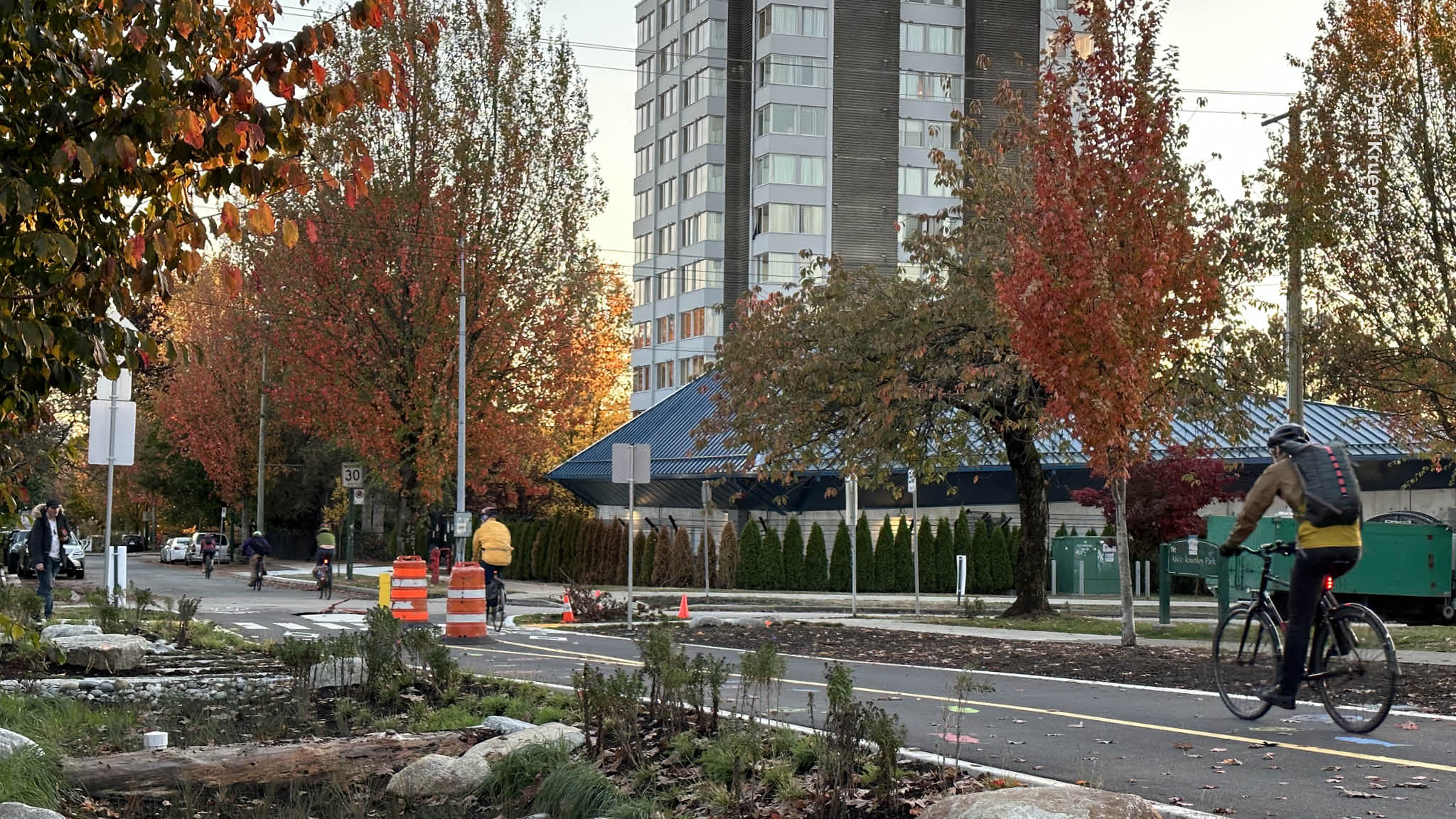
Traffic-calming policies are aligning with network progress. Recently approved by the City Council, the 30km/h speed limit on residential streets, covering 25 neighborhoods, should further calm conditions for everyday cyclists and pedestrians, reinforcing Vancouver’s reputation as one of North America’s safest cycling environments. However, bicycle services and facilities lag behind the infrastructure, with bicycle parking and the bikeshare scheme still suffering from limited capacity – this leaves Vancouver with a significant margin for improvement when it comes to end-of-trip and intermodal comfort.