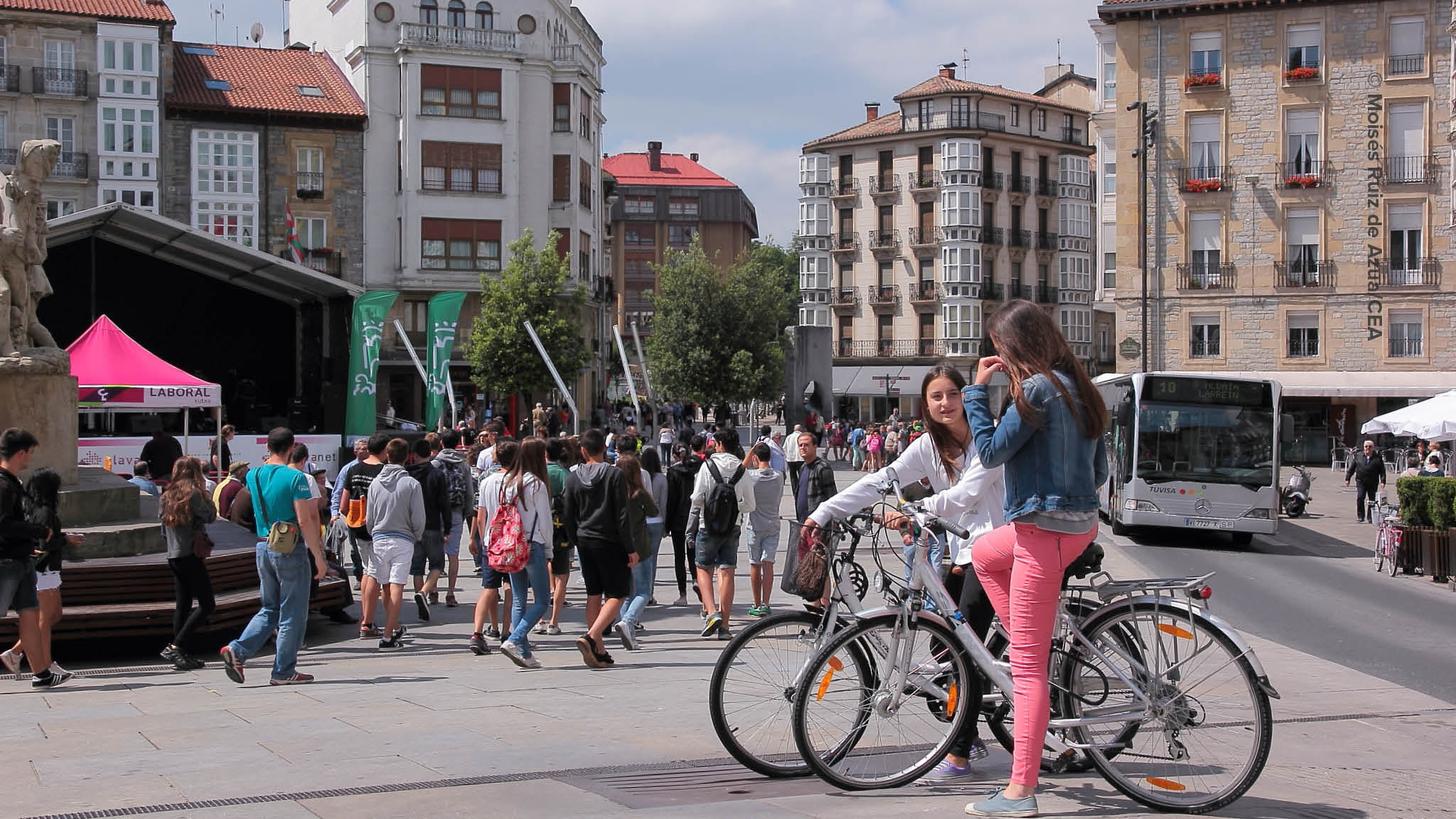
Vitoria-Gasteiz’s bicycle mobility achievements began with planned discipline and courage. Guided by its Sustainable Urban Mobility Plan (SUMP), the city has spent years transforming policy into impactful action, creating an environment that has favored people over motorized vehicles. Its superblock model, which has been progressively implemented during the last few years, has transformed entire neighborhoods by limiting through-traffic for automobiles and reclaiming public space for its residents, cyclists, and children. Within these car-light spaces, cycling has steadily become not just possible, but efficient and natural for a growing number of people.
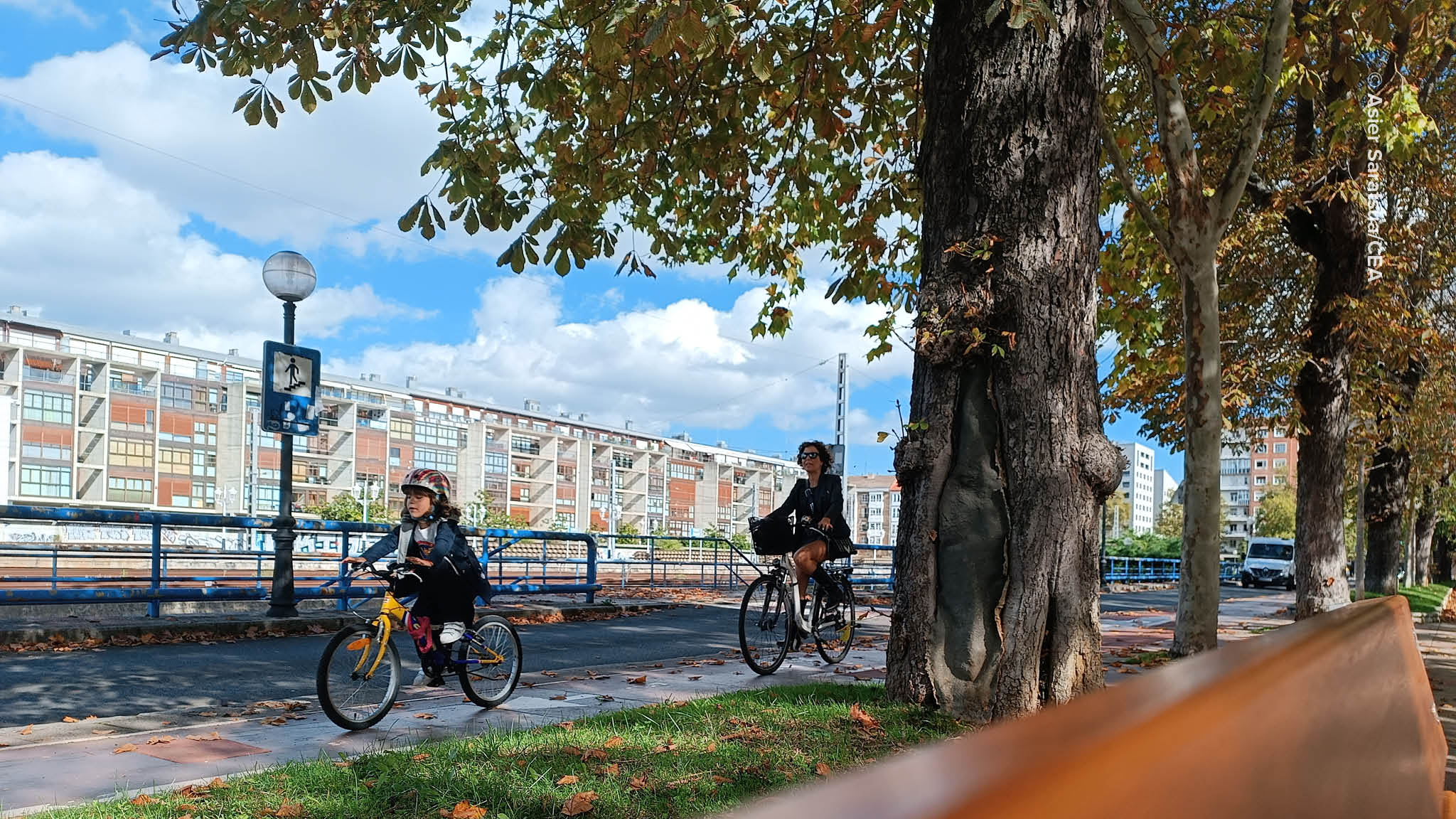
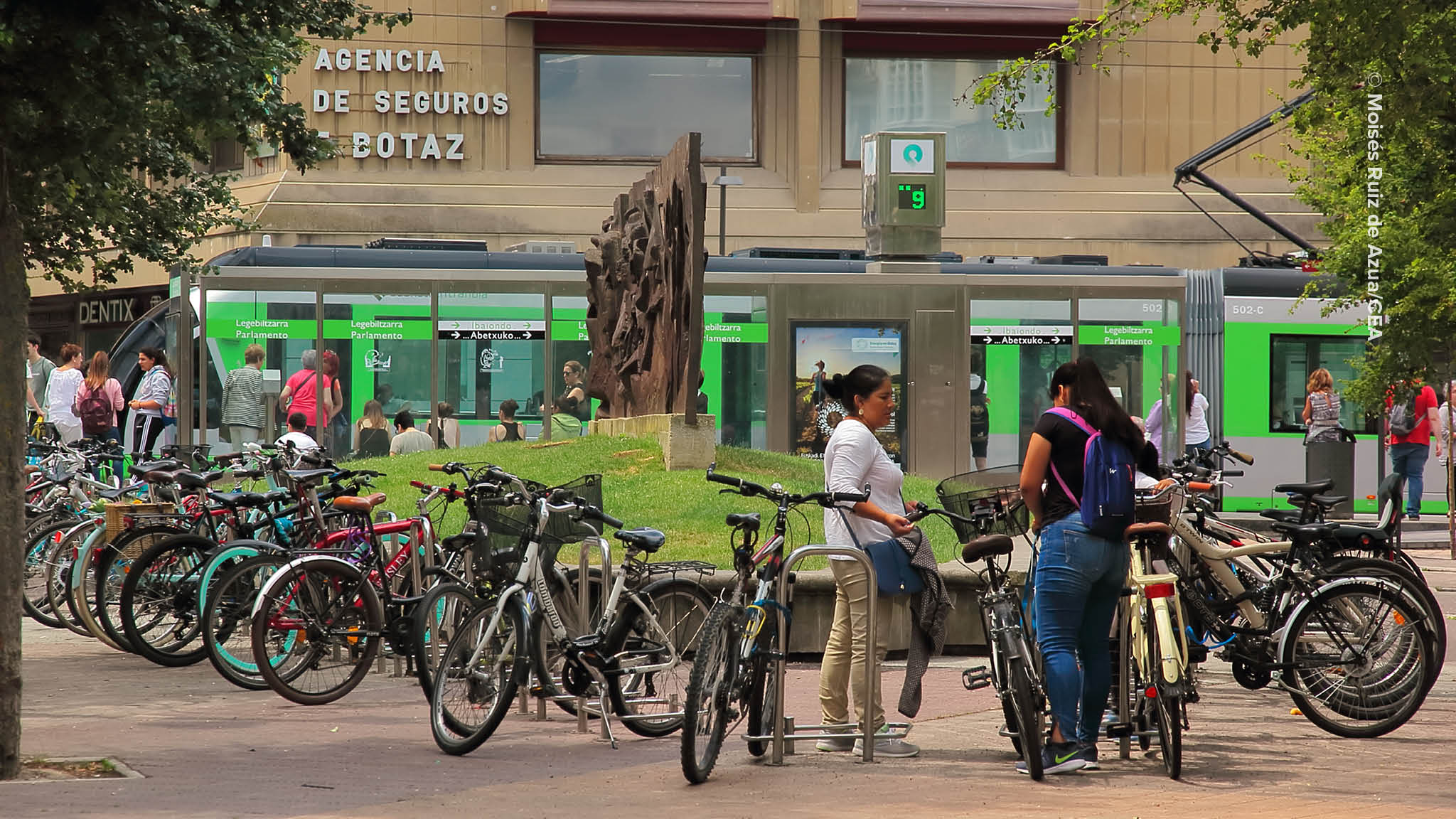
The results are tangible. Today, 8% of all trips across town are made by bicycle, an impressive figure for a city of its size in this part of Europe. Much of this success stems from a network of protected lanes stretching over 120 km across the urban area, linking neighborhoods, workplaces, and green areas. The recent launch of a public bicycle-sharing system has added yet another layer to the city’s infrastructure. It clearly has the potential to democratize access to cycling as city residents are now discovering just how convenient, comfortable, and empowering everyday cycling can be for them. Nevertheless, the next challenge lies in refining the existing infrastructure. Victoria-Gasteiz needs to enhance intersection designs, minimize pedestrian-cyclist conflicts – enabled by sidewalk-level bicycle lanes, and reclaim street space from the areas motorized traffic still dominate in the city.
The city’s leadership also extends to urban logistics and innovation. Recognizing that sustainability includes addressing how goods are transported, Vitoria-Gasteiz has promoted electric cargo bikes by means of subsidies, developing micro-distribution hubs, and reducing motorized traffic in its urban core. As a result, cargo bikes have become a familiar, almost emblematic presence on its streets.