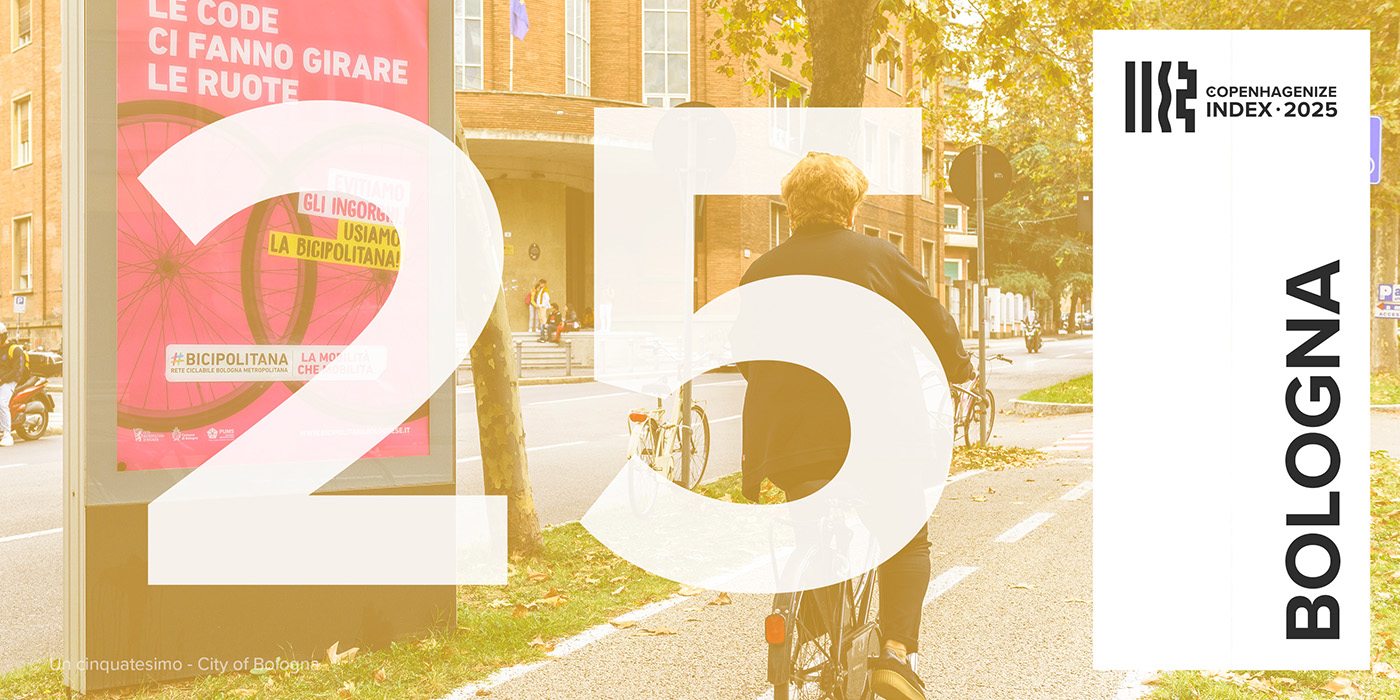
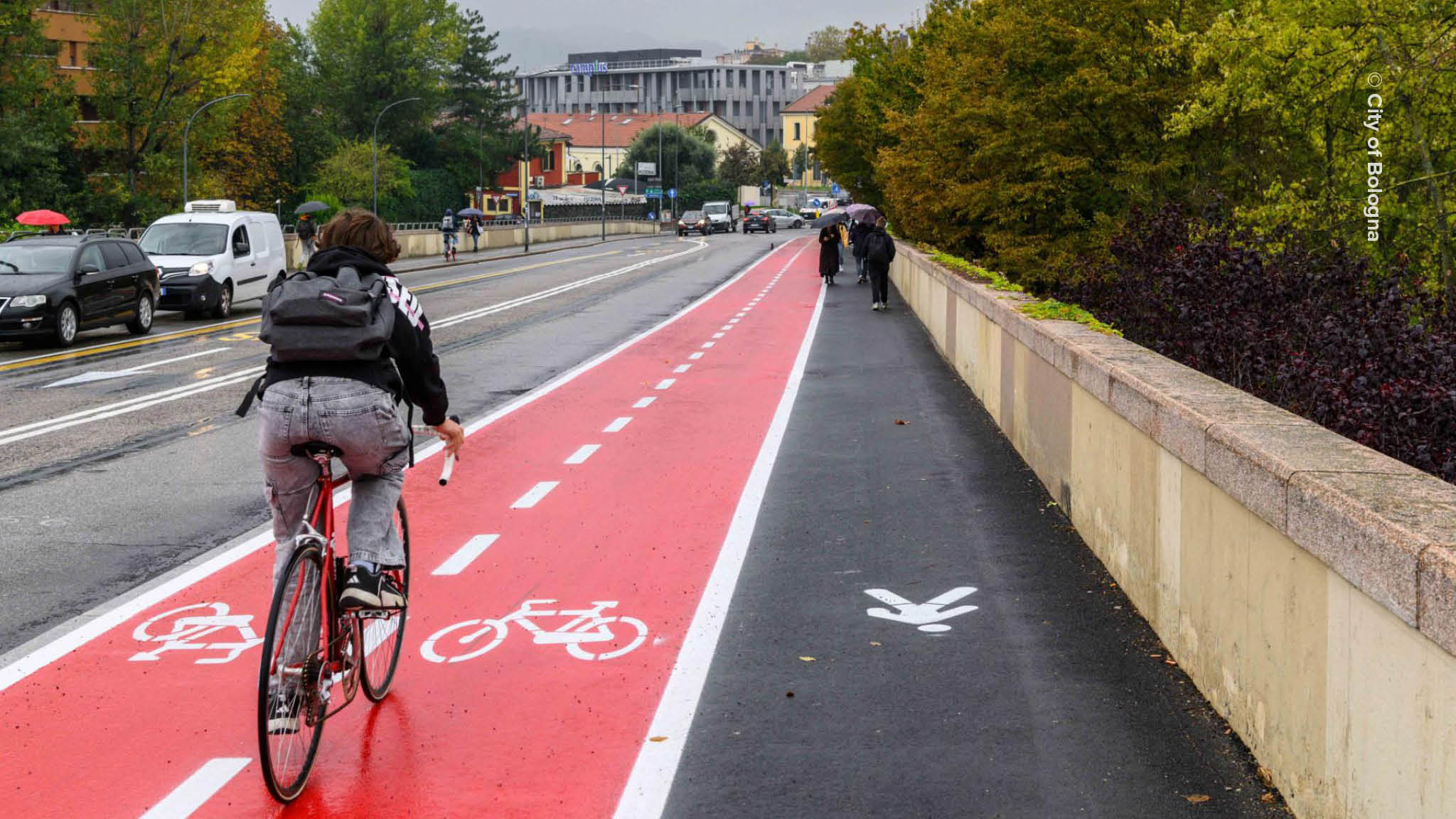
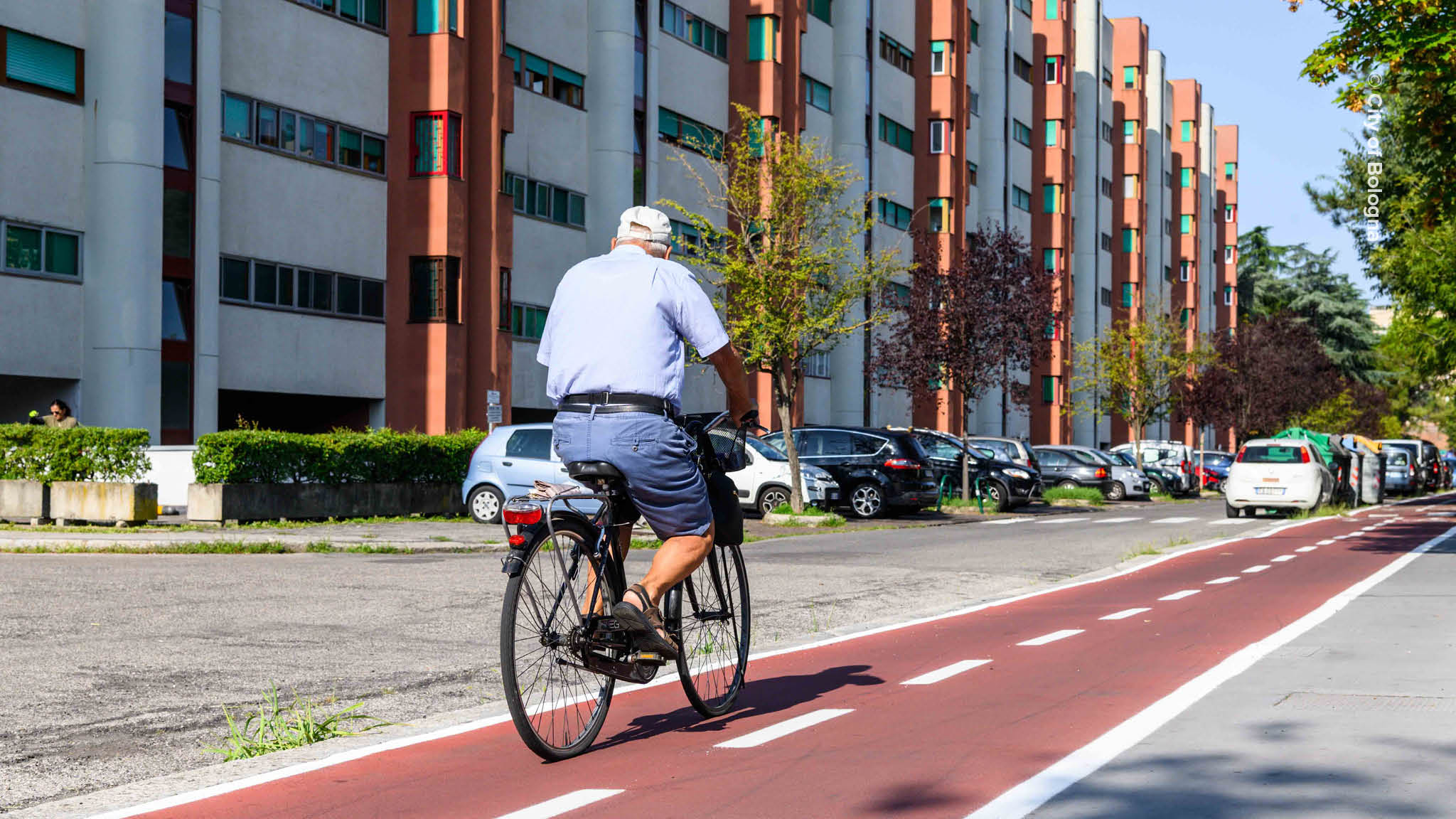
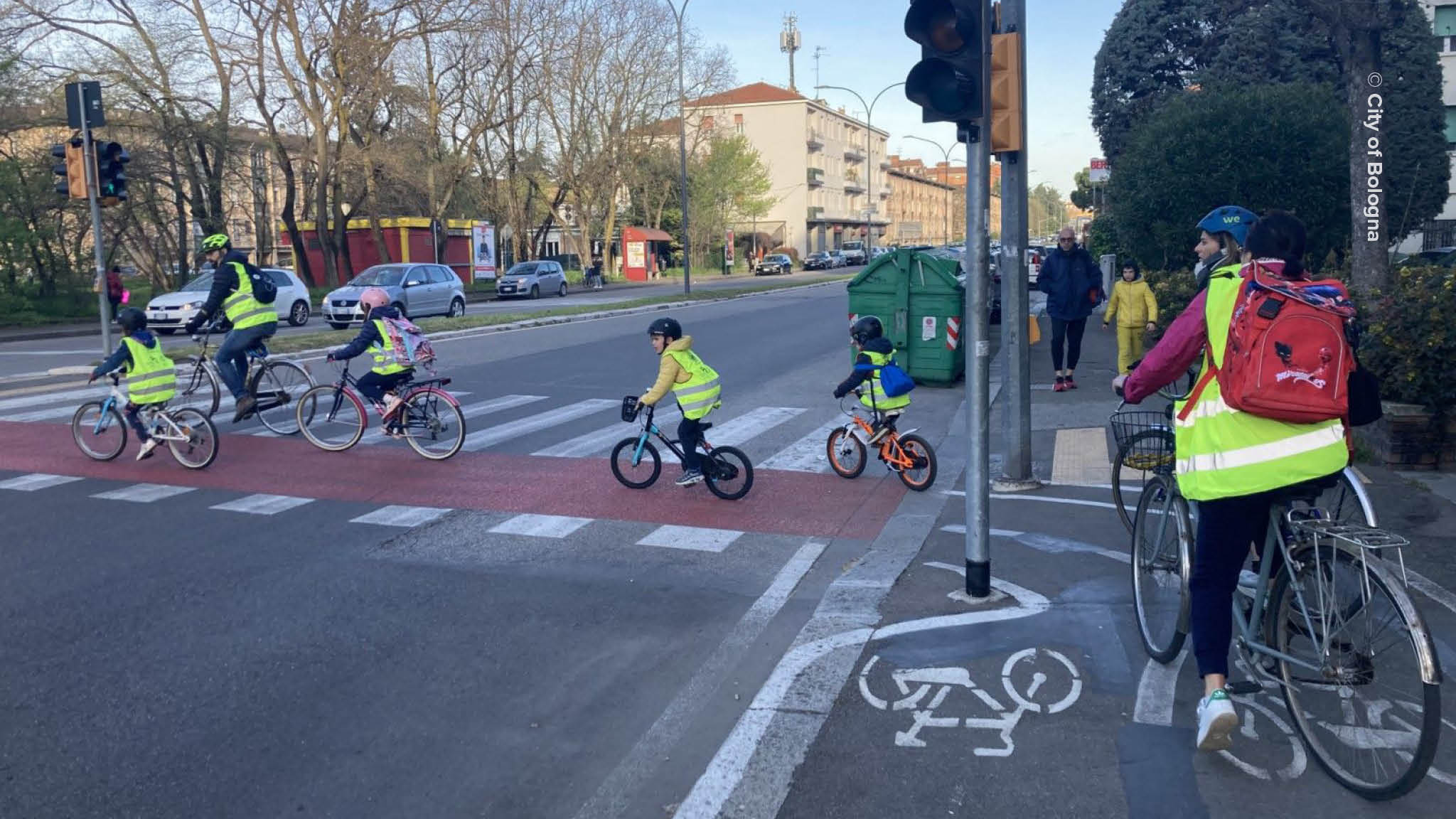
Bologna’s cycling evolution is based on two solid pillars: traffic calming and network expansion. Over 50% of the city has been revisited with 30 km/h speed limited zones which have made cycling safer and more intuitive. At the same time, the Bicipolitana, its flagship network project, has quickly taken shape as the cycling backbone of the metropolitan area. The network now extends over 100 kilometers, with 26 more added since 2022, marking a turning point in how the city circulates. Beyond the actual infrastructure, the Bicipolitana is also a clearly branded, widely promoted mobility system that is redefining cycling not as a niche practice, but as an everyday mobility option for many residents.
A strong political commitment has been a driving force behind this progress. Since the formal adoption of Bologna’s cycling strategy in 2019, the city has implemented concrete measures that are yielding visible results: ridership across the city has been steadily increasing. Furthermore, with 52% of bicycle trips being made by women, Bologna is sending a clear signal that when streets are designed with inclusion and comfort in mind, cycling becomes a true mobility option for everyone concerned. The city’s governance approach is equally noteworthy: the Consulta della bicicletta systematically involves NGOs and stakeholder groups in the decision-making process, while ongoing monitoring and reporting ensures accountability and continued improvement.
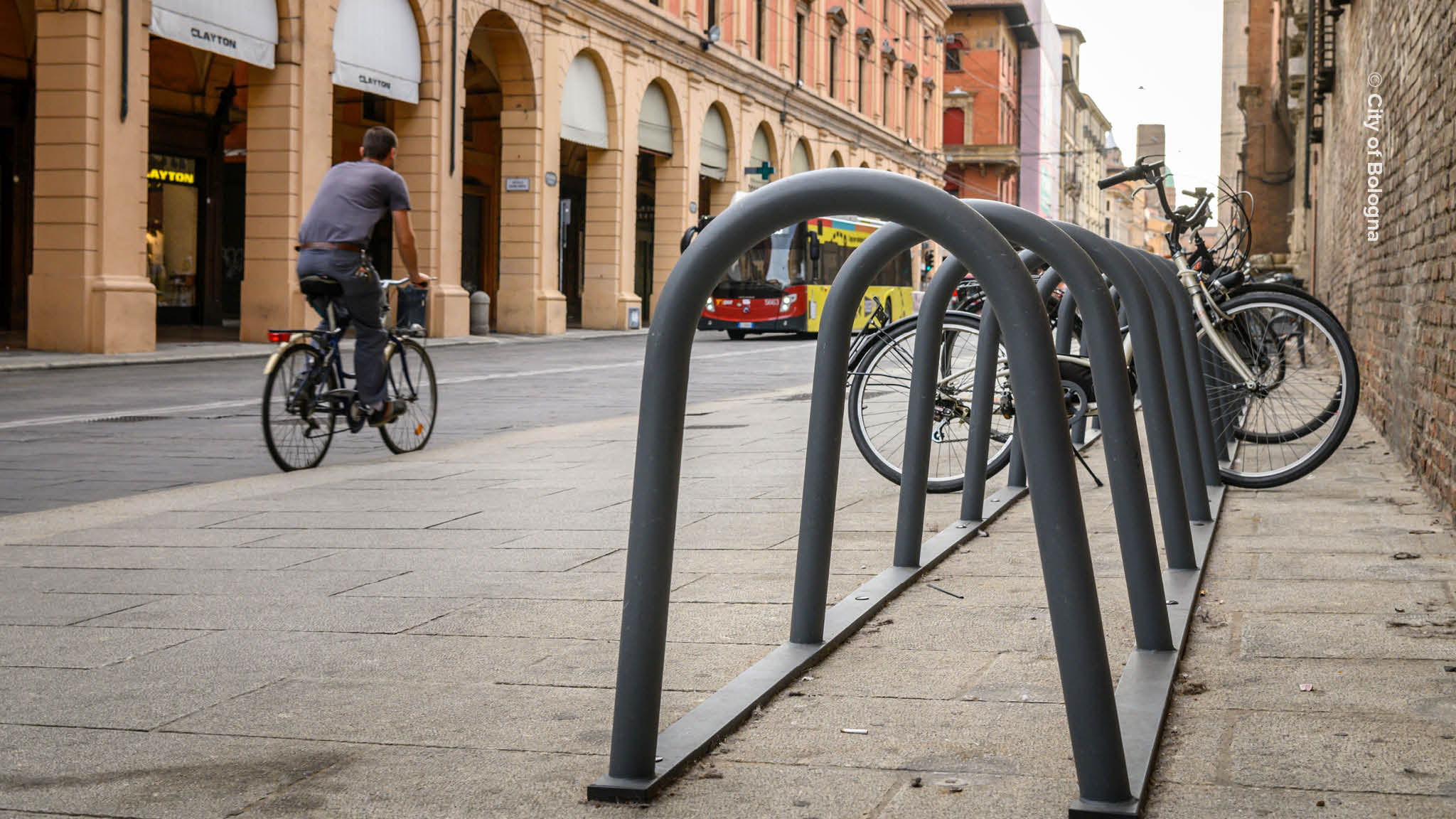
The infrastructure has also been supported by targeted city regulations. Urban planning requirements now mandate sufficient, secure bicycle parking facilities in new constructions and renovation projects, thus reinforcing the bicycle as a legitimate mode of transport within new structures built throughout the city. Together, these measures have been turning Bologna into a living laboratory for how Italian cities can transition toward cleaner, calmer, and more people-centered streets.