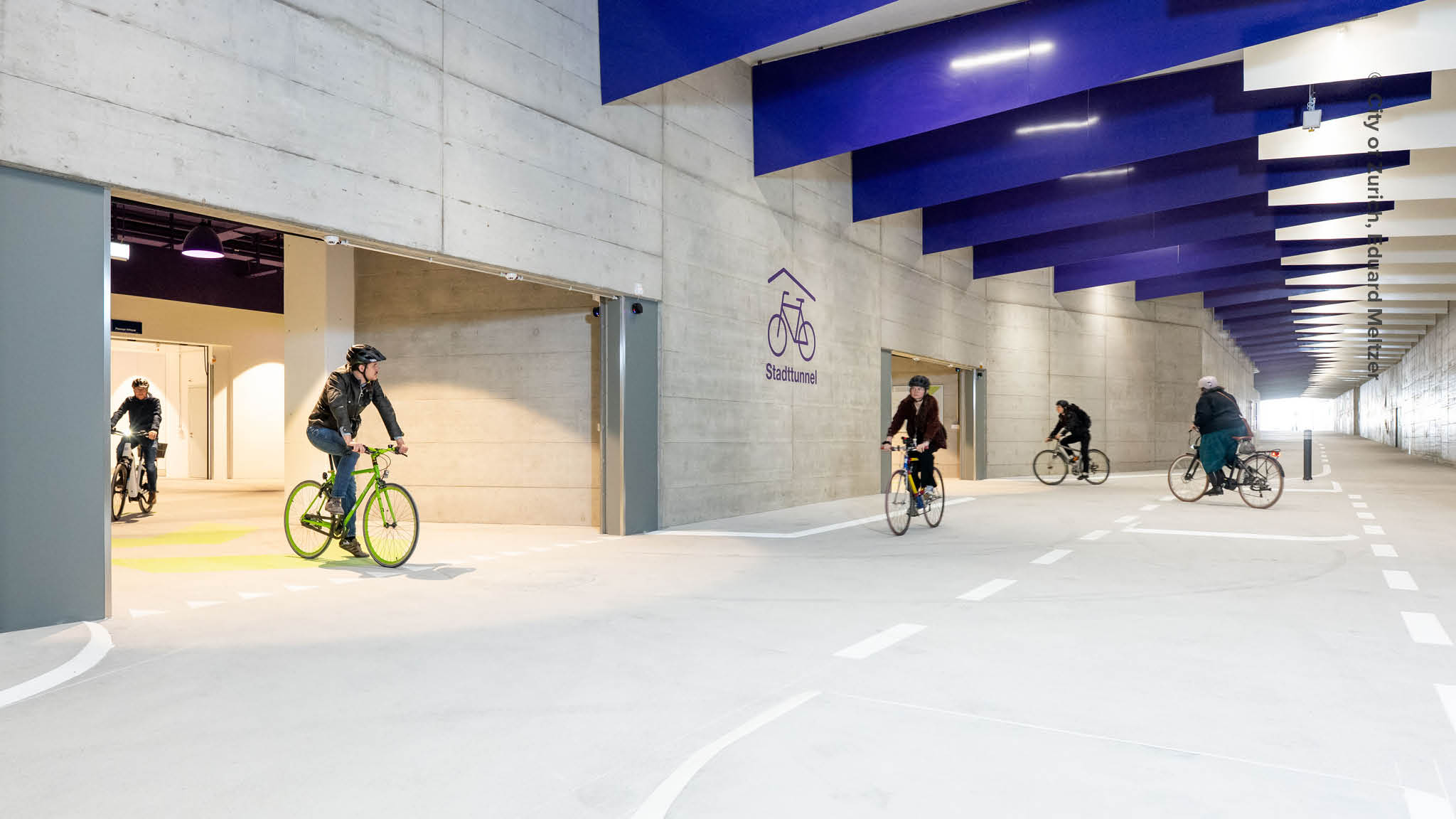
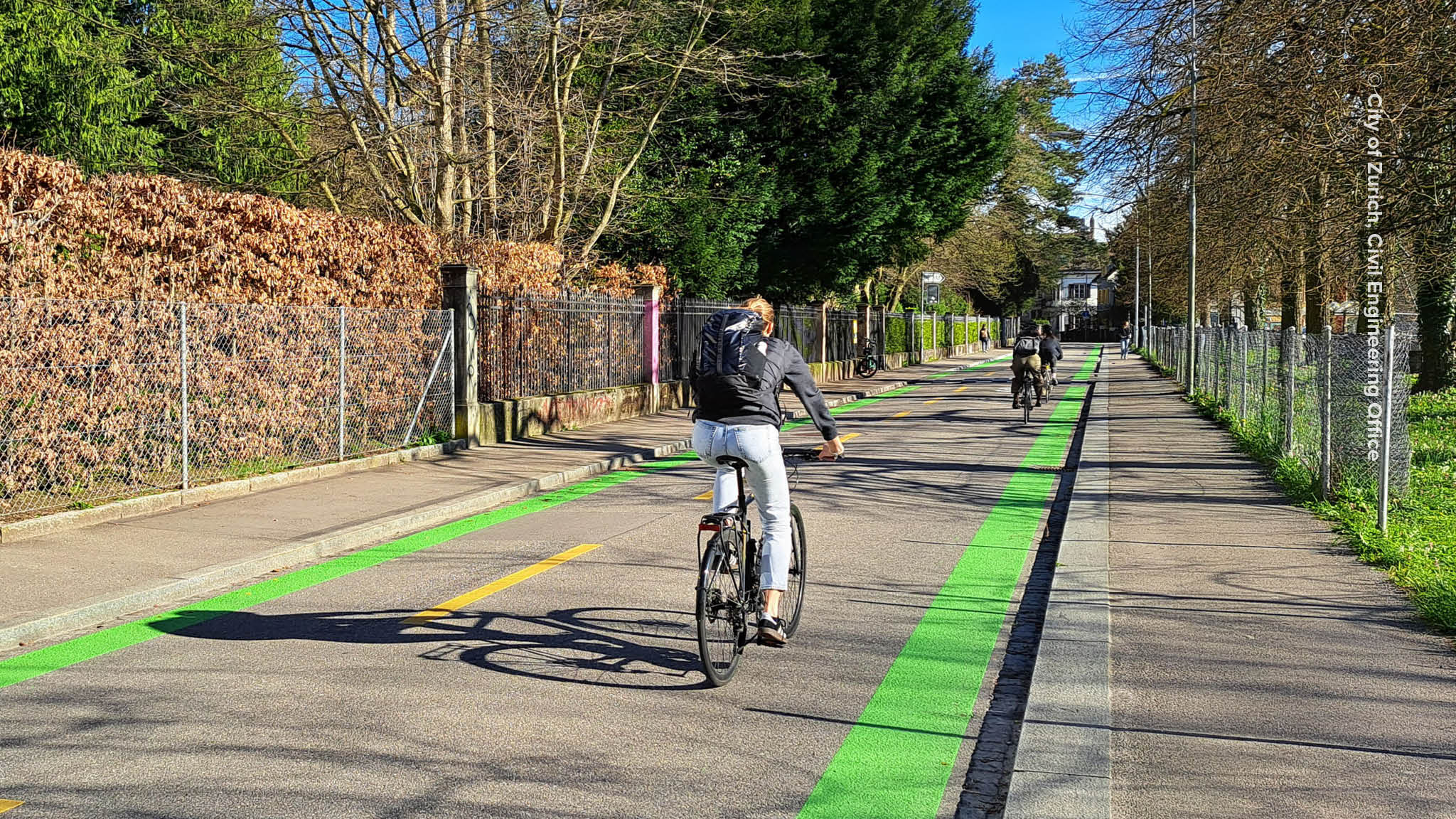
Zürich is channeling efforts and investment into major, connective projects: a former automobile tunnel underneath the Hauptbahnhof, the main train station, has been turned into the bicycle-exclusive Stadttunnel. The tunnel provides a direct and protected corridor for cyclists in a vital transit zone. It has been equipped with tactically placed bicycle stations at the entrance and exit. End-of-trip facilities have also increased; there is now an 800-space bicycle parking facility at the Stadelhofen station and 240 self-service bike stations distributed across town. Throughout the cycling network, a ground color-coded system is helping users instantly identify the type of route they are cycling on. This has made Zurich’s bicycle paths and tracks more legible and predictable for all.
Cycling policy is hands-on and can take a long time to put into place. The 2012 Masterplan Velo under Stadtverkehr 2025 has set lofty goals to double cycling’s modal share, improve safety, and make riding accessible for all ages. The ambitious Cycling Strategy 2030, named “Velostandards Stadt Zürich”, builds on the foundational plan with clear, contemporary standards. A dedicated city team delivers tactical cycling measurements, setting ambitious timelines for test pilots and improvements to the existing cycling network, while consistently sharing progress with residents on the city website. Finally, citywide education anchors bicycle efforts in Zurich: all public-school children take the police run Veloprüfung (cycling exam), instilling cycling skills and confidence in them from a very young age.