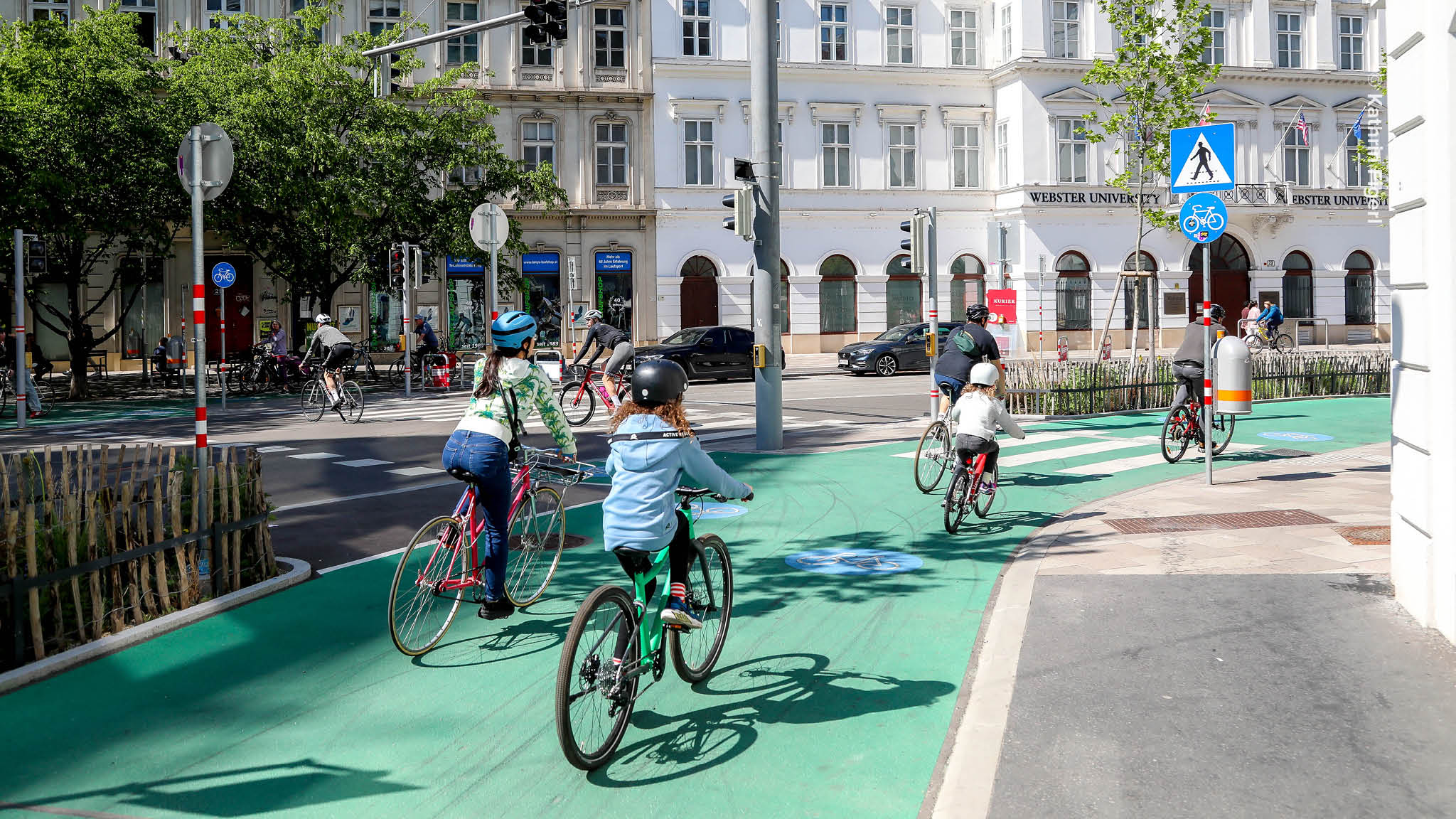
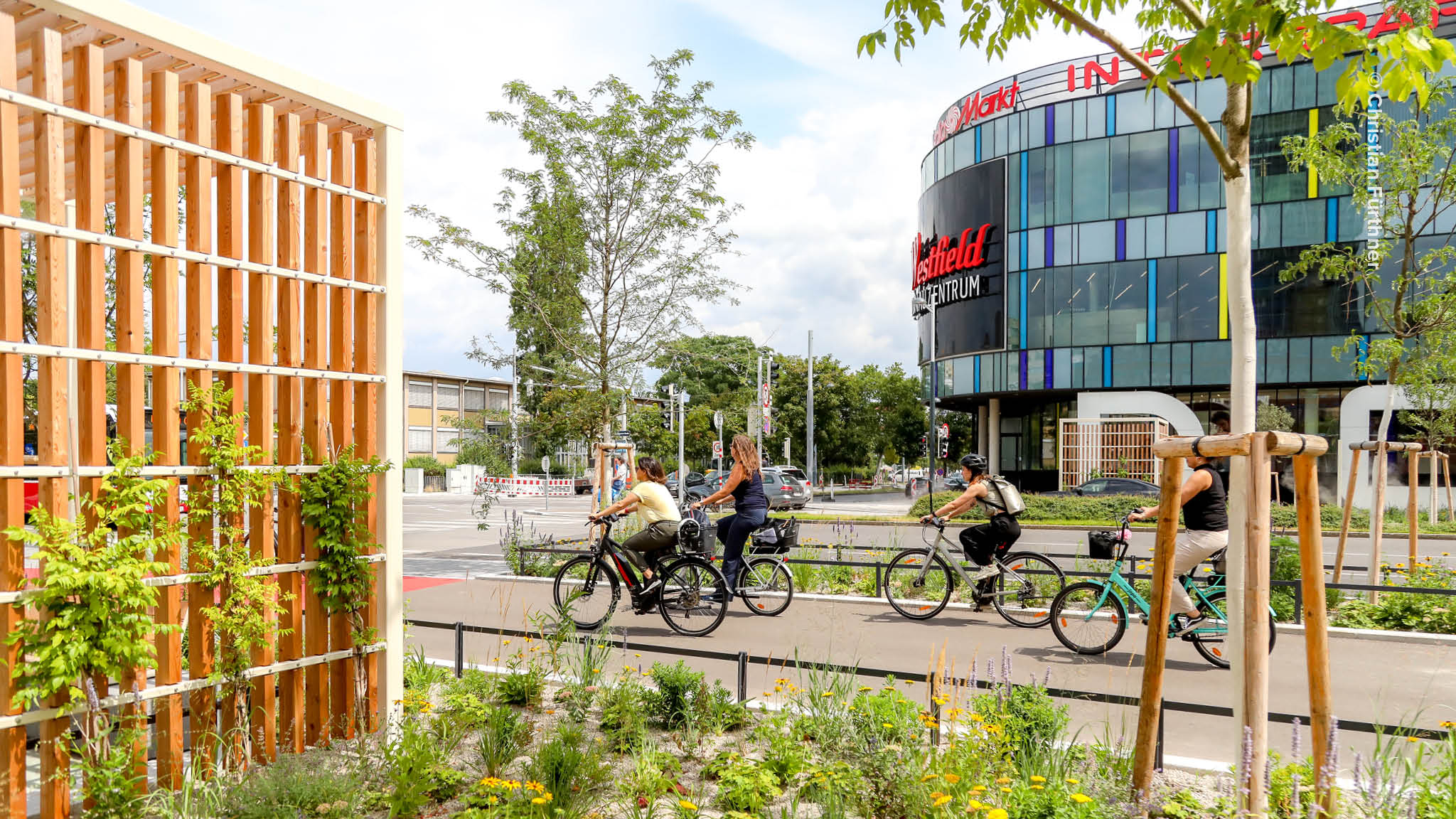
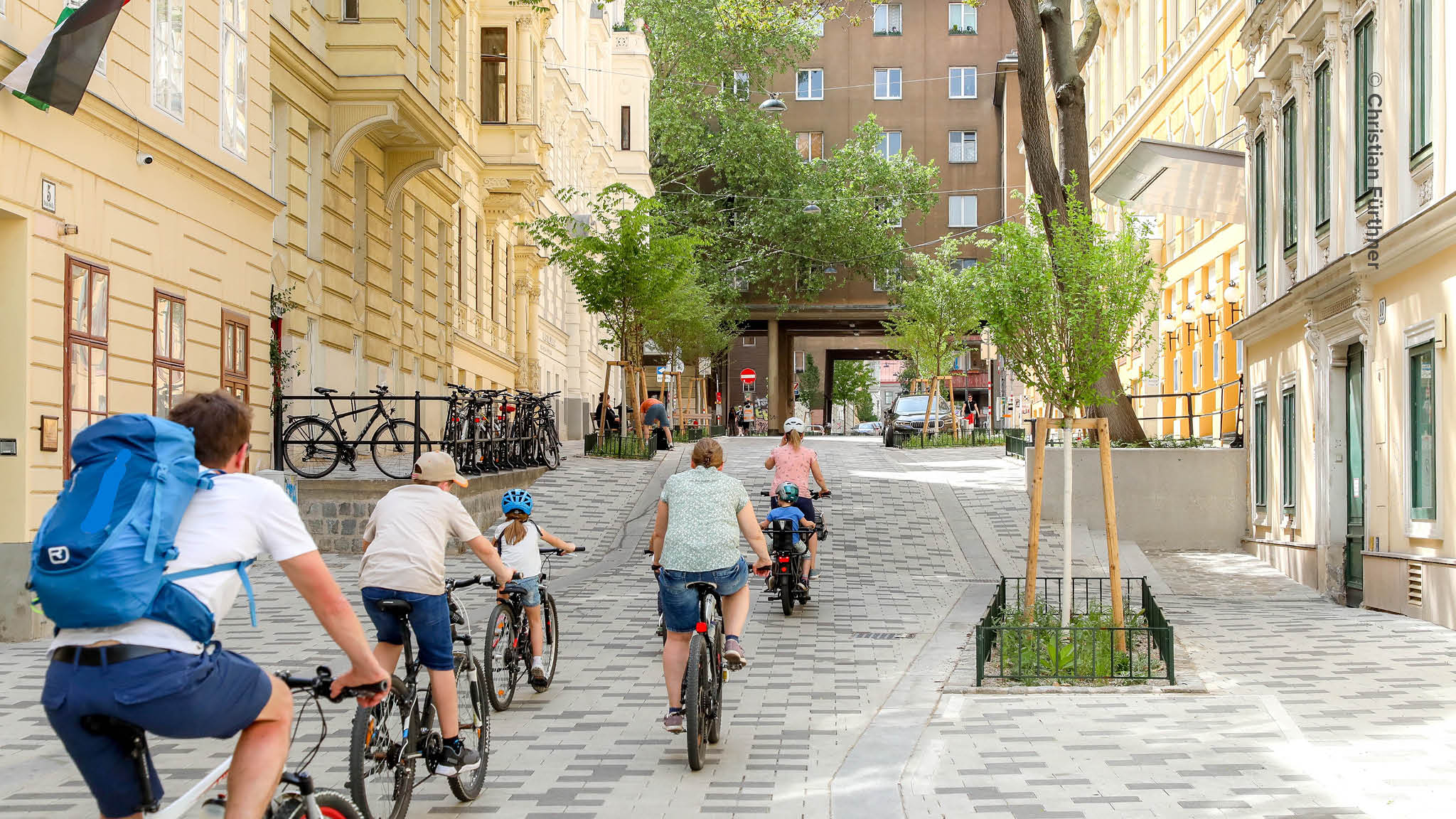
Through the Radoffensive launched in 2020, Vienna has moved from incremental tweaks to large-scale development, excelling both in infrastructure quality and quantity: 44 km of new or in-progress bicycle paths in the past five years, combining wider, higher-standard cycle paths, bicycle streets, and generous greening and streetscape design upgrades. Safety is tangibly improving, reflected in a declining cyclist fatality rate, and the city plans to continue this progress by banning e-mopeds from bicycle paths and pedestrian areas in 2026. Argentinierstraße captures this shift in infrastructure. As home to one of Vienna’s first bicycle lanes, it was rebuilt in 2024 as the city’s first Dutch-inspired bicycle street linking the center to the central train station. With 6,000 daily riders, the old 2 meter bidirectional track had become uncomfortable and unsafe. After contemplating a wider bidirectional track versus a bicycle-street, residents – involved in the project’s process from the very beginning – backed the “greening, cooling, less asphalt” bicycle street with 85.5% support, bringing calmer traffic, wider sidewalks, trees, and benches.
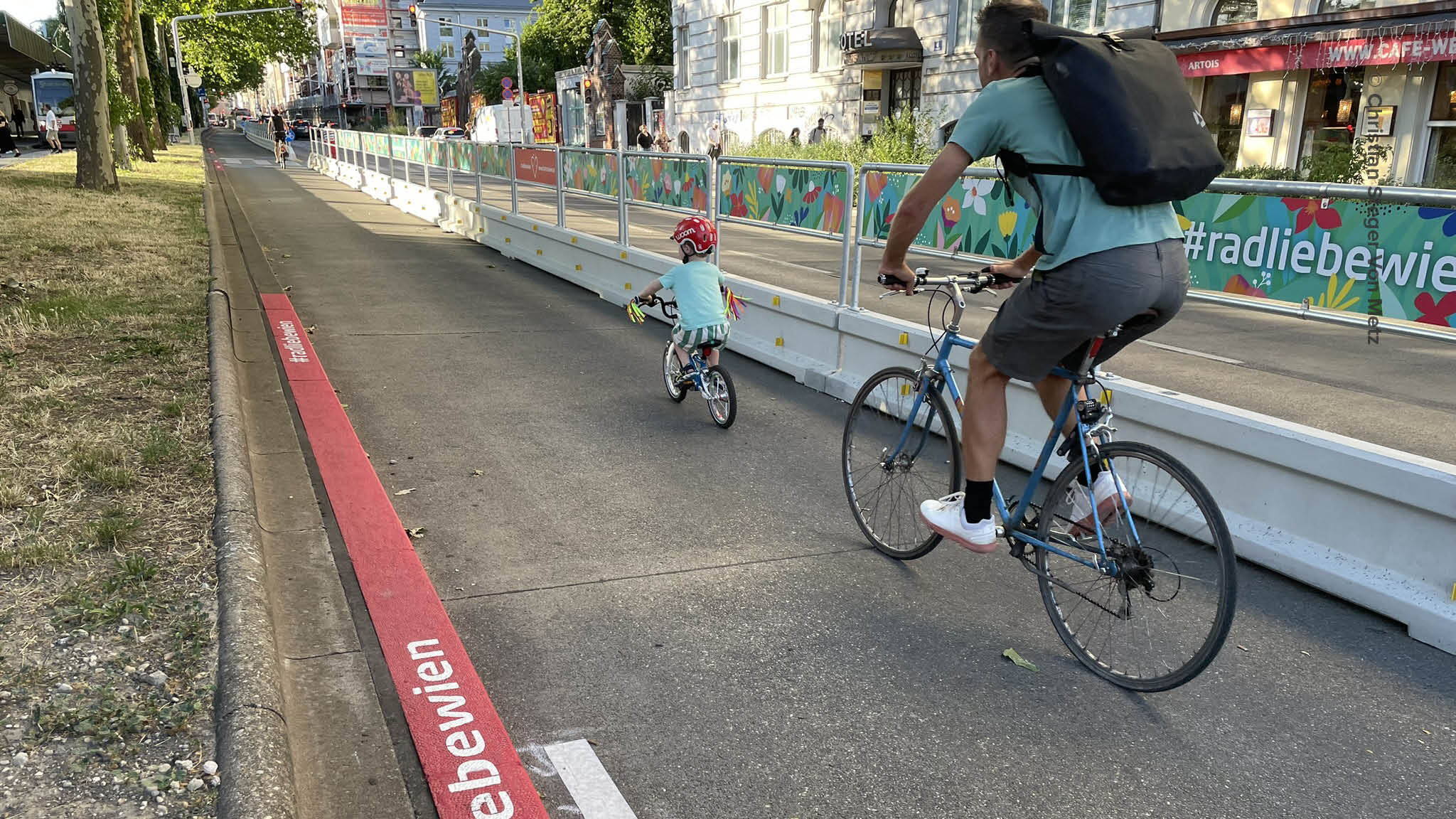
Vienna’s policies are deliberately family-centered. The city supports everyday cycling with cargo-bike purchase subsidies, try-before-you-buy options, free cargo-bike rentals (Grätzlrad), bicycle training and mobility education in schools, school streets and bicycle parks. A “Traveling with children in Vienna” brochure is even included in the diaper bag for expectant parents. Positive communication is a pillar: a dedicated website offers practical guidance and inspiration; the ARGUS Bicycle Festival (the 2025 edition drawing around 100,000 visitors) broadens the reach to all types of cycling; and the “Damit sich’s leichter Radelt” campaign keeps residents informed as Vienna keeps on building roughly 20 km of bicycle lanes each year. Together, these user-focused programs have turned infrastructure into a habit, making cycling an easy and visible part of daily life, while residents are kept informed and involved.