Oslo’s cycling journey is deeply tied to its Vision Zero policy, which emphasizes a commitment to eliminate road deaths by redesigning streets for safety, not speed. The city is drastically reducing the physical and cultural space that has traditionally been allocated to cars, often providing only what’s absolutely necessary and applying traffic calming measures such as speed bumps and tightened intersection corners. Two-thirds of the streets have a current speed limit of 30 km/h, with plans to extend that standard all across the city. Furthermore, police crash data is being used to analyze high-risk sites and develop targeted safety interventions, particularly at intersections where visibility and predictability matter the most.
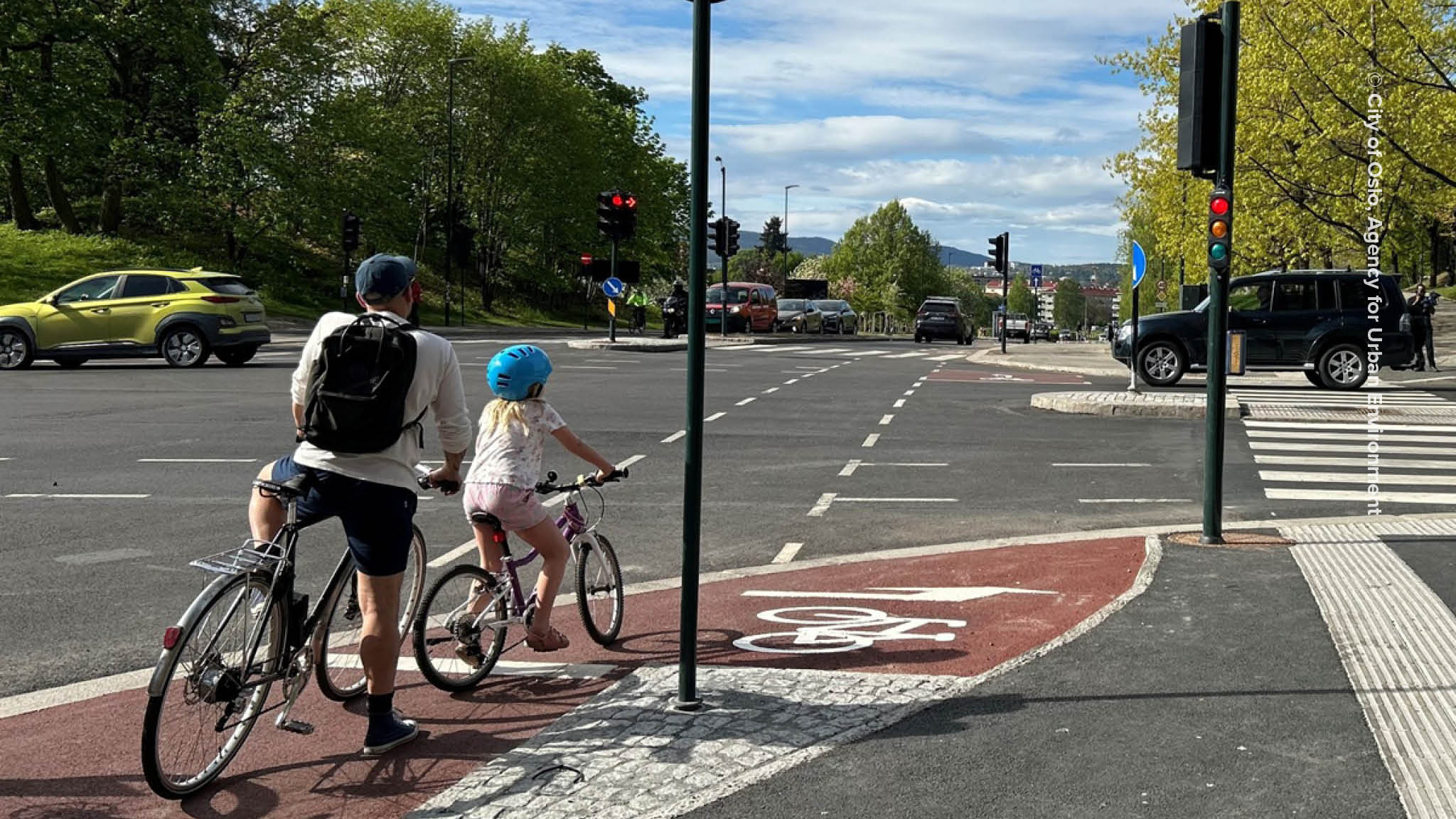
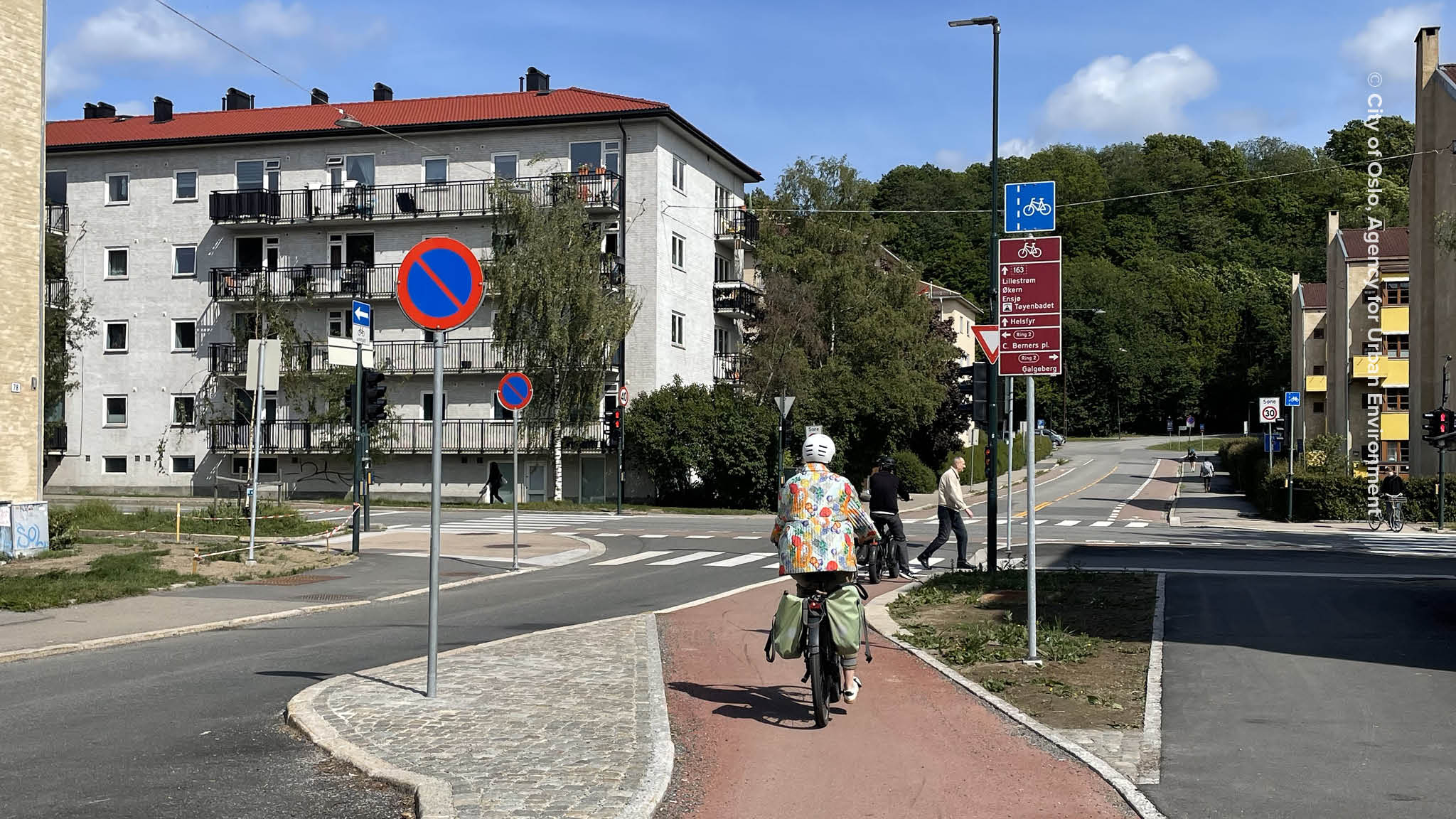
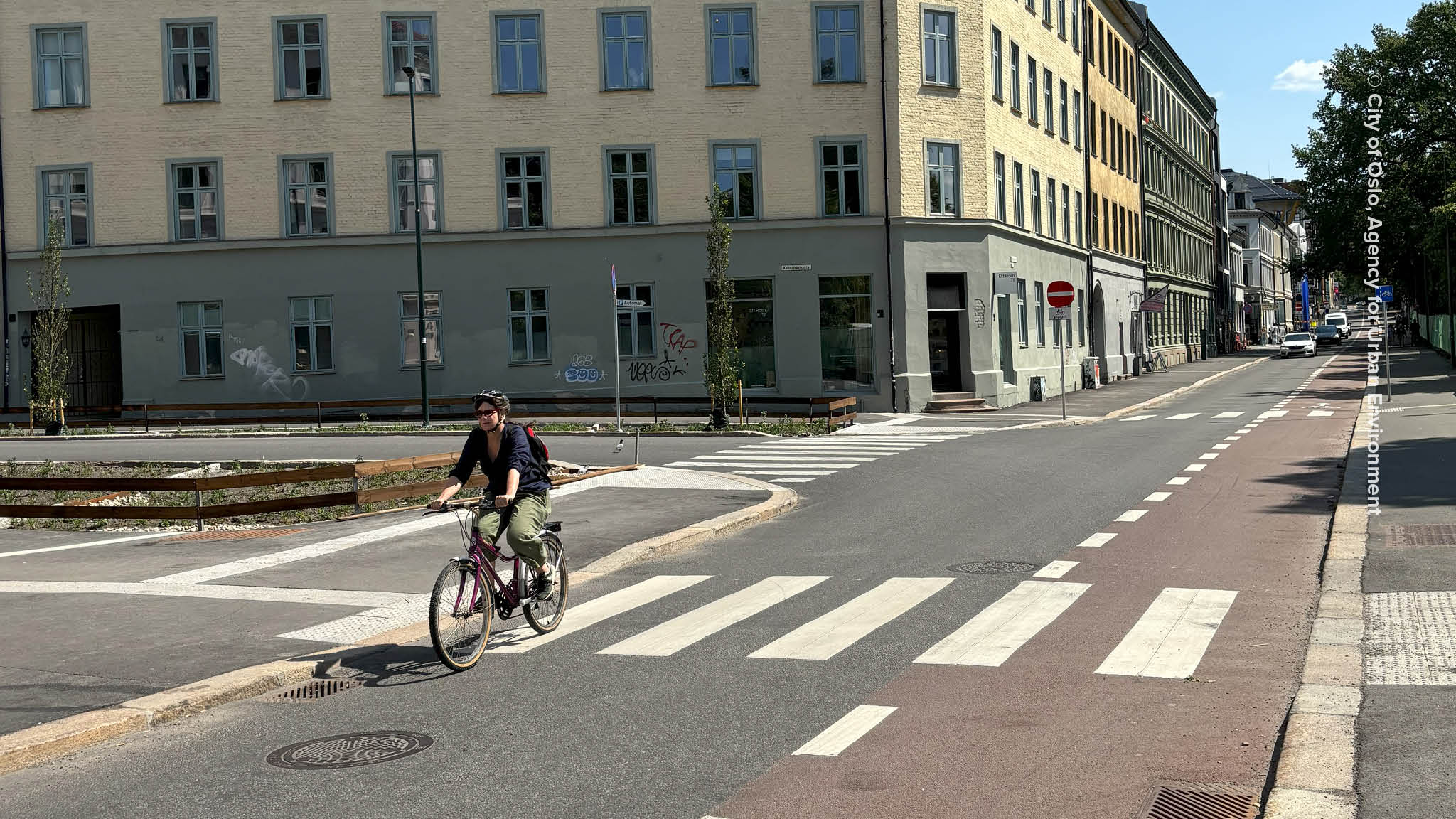
Many crossings are being redesigned with a pragmatic approach to make everyday riding smoother and safer. On the other hand, contra-flow cycling has also become the norm on all one-way streets, a simple but powerful detail that makes cycling more efficient. The impact is tangible: Oslo currently has a 7% bicycle modal share, and gender parity in bicycle mobility is steadily becoming a reality. Yet, the city still faces challenges: the bicycle network is still fragmented and users often have to share valuable space with streetcars. These are growing pains in a city that is working to define its cycling identity.
Oslo’s innovation also extends to other realms of bicycle mobility. The city’s public bicycle parking design guidelines have set clear standards for size, location, and inclusion, and take into account cargo bike specific needs. The guidelines also require new buildings to integrate secure parking, embedding bicycle mobility into the fabric of urban development. Perhaps most remarkably, Oslo is embracing the challenges of its Nordic climate. To tackle seasonal variation in cycling, the city has put forward a strategic winter maintenance program, ensuring that snow removal on bicycle infrastructure matches the standards of the main roads. A pilot subsidy for purchasing studded winter tires is also being tested by the city to encourage residents to cycle all year round, promoting the bicycle as a reliable, all-season mode of transportation rather than just a fair-weather accessory.