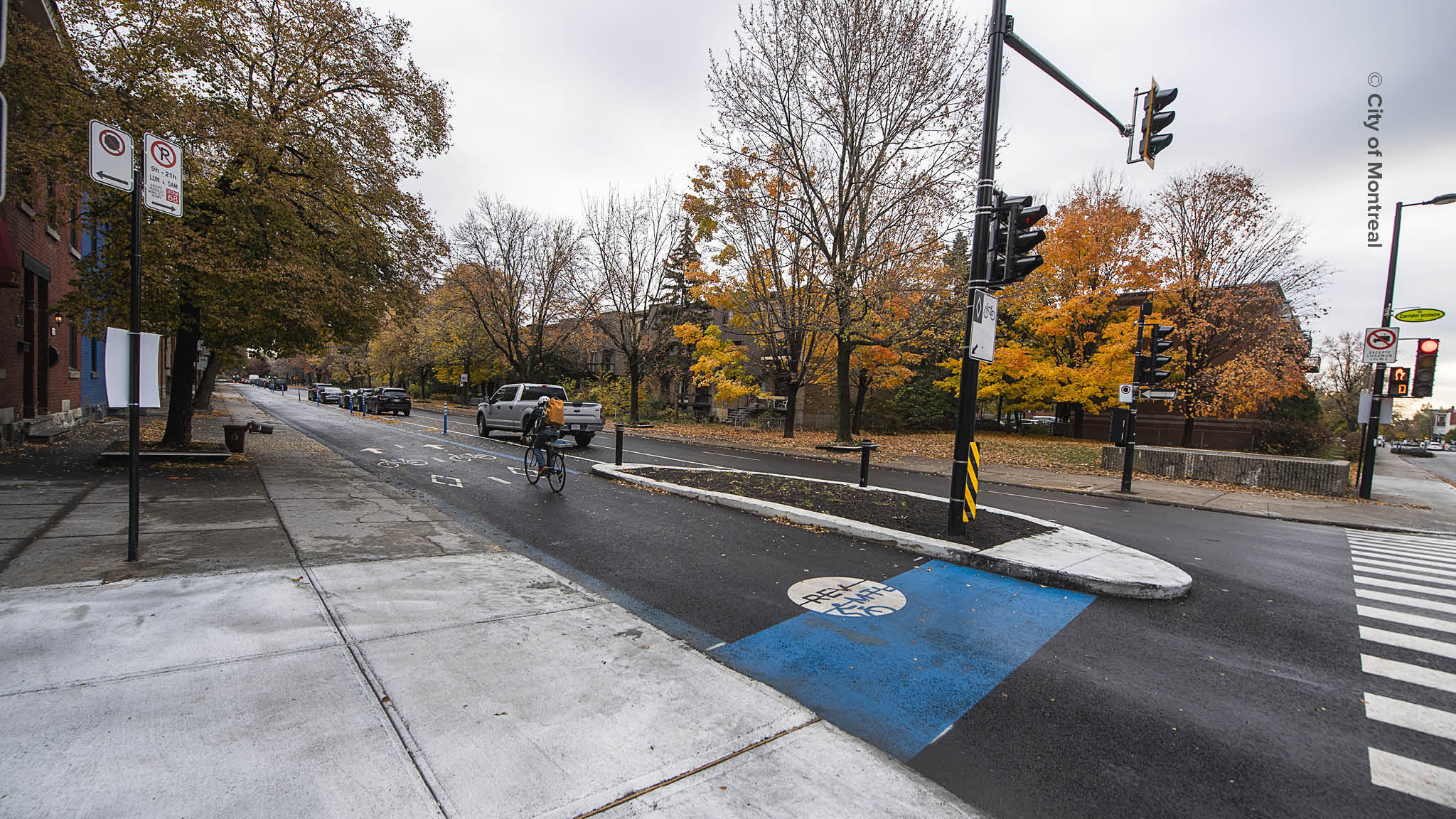
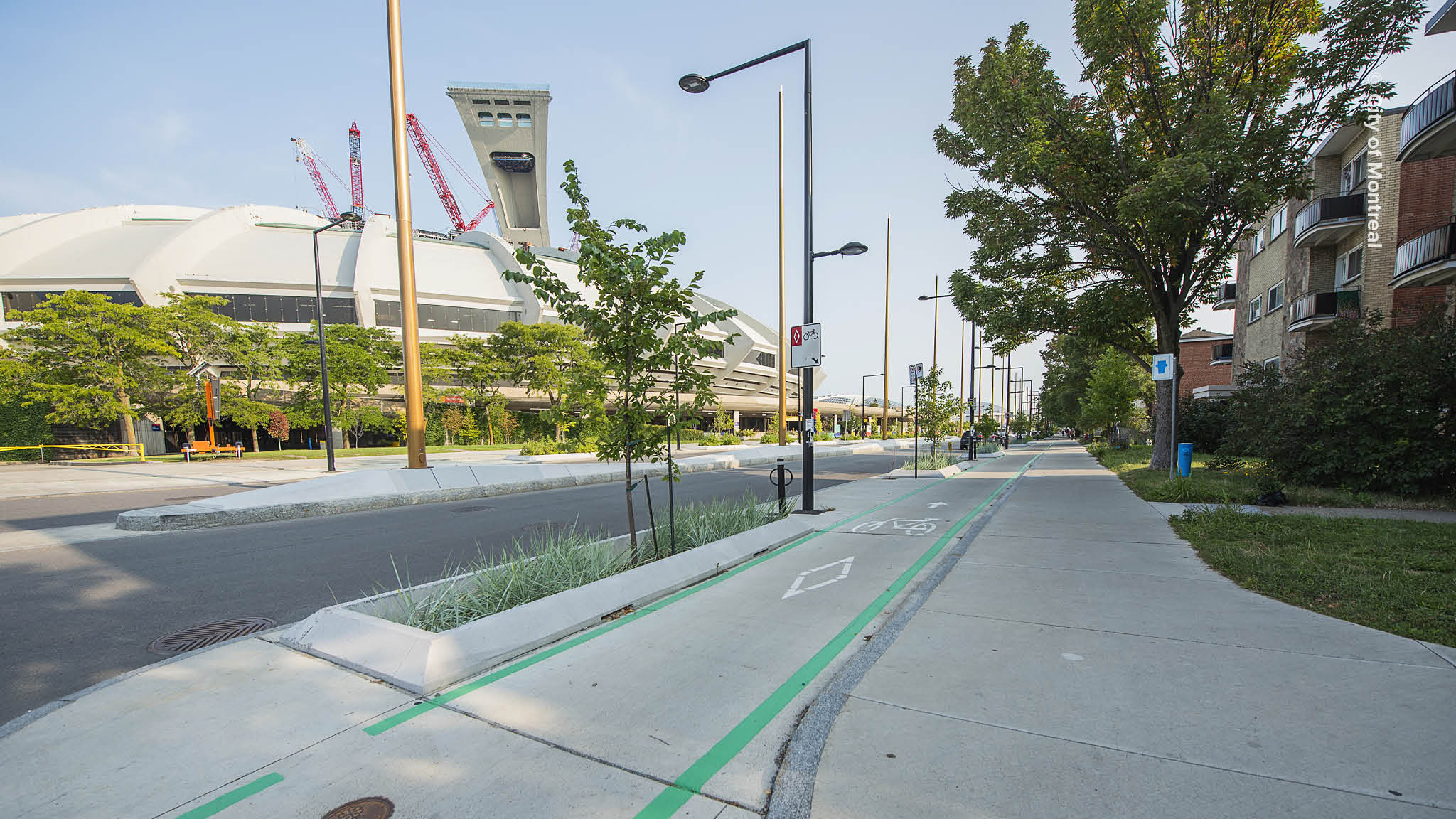
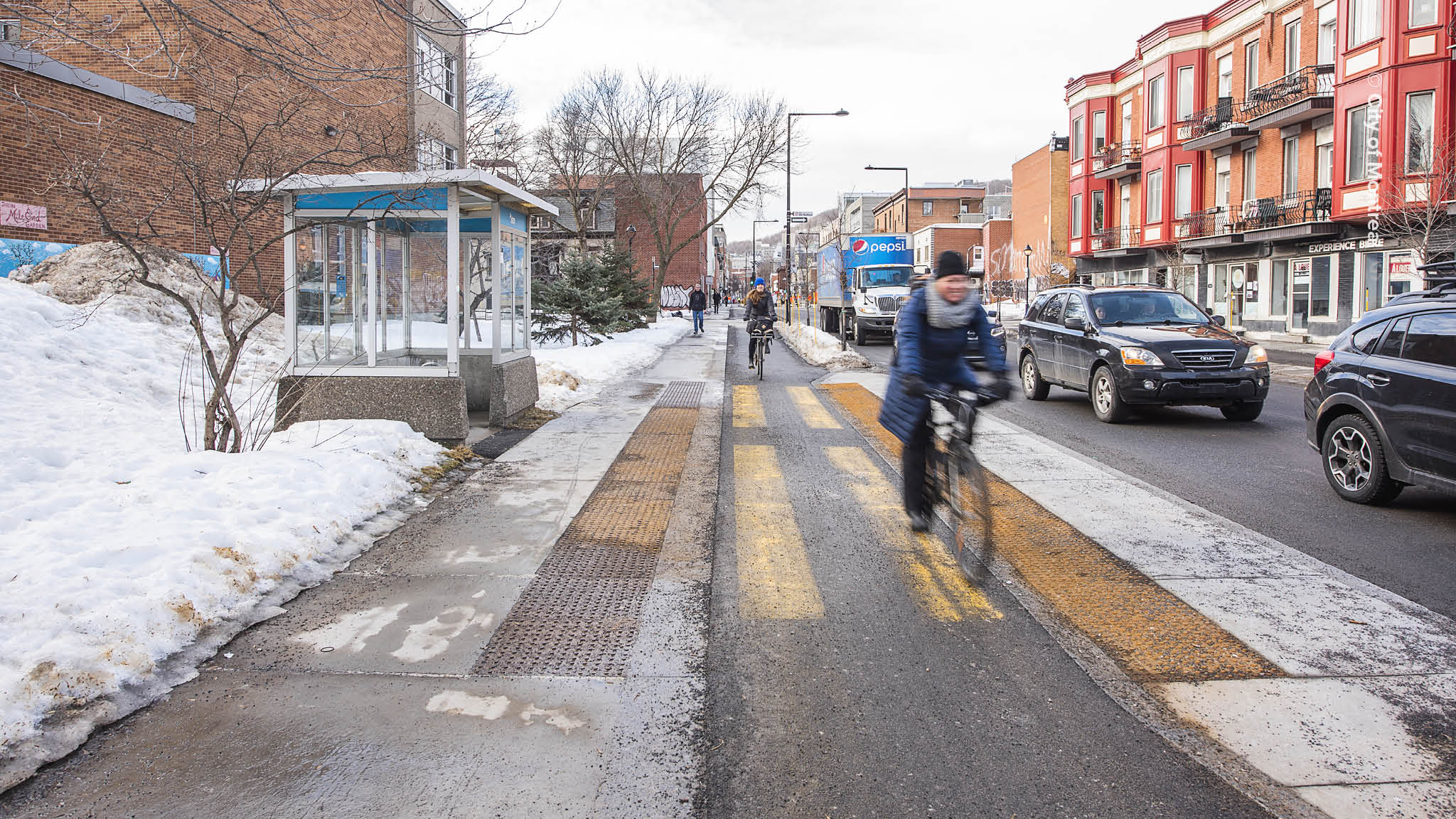
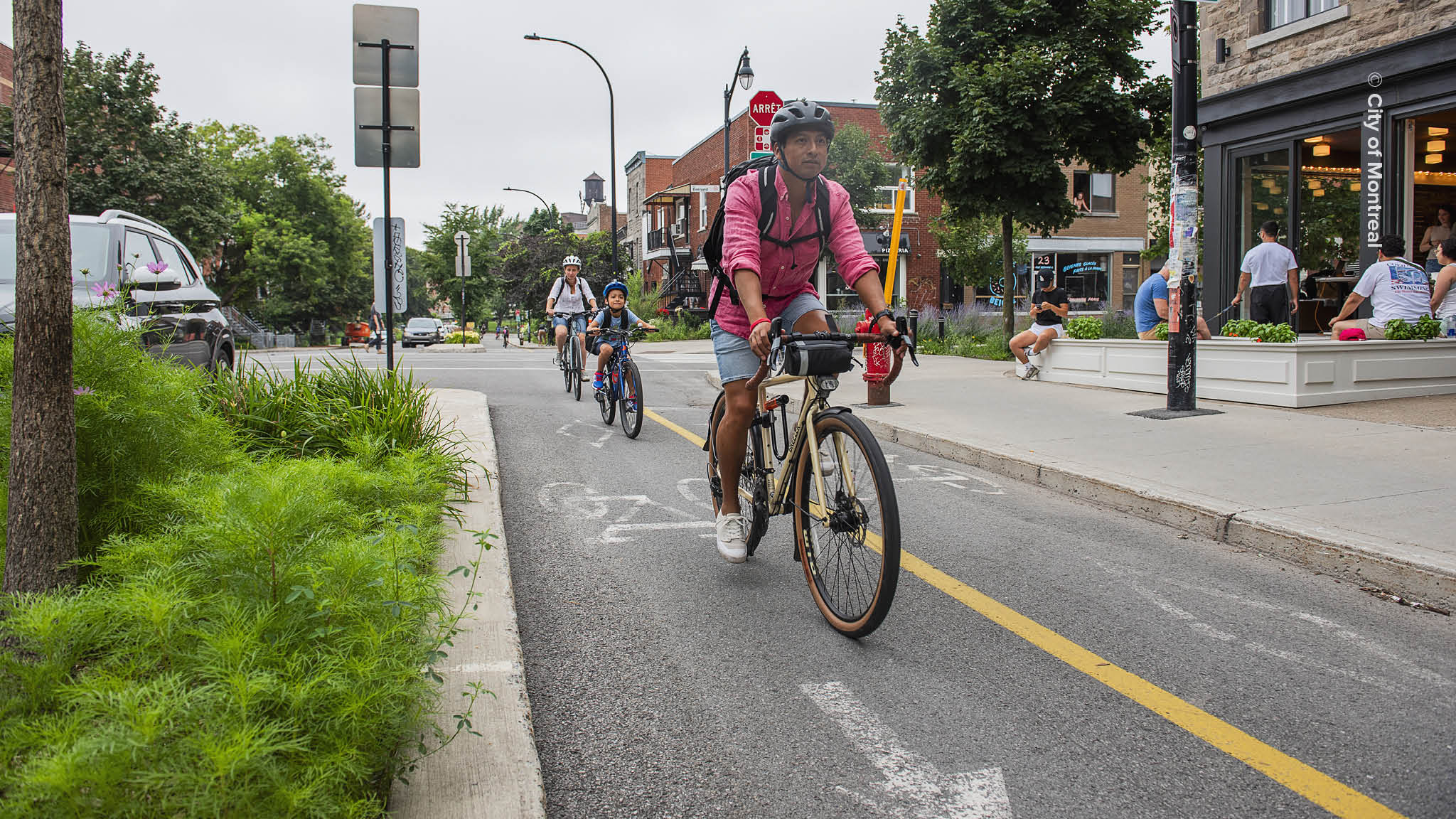
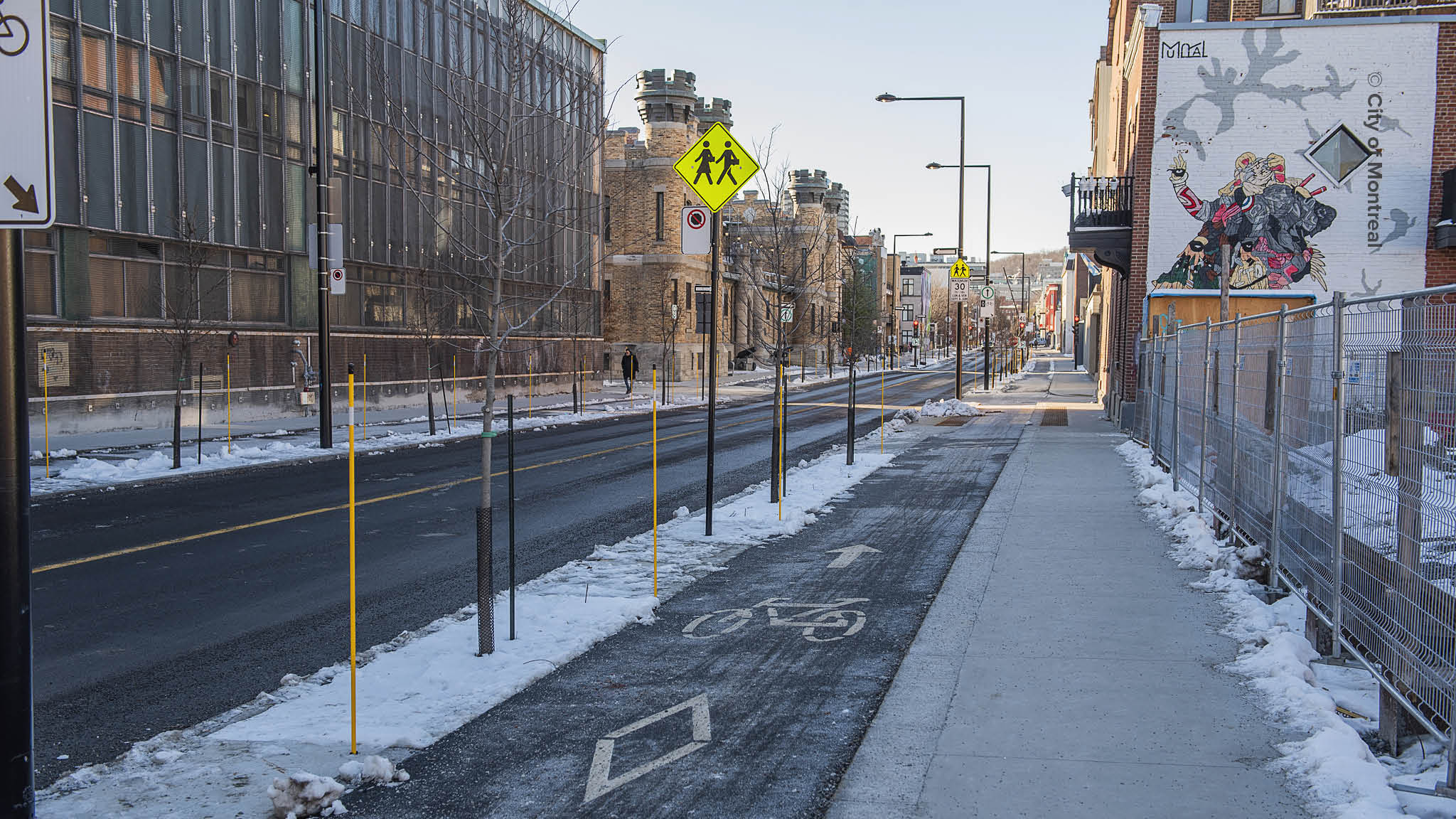
In recent years Montréal has accelerated its efforts to become a truly bicycle-friendly city, significantly expanding and improving its networks with a focus on safety, comfort, and connectivity. Its flagship project, the Réseau Express Vélo (REV), is now one of the most ambitious cycling initiatives in North America. More than just infrastructure, the REV has introduced a cohesive design identity with clear signage, generous widths, and consistent protection making it instantly recognizable and easy to navigate through.
The Saint-Denis corridor, a centerpiece for this transformation, has become a symbol of the shift in Montréal, with 1,3 million trips between January and September 2025. Record ridership levels and a thriving local retail district along the corridor have dispelled earlier fears that cycling infrastructure would bring harm to business. Actually, the street has seen its vacancy rate drop from 24% in 2020 down to approximately 16% in 2024, which demonstrates that a well-designed bicycle network can support both mobility and economic vitality. Beyond flagship routes, Montréal’s approach extends to the finer details in street design. The city has invested in intersection safety, applying best practices in visibility and turning protection. It has also pioneered “bicycle streets” (vélorues), the first of a kind in North America, while carrying on with the task of calming traffic on those famous residential streets that are so pleasant to ride on.
The success of BIXI, Montréal’s iconic bike-share system, showcased its maturity by reaching an impressive new record of 13 million logged trips in 2024. Having introduced bike trailers in 2025 (a world first) and now operating year-round after a successful winter pilot in 2023–2024, BIXI has seen record ridership and international recognition, and has even earned a place in TIME Magazine’s 25 Best Inventions Hall of Fame. Together, these milestones point to a city that has normalized cycling into everyday life.