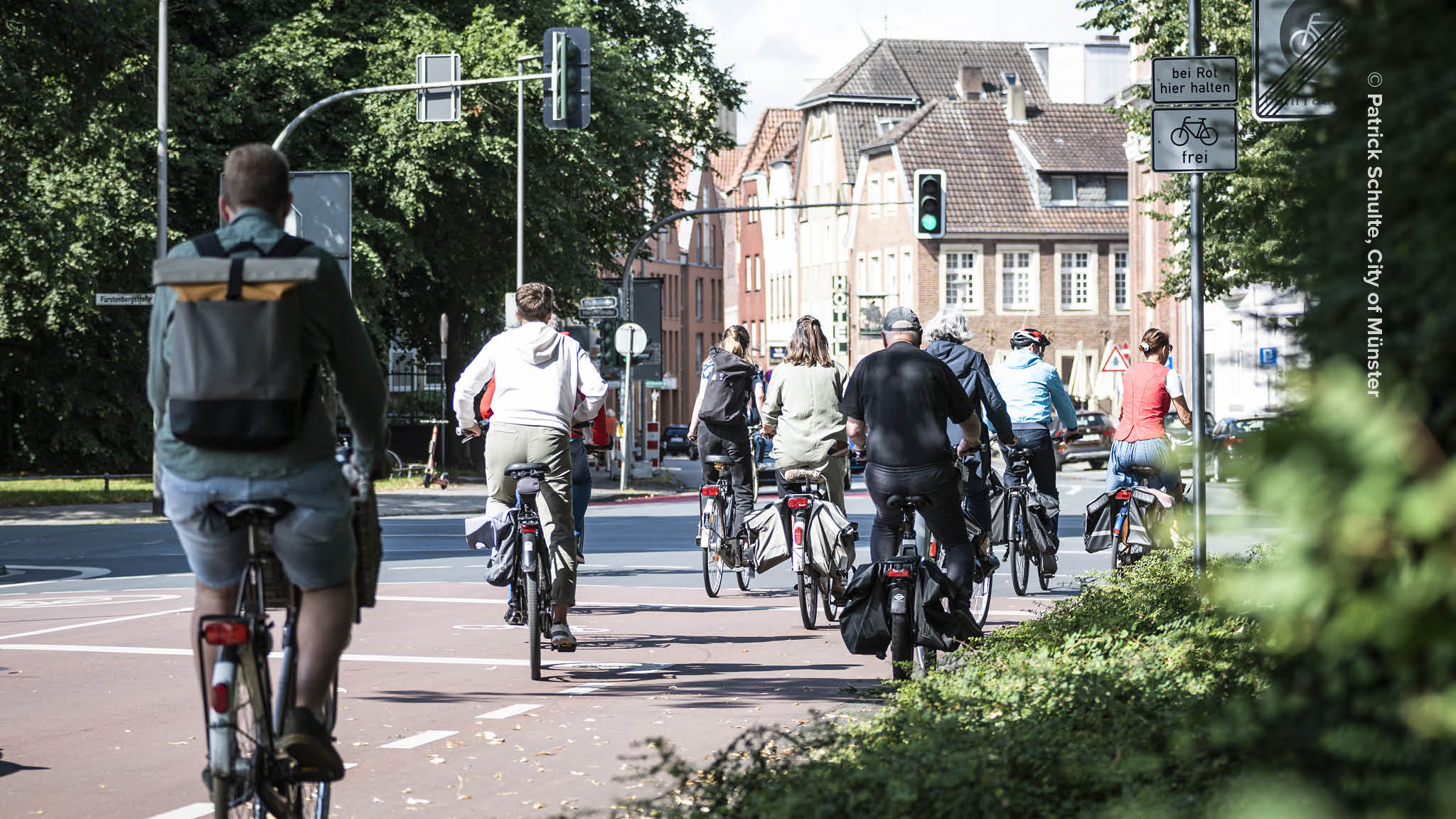
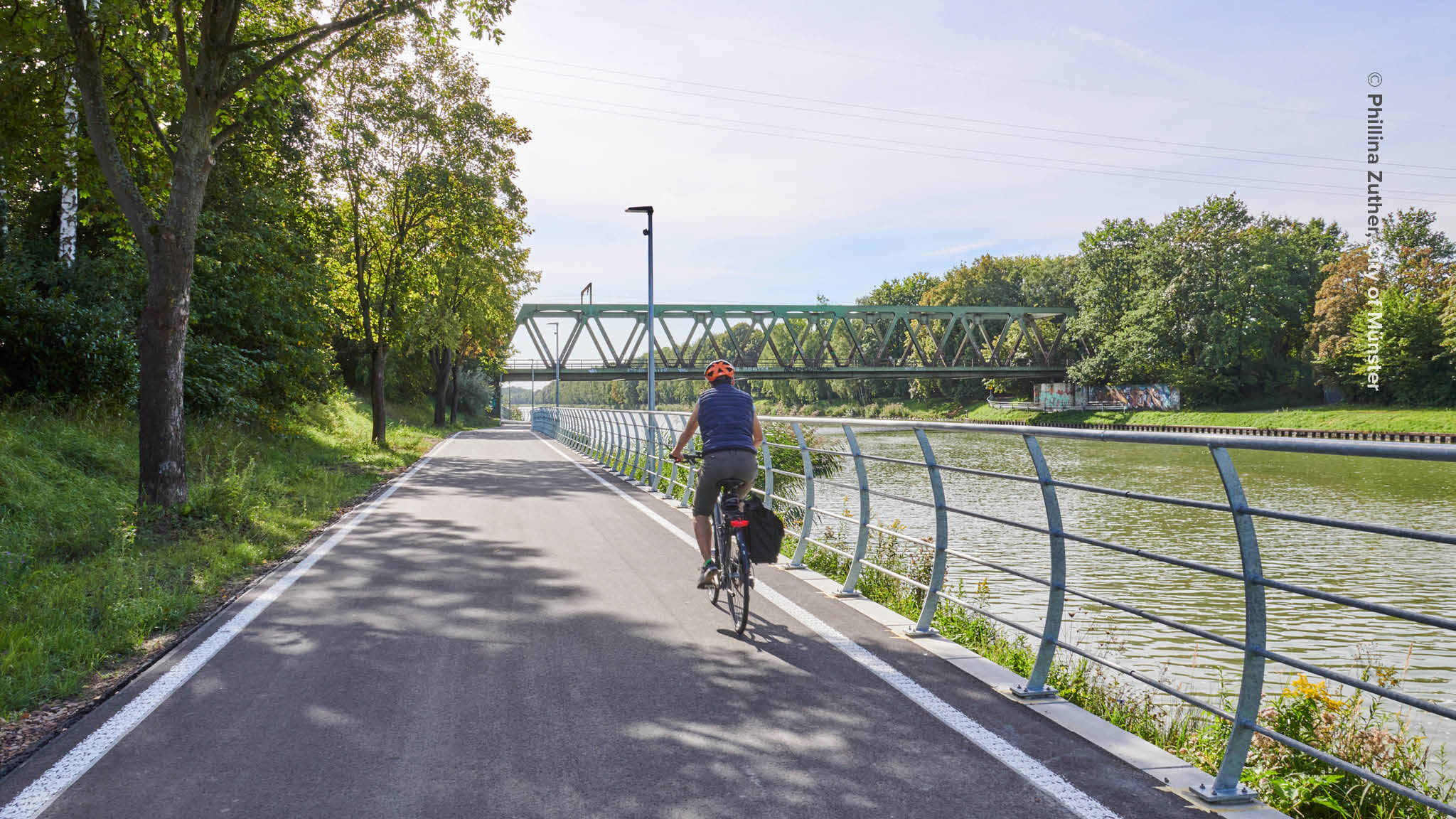
Two thirds of Münster’s streets enforce 30 km/h speed limits and roughly 40% have protected cycle tracks. Additionally, investment in cycling infrastructure and facilities is robust and consistent: for the past five years, the city has spent an annual €33 per resident. During post-pandemic years, the city made improvements on existing infrastructure and developed new cycle tracks, most notably the scenic 20km “Kanalpromenade”, whilst maintaining existing bicycle corridors such as the iconic tree-lined “Promenade”. Like many German cities, Münster has started coating their bicycle streets, “Fahrradstraßen”, with red paint and traffic-calming signage, indicating that these zones prioritize cyclists as the designated occupants. Though high by global standards, the quality of existing infrastructure remains relatively inconsistent for a city with such exceptional cycling usage. Despite its connected bicycle network, Münster has not yet matched the infrastructural upgrades seen in larger metropolitan areas, and comfort and safety are compromised in places where protection and width are inconsistent. Bicycle tracks remain relatively narrow and often not separated from pedestrians.
What’s most notable about Münster is its solid cycling usage. With an impressive, steadily growing modal share – 43.5% in 2019 to 47% in 2022 – it’s no surprise Münsterländers were Germany’s “least stressed” and most satisfied cyclists in ADFC’s 2024 Bicycle Climate Survey. A large part of this success is embedded in the city’s structure: a young university population and a compact urban layout keep everyday trips rather short. In order to bolster pride, the city tracks and publishes their progress: six permanent counters feed public billboards so that residents can follow ridership and climate trends.