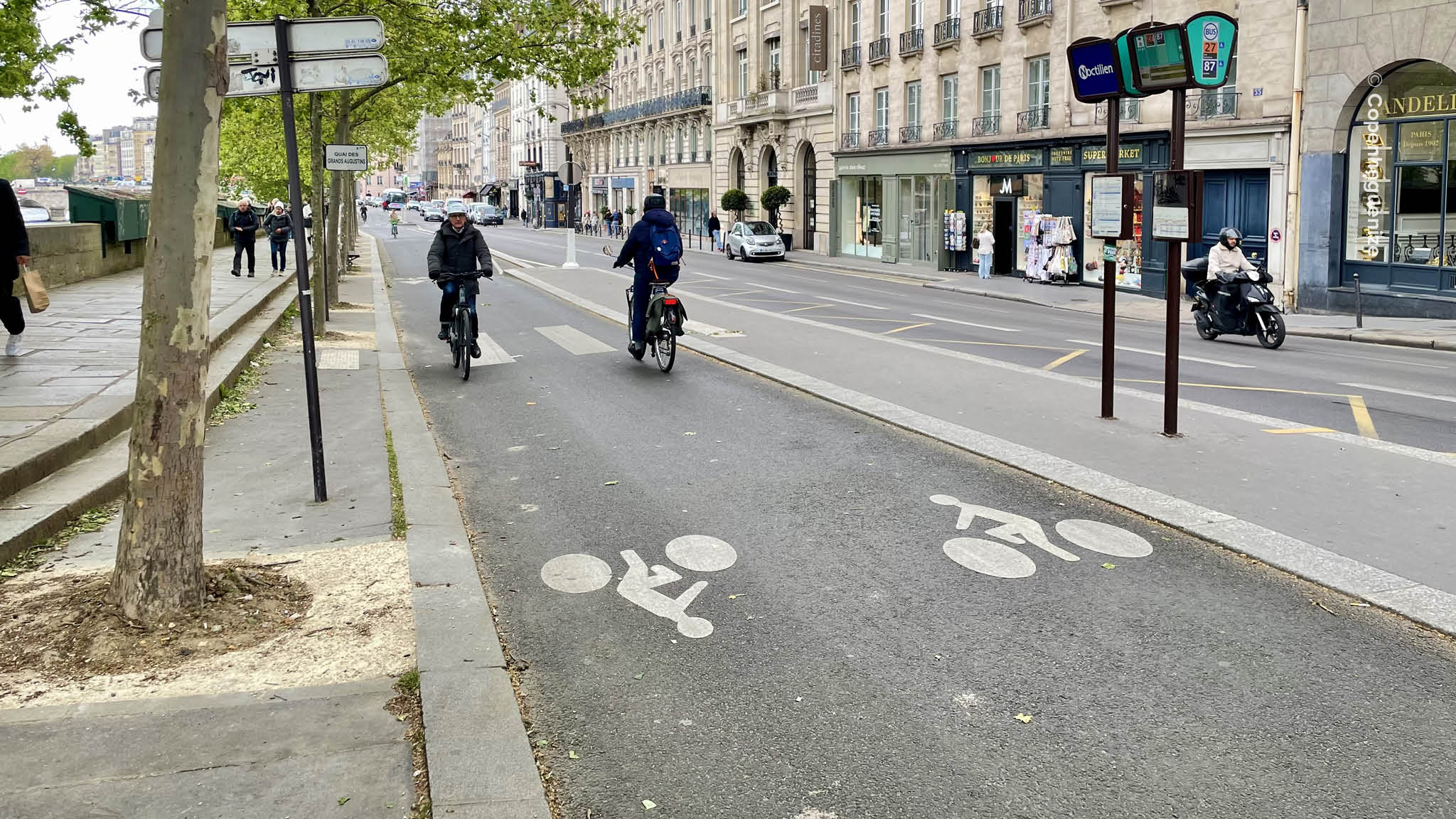
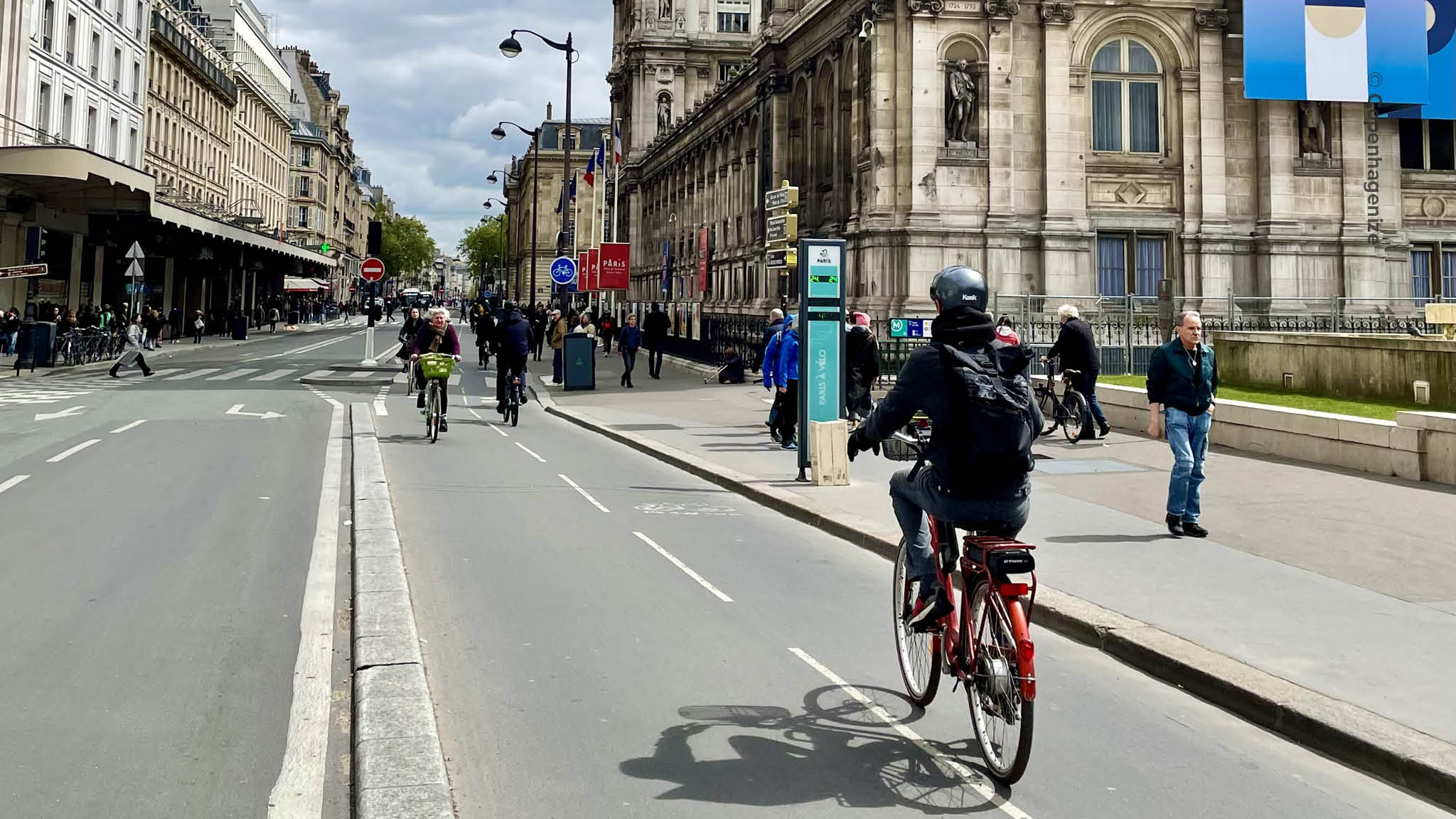
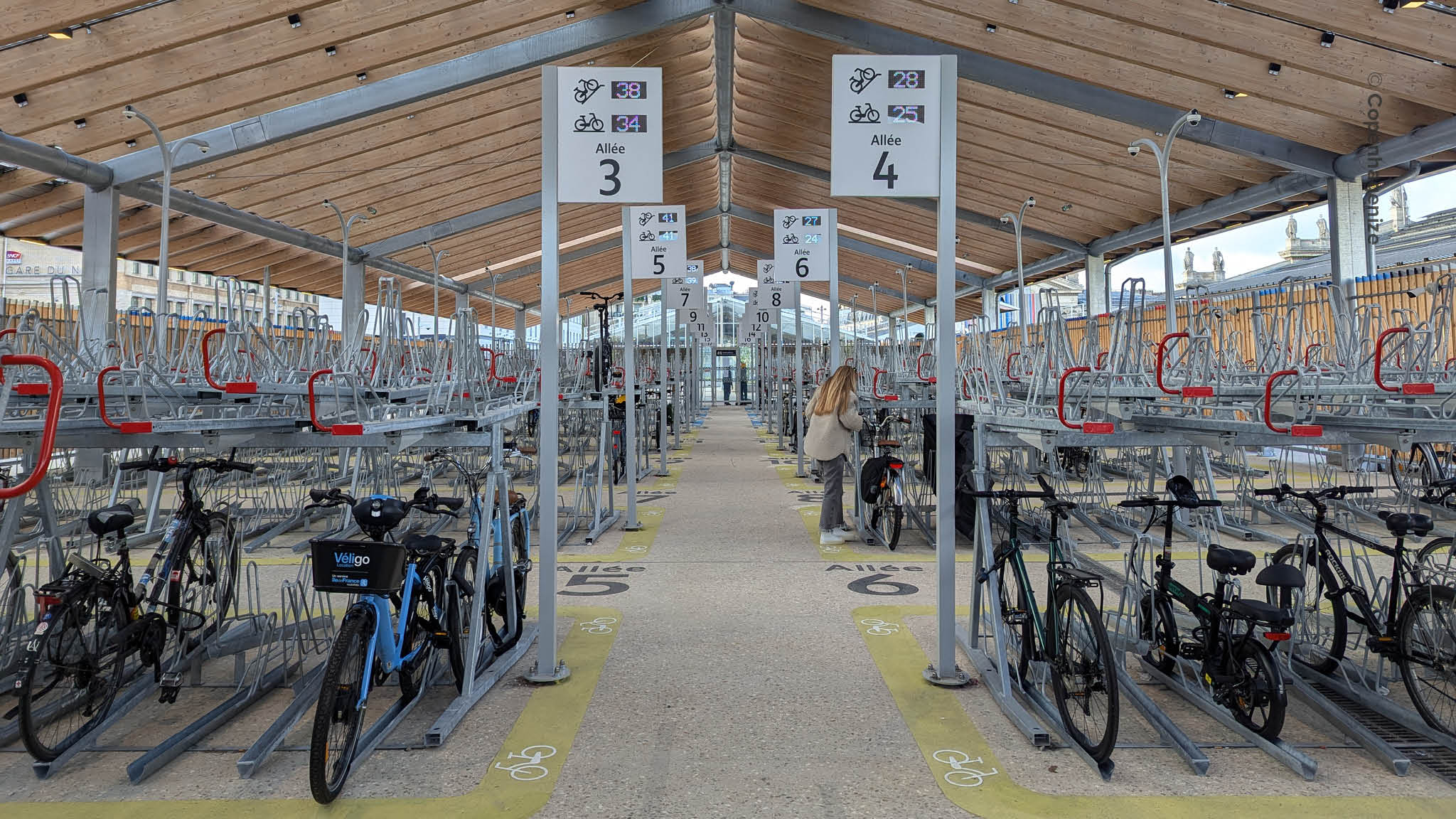
When Paris decides to do something, it does so at awe-inspiring levels. Famous boulevards like Rue de Rivoli or the Quais de Seine are now car-free, and public squares like Place de la Bastille and Place de Catalogne are being revamped for people and nature. The current transformation of the city includes an entirely new approach to public space with people, active mobility, and environmental resilience at its root. The city’s cycling budget and the already-extensive cycling networking continue to grow with new protected bicycle tracks being added regularly. Street-level amenities have followed suit: there are more than 122,000 public bicycle-parking spaces, including adapted spaces for cargo bikes, and guarded spaces at transit stations and other secure areas. A change of this magnitude is only possible by deliberately reclaiming space from cars. School streets are becoming the norm, speed limits have been reduced to 30 km/h on 85% of roadways, car parking and lanes have been removed to make way for more pedestrianization, wider sidewalks, bicycle infrastructure and urban greenery.
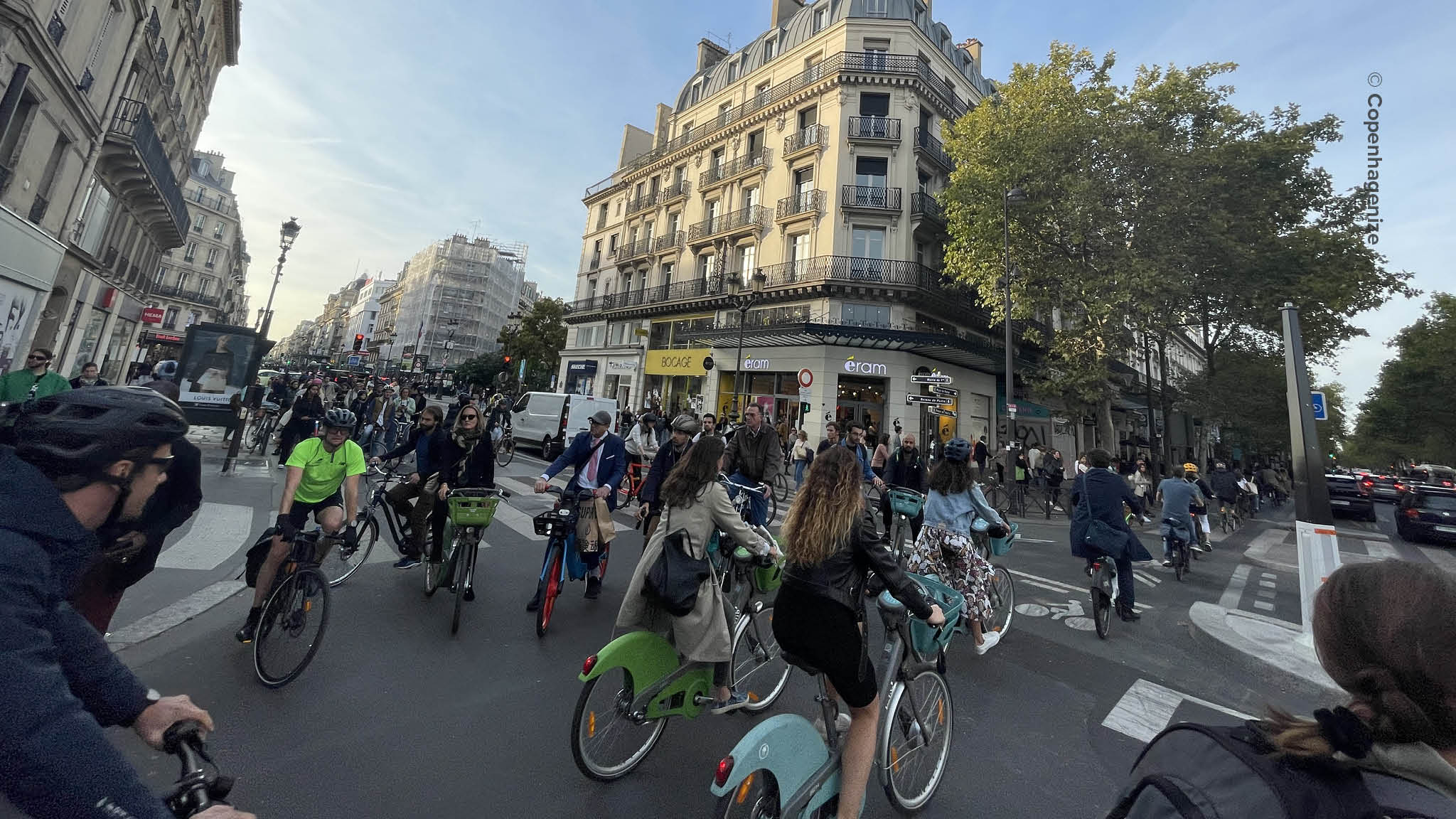
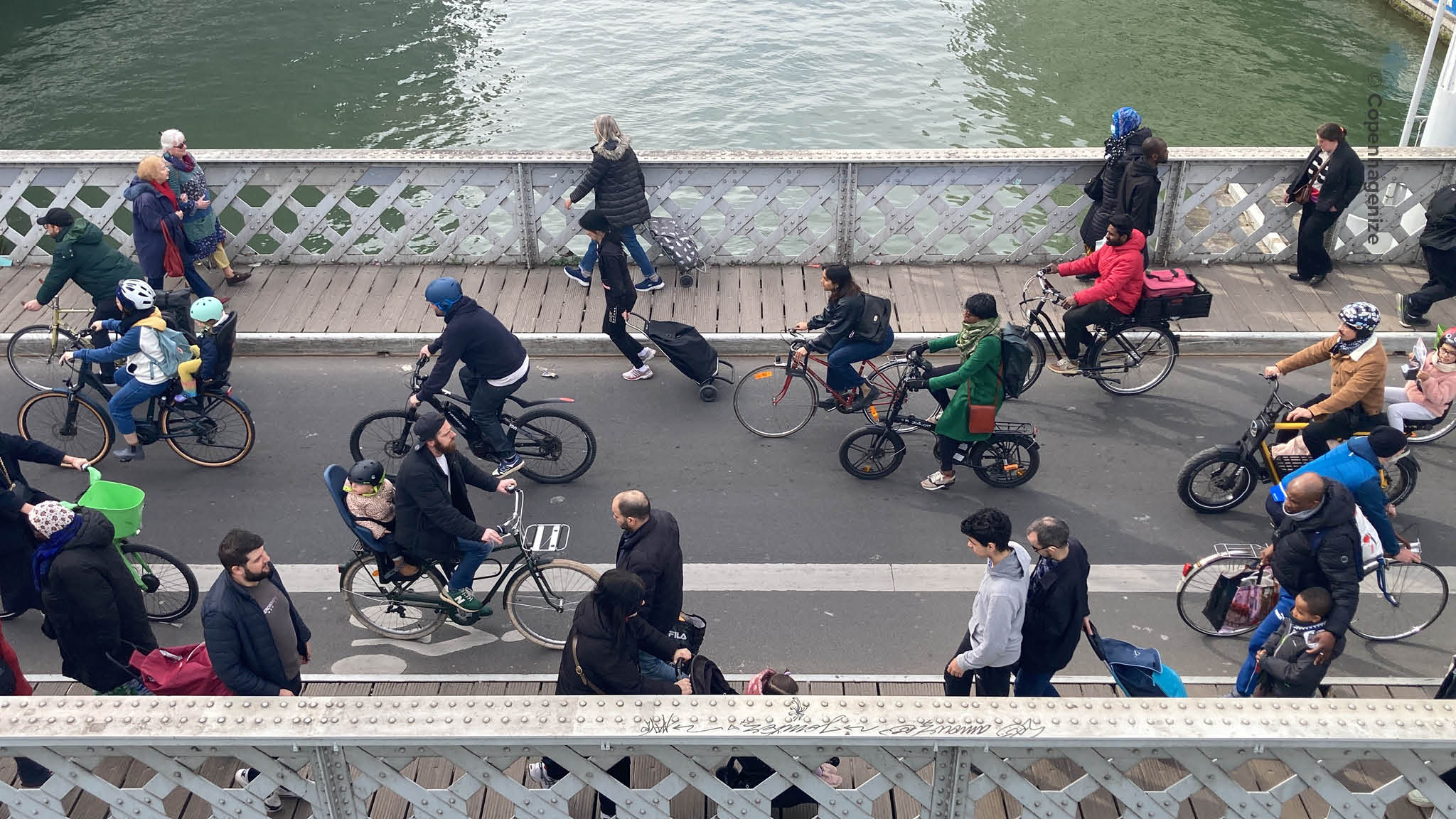
A variety of bicycle users is now visible everywhere, from families using cargo bikes to couriers and commuters. The city subsidizes household and business cargo bike purchases, with businesses having taken advantage of this support to buy 1500 cargo bikes since 2018. Shared mobility has reinforced the shift to cycling: Vélib’, the city’s shared bikes system, and other private dockless services together offer over 45,000 bikes, which generated 56 million trips in 2024, a European benchmark. Paris’ spectacular transformation goes beyond mobility, it’s been about creating a more climate prepared and livable city. These recent changes have improved quality of life for all of its residents, who now benefit from reduced air and sound pollution, calmer and safer streets, and more welcoming public spaces.