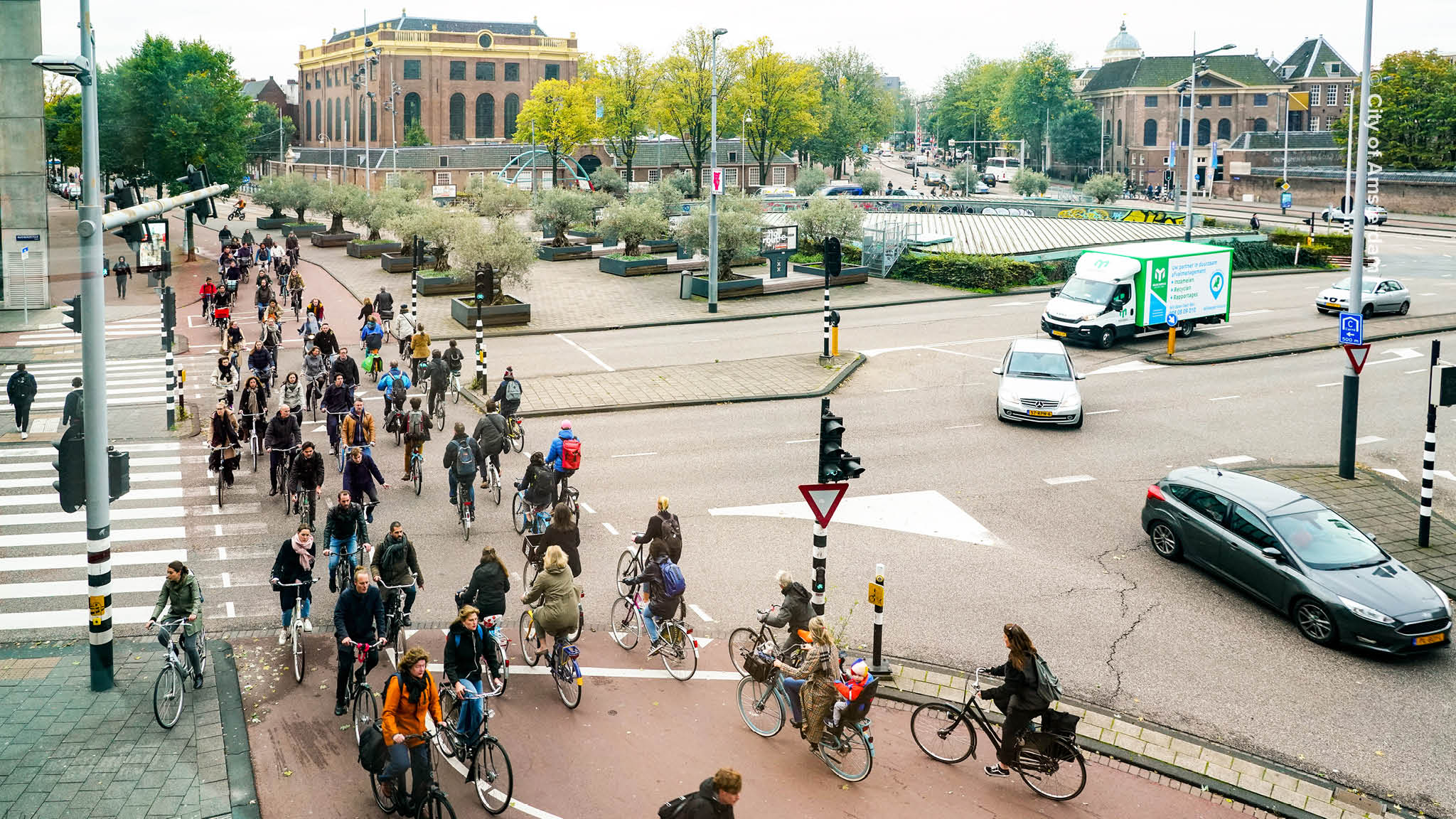
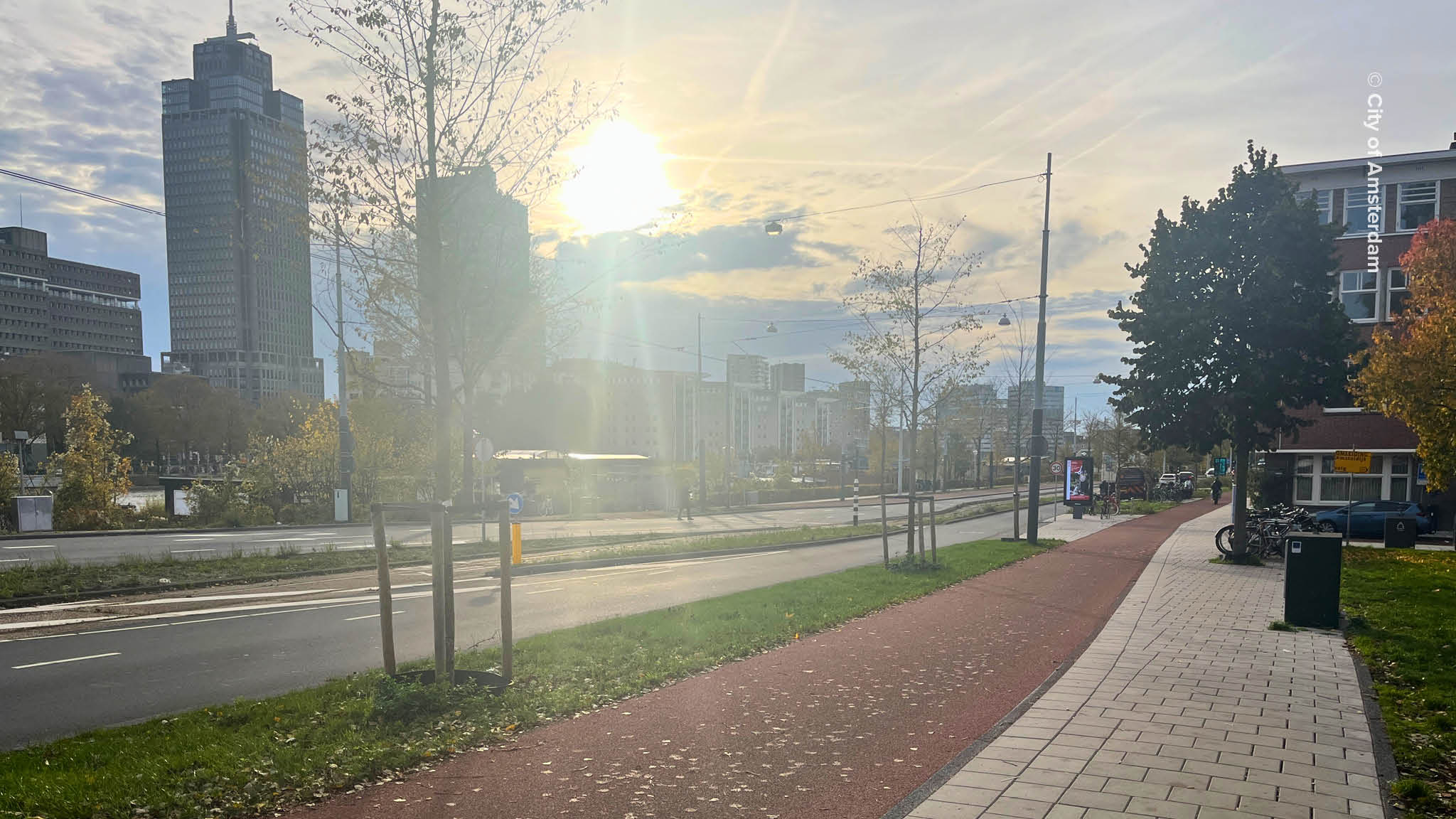
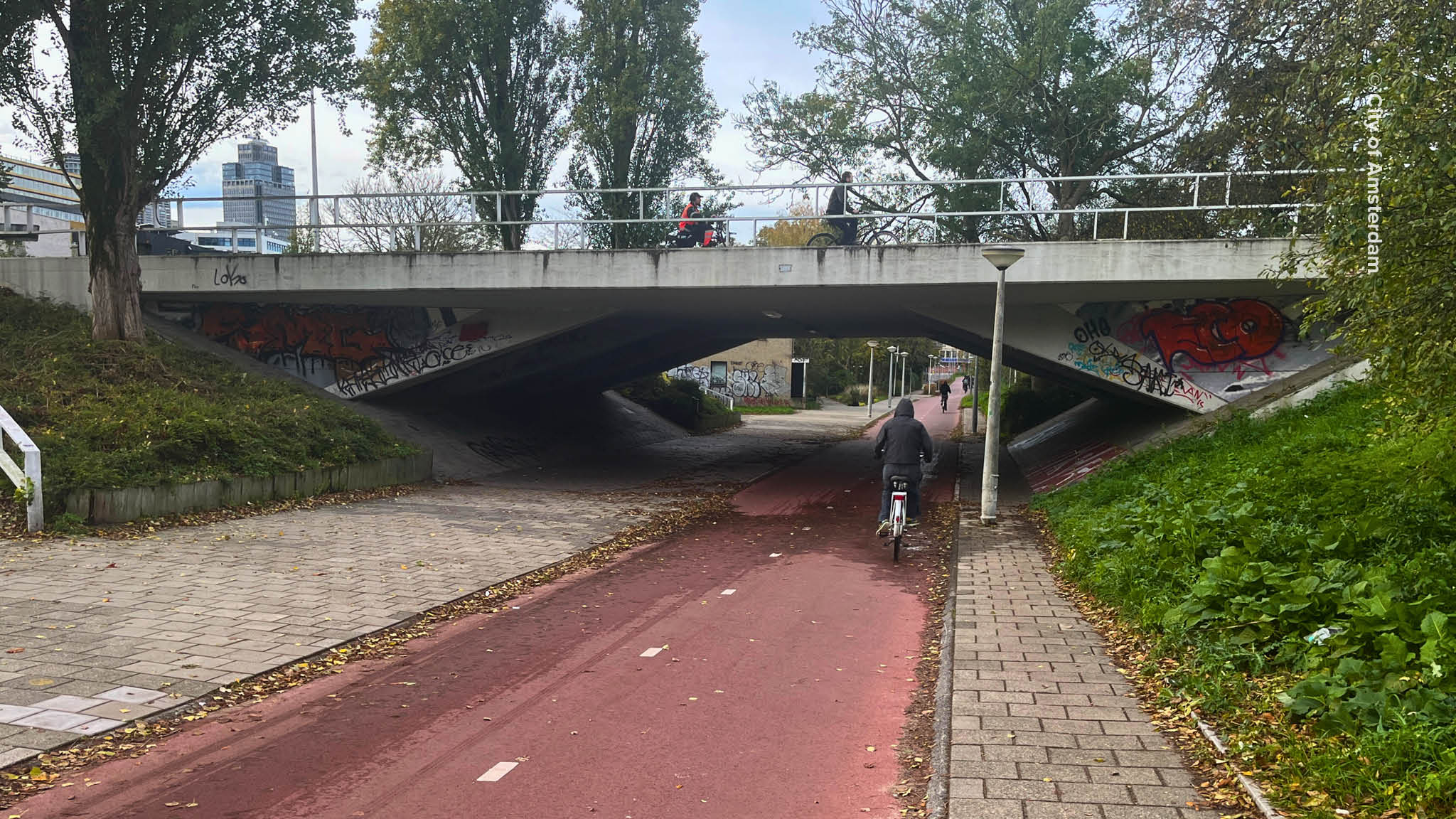
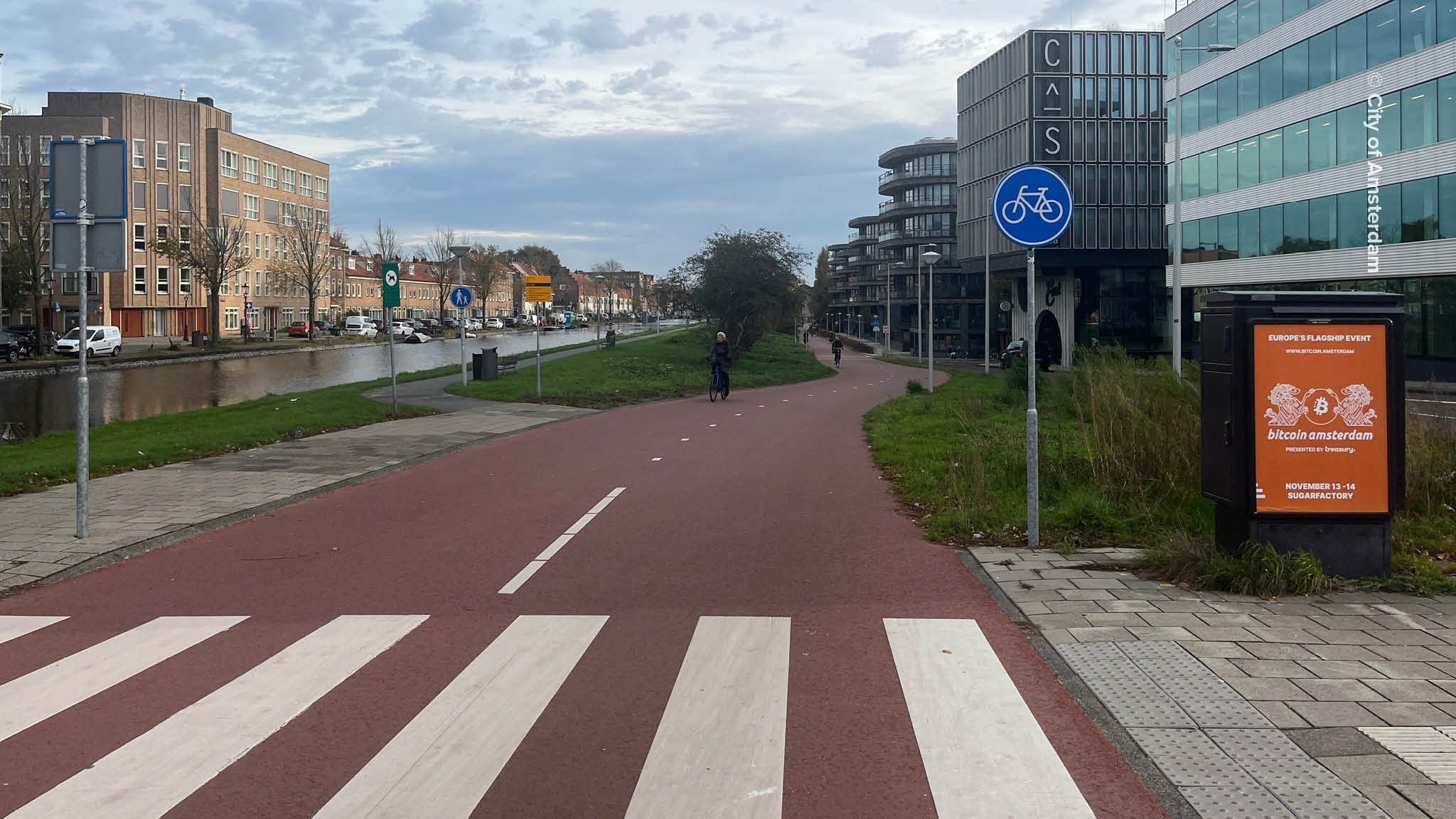
Amsterdam’s network now includes nearly 560 km of protected cycle tracks within its city limits, one of the densest and most continuous in the world. Following the 2023 city-wide 30 km/h speed limit rollout, 82% of streets now circulate at calmer speeds, and have redefined the city’s street hierarchy around safety and comfort. In 2024 the city doubled its cycling budget from the previous year, confirming a strong political will to enhance quality, maintenance, and coherence. These numbers demonstrate that Amsterdam has gone past the stage of building and expanding the cycling network, and is now moving to refine the user experience.
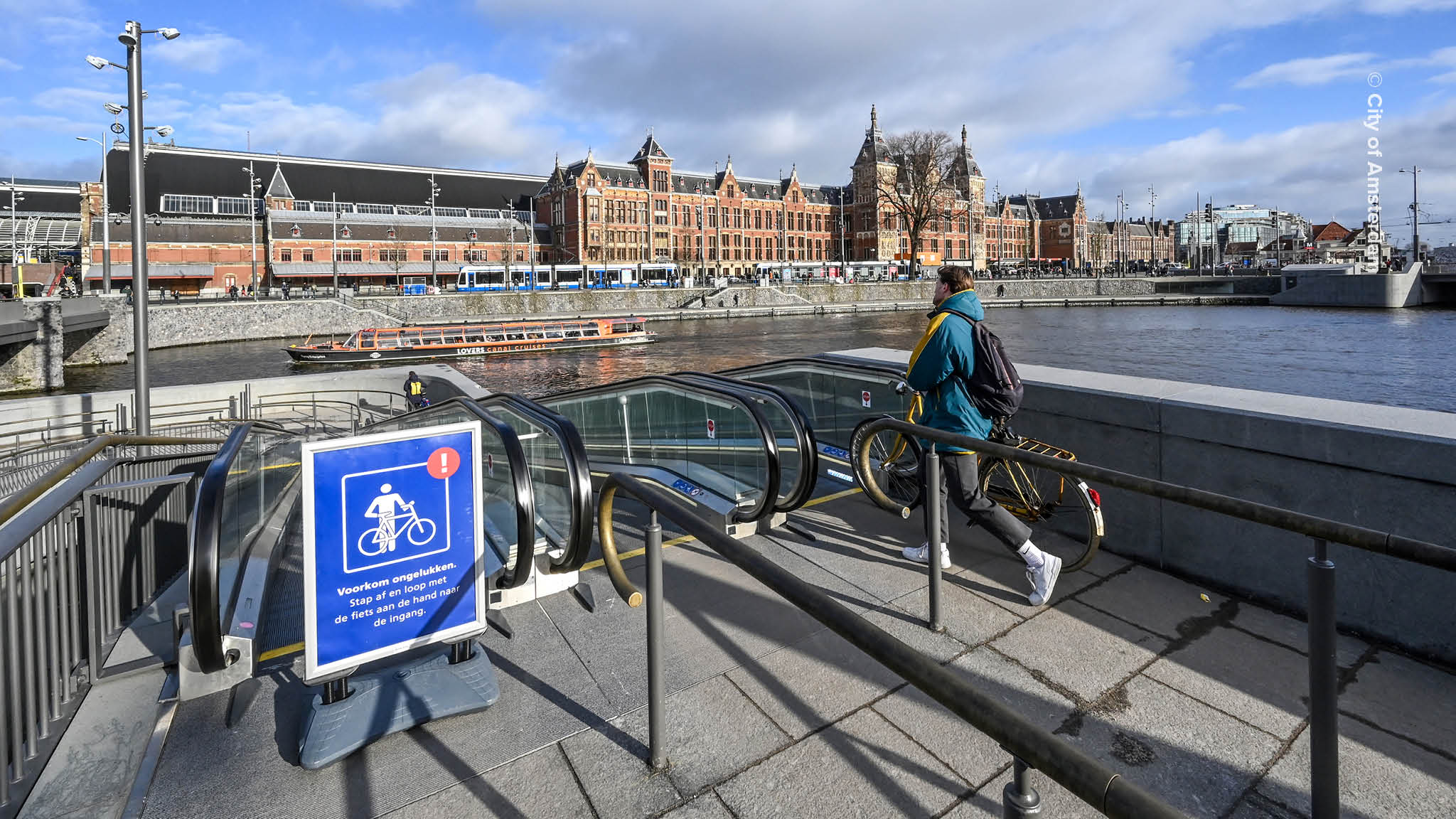
In a city known for its many canals and small charming streets, land is scarce and water abounds. Finding enough space to keep up with bicycle parking demands is not obvious, but Amsterdam has continued innovating and using the water to its advantage. In 2023 the city opened a spectacular underwater bicycle parking garage at the Central Station, adding 11,000 new spaces underneath the canal. This was a global first and proved once again that Amsterdam is a leader in cycling innovation. This brings the total secured bicycle-parking to an impressive 42,000 available spaces. Amsterdam is also reclaiming space from cars, transforming the historic canal belt into a continuous fietsstraat (bicycle street) as part of the Binnering project.
Since 2021, the school streets program has closed off roads to motorized traffic during the pick-up and drop-off hours, encouraging the children and parents to walk and cycle to school. With 15 streets already active and 10+ added annually, the city is nurturing safer, more child-friendly neighborhoods today and for generations to come. Amsterdam even created a meaningful solution for abandoned bicycles. The Fietsdepot (bicycle depot) offers them a second life. Repaired by a social organization at the depot, the bicycles are then donated to low-income residents, refugees, and people in asylum centers. This is evidence that Amsterdam’s cycling policy has extended beyond mobility to social inclusion.