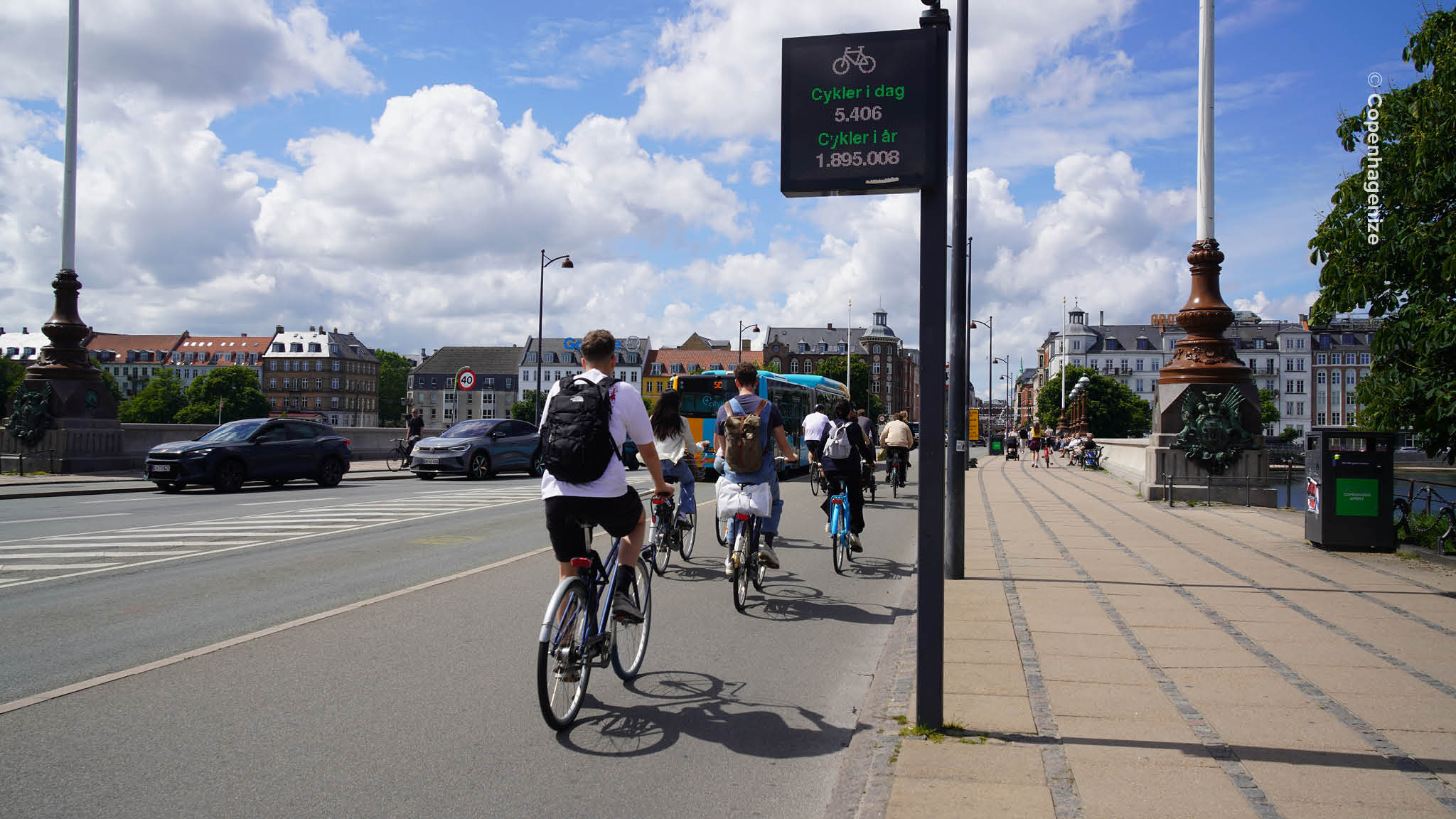
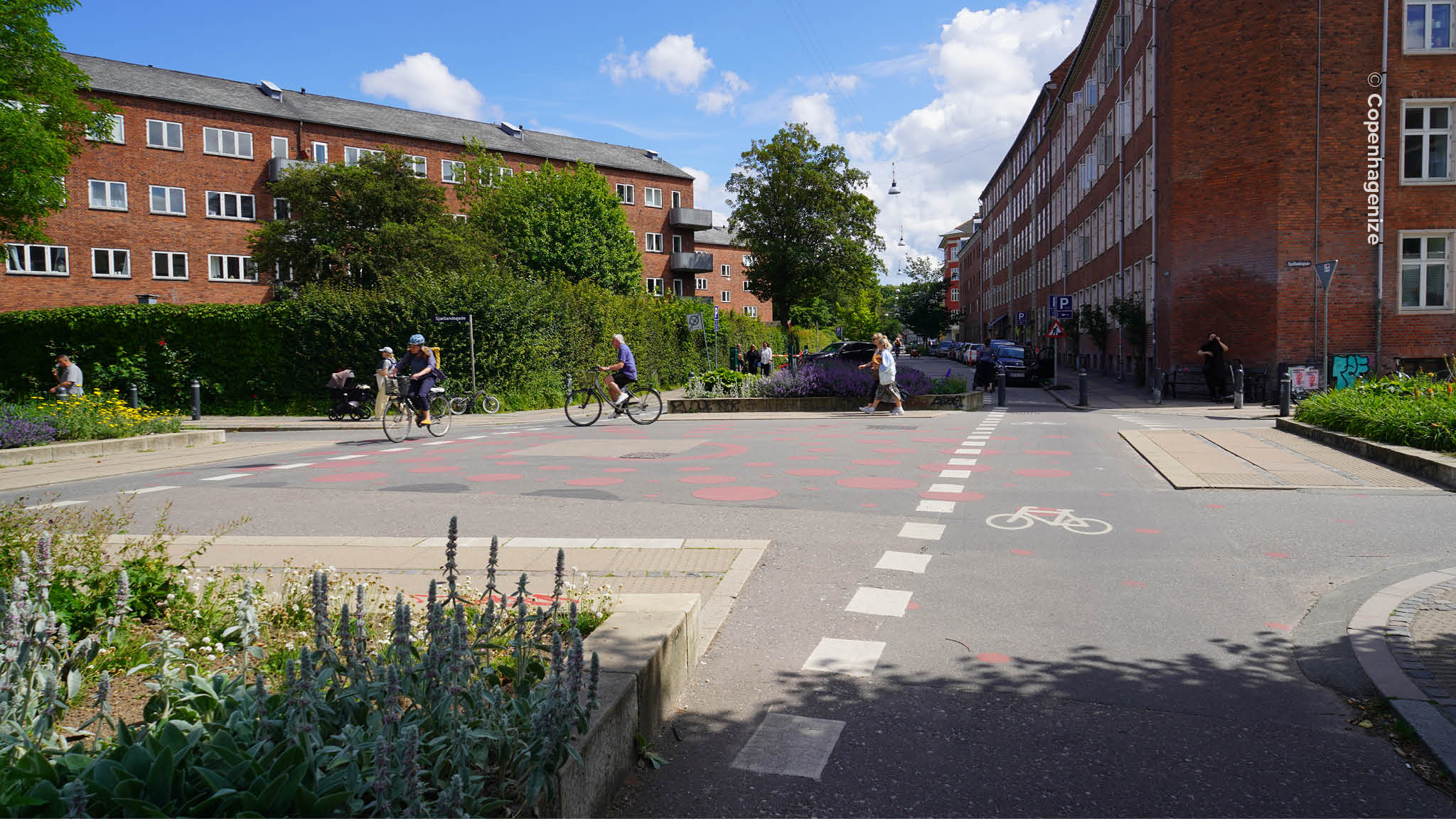
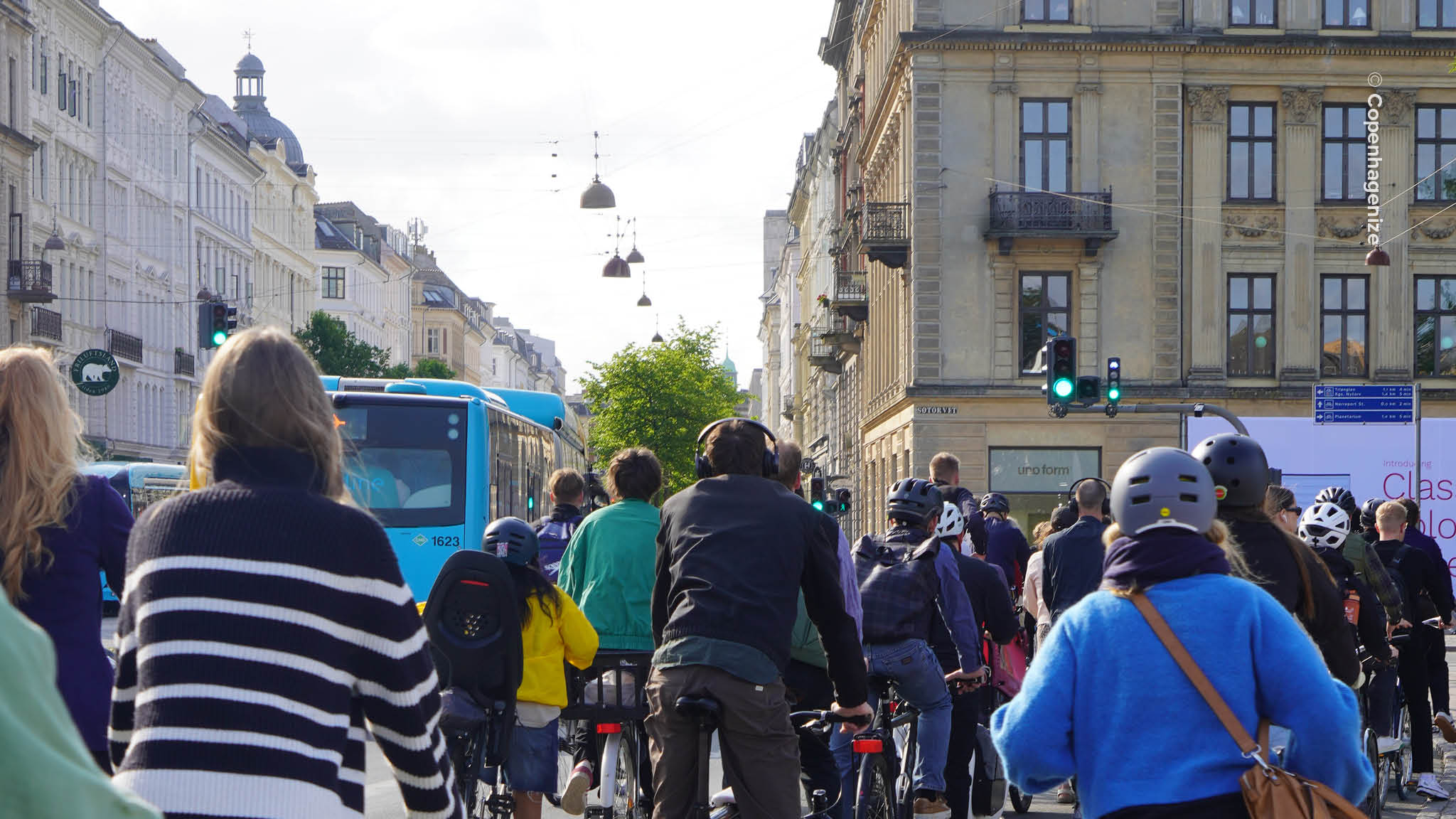
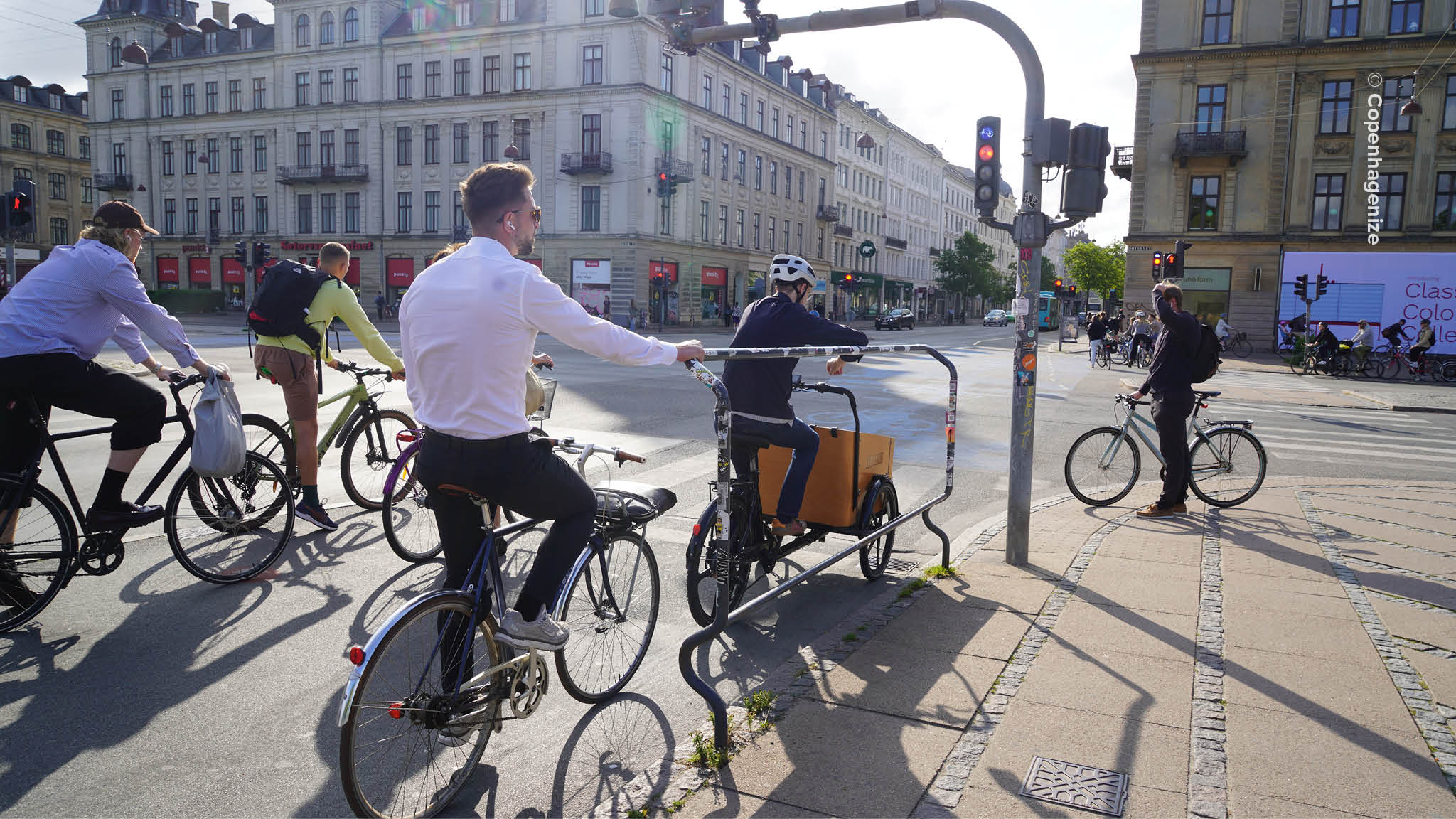
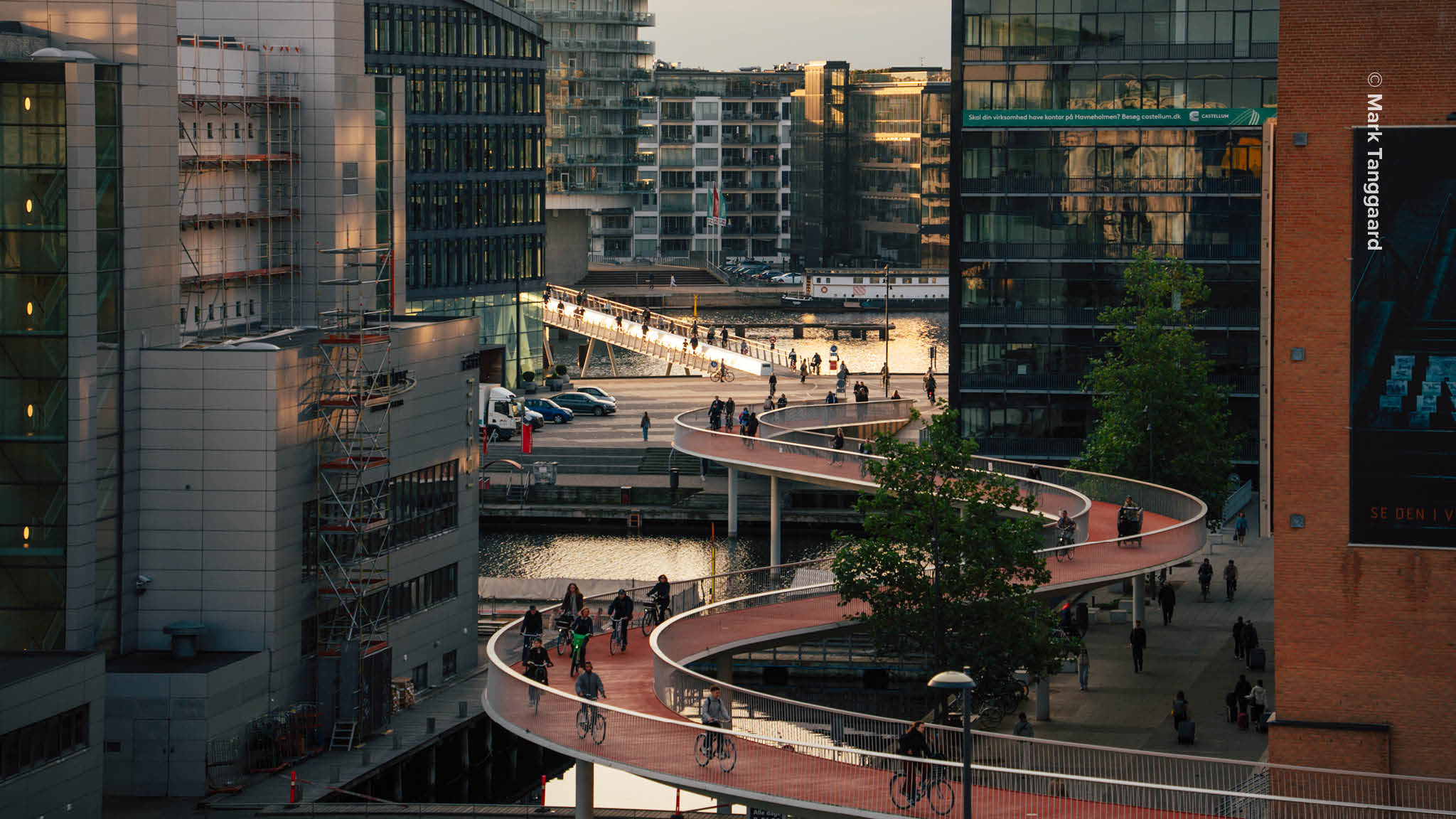
Copenhagen has long defined the global standards for cycling infrastructure and design, maintaining the highest infrastructure density in the world with 52 kilometers of protected bicycle tracks for every 100 km of roadway. This network supports an impressive 29% modal share of all trips by bicycle and continues to evolve to address new challenges. In recent years, Copenhagen has expanded its playbook of solutions by finally introducing bicycle streets in dense corridors such as Nyhavn, Rantzausgade, and Nordre Frihavnsgade, where cyclists eventually lead the flow. The Dybbølsbro area illustrates this evolution, with Copenhagen accommodating high cycling volumes on tracks up to 9 meters wide, while in other parts of the city, street profiles have been reimagined to incorporate green infrastructure for rainwater management.
Yet the next chapter for Copenhagen lies not in the quantity, but in rebalancing the city for all forms of life. As car numbers rise, the challenge is to strengthen traffic calming, expand 30 km/h speed limit zones, and create car-free areas around schools, while simultaneously expanding green-wave corridors and climate resilient street redesign. These measures will sustain Copenhagen’s renowned livability and bolster environmental leadership. Over the past five years, the city has invested nearly €38 per inhabitant annually in cycling, a level of consistency that makes evident Copenhagen’s long-term commitment to everyday cycling.
What is continuing to distinguish Copenhagen is not only the scale of everything it has already built, but its habit of continuously refining, updating, and improving its streets in response to real world challenges. The city remains one of the most influential references in globalized bicycle urbanism, a place where principles of design together with a culture of planning have shaped cycling policy far beyond Denmark’s borders.