Singapore
Pillar: Safe & Connected Infrastructure
Indicator: Bicycle Infrastructure
Since 2014, Singapore has gone car-lite, reframing bicycling as everyday transport. Today, the island is equipped with 730 km of safe, segregated bicycle tracks, with the aim of reaching 1,300 km by 2030.
Since 2014, Singapore has pursued a deliberate “car-lite” pathway. On a dense, compact island, limiting private car use has been a decade-long goal, turning the focus on making walking and cycling truly viable through safe, reliable infrastructure. The Land Transport Authority (LTA) now holds a dedicated mandate for active mobility, with specialists continuously improving bicycle facilities. Beyond bicycle-sharing success, car-free days, and traffic calming policies, one major initiative has put Singapore on the world’s cycling map: a connected, island-wide bicycle network safe for riders of all ages and abilities. Today, the LTA, working with NParks, the Urban Redevelopment Authority, and the Health Promotion Board, has built over 730 km of cycling paths and park connectors that cross Singapore’s various neighborhoods, with a clear, funded goal of around 1,300 km by 2030. First/last-mile paths meet MRT stations and interchanges, and streets are now equipped with hundreds of thousands of bicycle parking spaces. This push is anchored in the Singapore Green Plan and the 2040 “Walk-Cycle-Ride” vision, reframing active and shared travel from being a sport to default transportation.
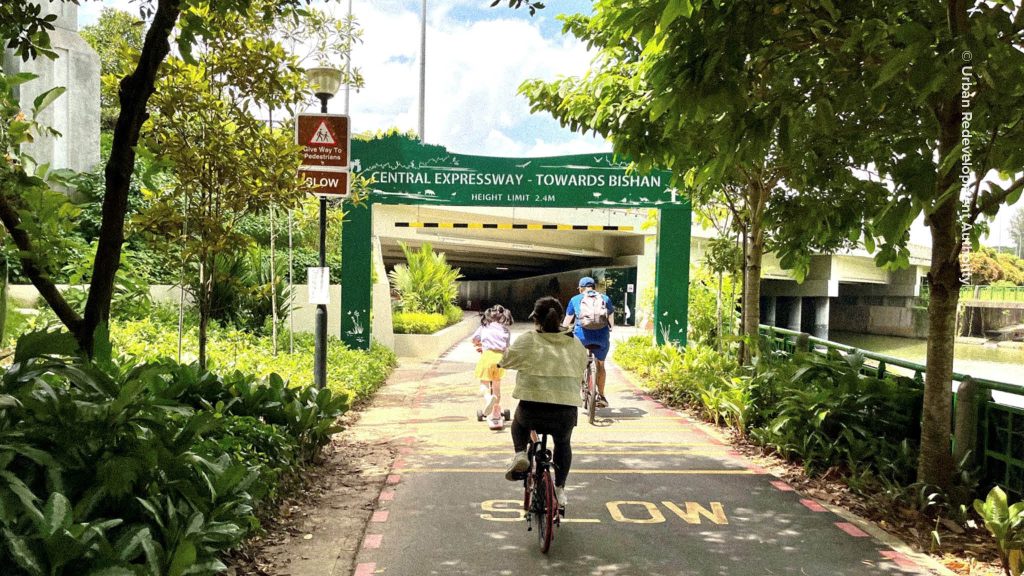
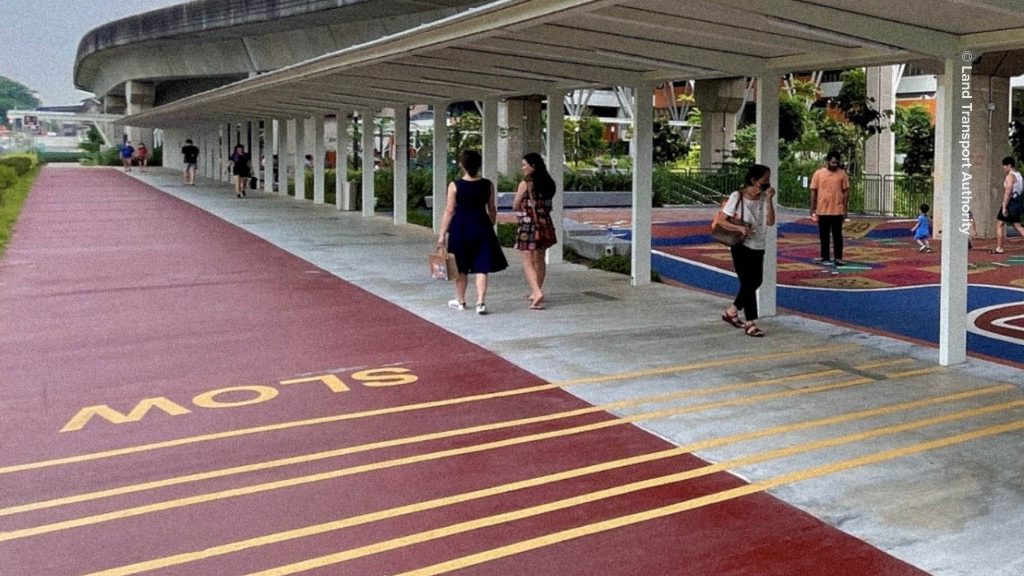
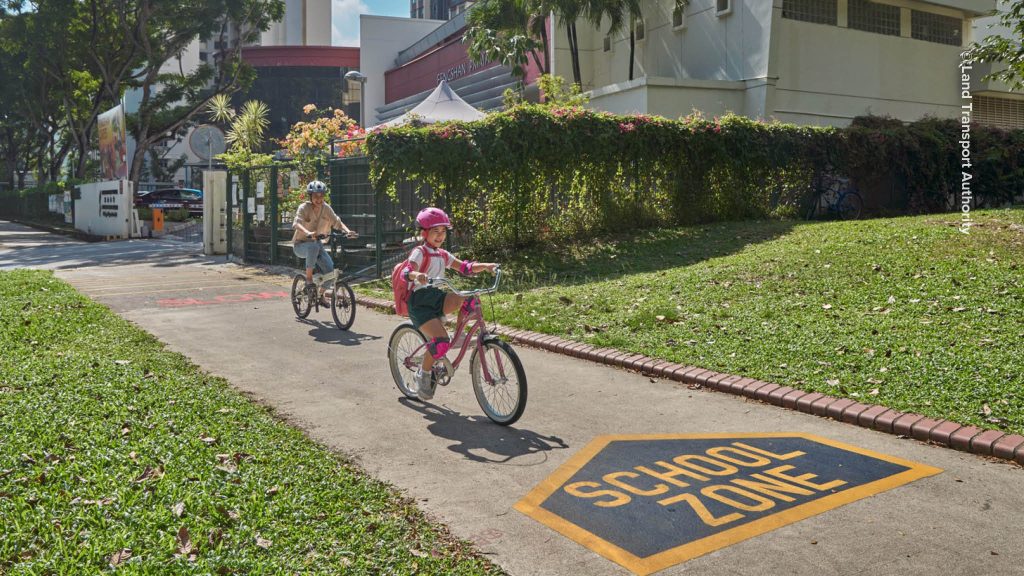
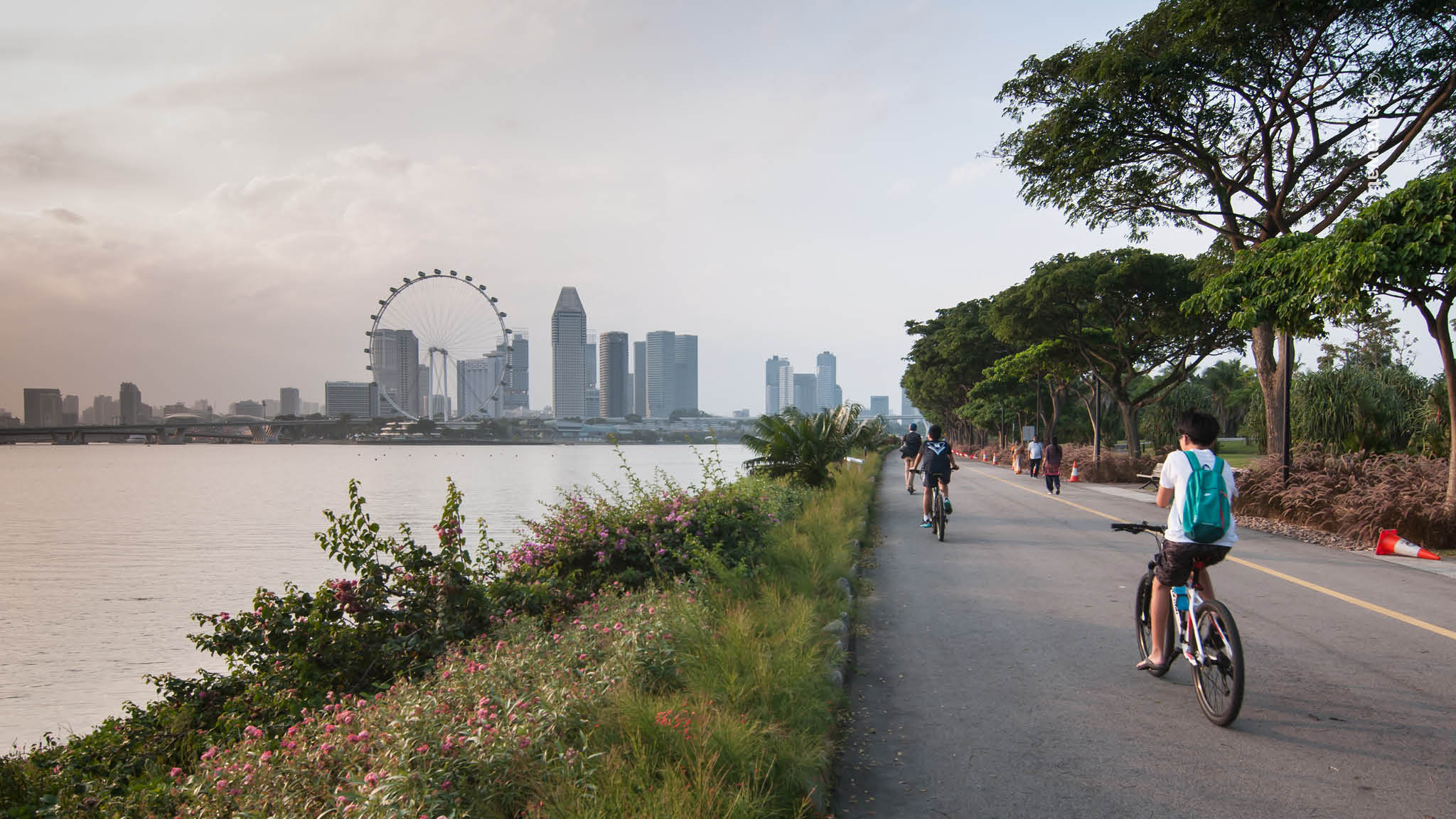
Design choices make everyday trips realistic in this city’s tropical, high-density landscape. New paths are predominantly off-road, two-way, and fully segregated, with red and skid-resistant surfacing for visibility, speed-calming strips, and signage at conflict points. Notably, the reimagined North-South Corridor, originally planned as a “North-South Expressway” for motorists, was redesigned to prioritize bus lanes and bicycle tracks. In parallel, NParks’ Park Connector Network provides green spines that link parks, waterfronts, and neighborhoods into cyclable circuits.
The rapid expansion of Singapore’s cycling network—on track for the goal of 1,300 km by 2030—has put a majority of the city’s households within reach of safe and protected cycle routes. As the network grows, public agencies are reinforcing this shift with tens of thousands of bicycle parking spaces at hubs and stations. The result is a steadily growing public acceptance and modal shift, supporting the city’s objective of going “car-lite” so as to cut land-transport emissions. The culmination of these efforts has made cycling a visible, safe, and normal part of daily life in the dense urban landscape of Singapore.
« There’s much more coverage than a few years back, so now you can find cycling paths in many places, especially on bigger roads in the neighbourhoods.” – Singapore resident (Vareck Ng,23) 2025