Fortaleza, Brazil
Pillar: Usage and Reach
Indicator: Cargo bikes
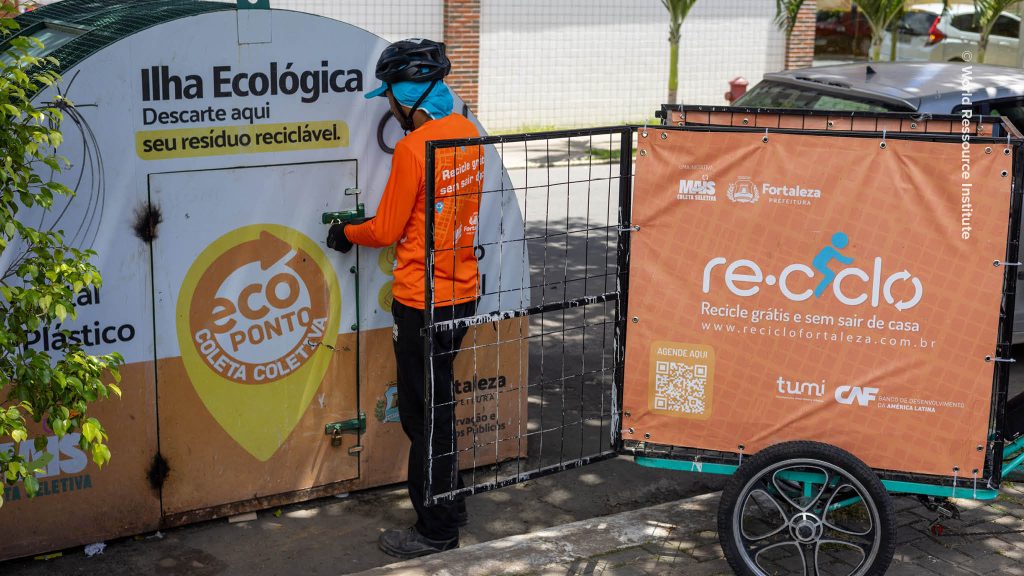
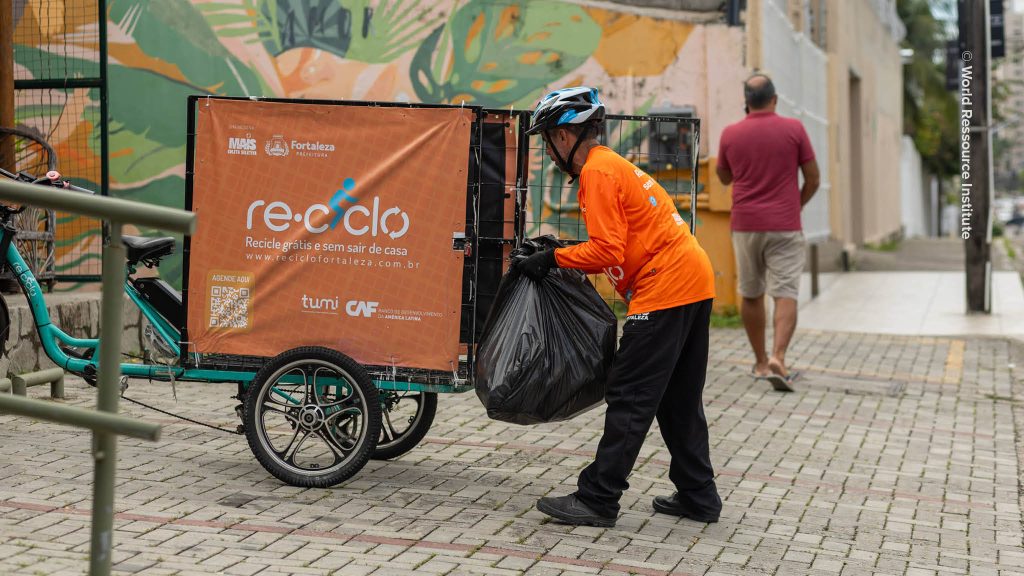
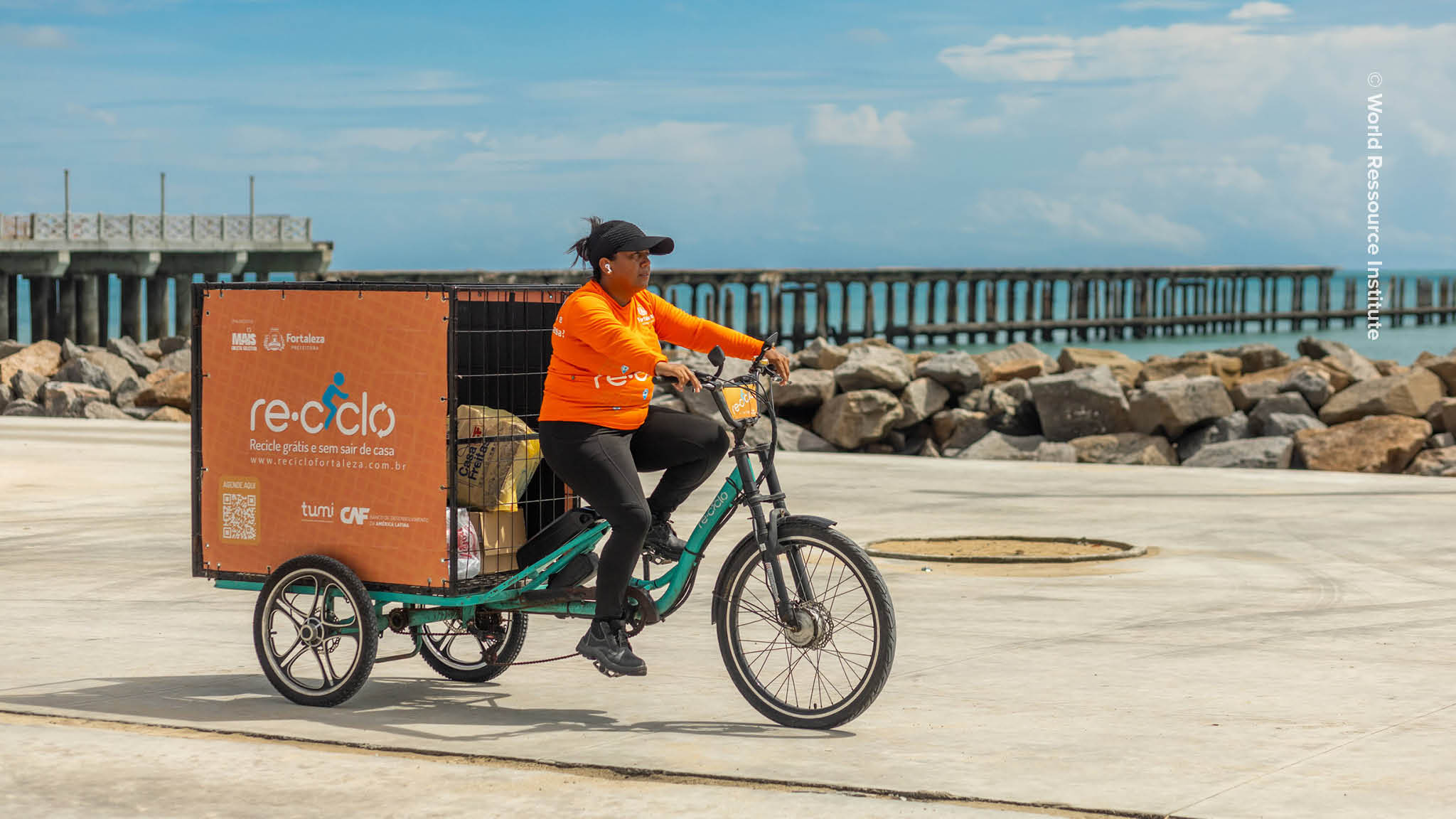
Fortaleza’s Re-Ciclo program equips waste collectors with electric tricycles, formal routes and EcoPoints. The program boosts recycling, creates income, and encourages respect while ensuring cleaner streets and shifting public perception city-wide.
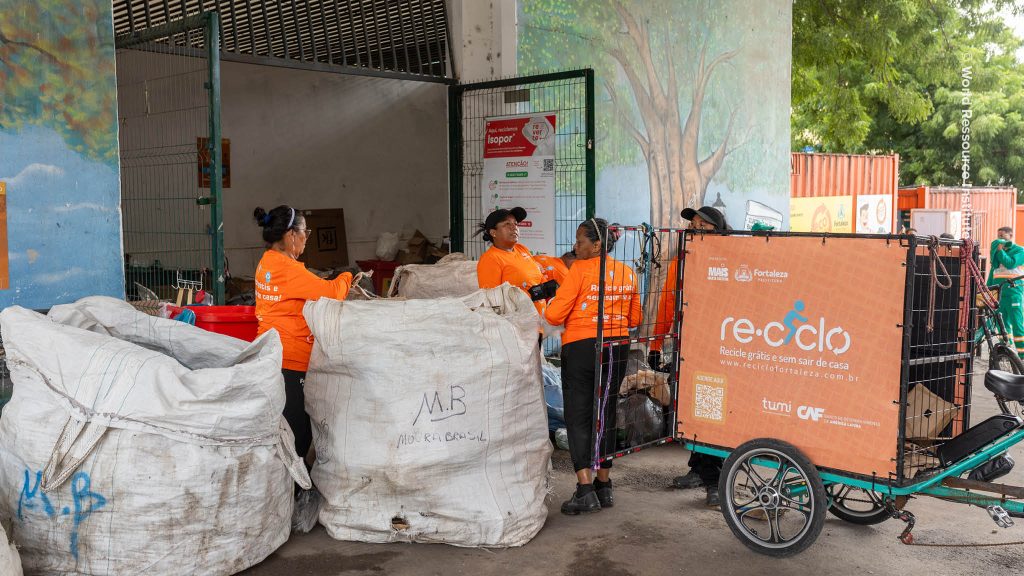
Fortaleza is the state capital of Ceará, and is Brazil’s fourth largest city with a population of over 2.5 million residents. Like many other Brazilian cities, Fortaleza has faced longstanding challenges in waste collection, and in 2023, only 6% of the city’s recyclables reached processing facilities, leaving public spaces littered with trash. Today, Fortaleza’s “catadores” – waste collectors – and electric tricycles are reframing recycling, transforming de-valued work into an issue of mobility, equity and public space. Through the city’s Innovation Lab (LABIFOR), Re-Ciclo was co-designed with waste-picker associations to pivot away from handcarts and informal work systems. The new structure puts staff pride and wellbeing at the forefront: uniforms and PPE, pedal-assisted tricycles with GPS, and a booking system connecting the collectors to neighborhoods. Materials collected at the curb go to a network of EcoPoints for sorting and onward sale, turning scattered efforts into a service that residents can see, respect, and trust.
How did mobility play a part in this change? Operationally, e-tricycles cover longer distances at higher average speeds than handcarts, with loads of up to 150 kg. Training, route optimization, and simple digital tools helped standardize quality and safety. Crucially, the city included waste collectors as design partners from the start, iterating vehicles and routines to match real constraints: maneuverability, weight, turn radii, and much more.
The results are clear. Since 2022, the Re-Ciclo program has cleared 980 tons of waste, and alongside broader municipal measures, the initiative drove a 541% increase in recycling. Even more, Re-Ciclo has instated a new reality for waste collectors with steadier pay, some reporting a 5 times increase in earnings. Many employees – 85% of them women – say the uniforms and tricycles foster pride and increase recognition in the community. Now, Fortaleza’s target is to achieve a 50% city-wide recycling rate within the next eight years by scaling up to 150 tricycles and expanding the network to every neighborhood, positioning Re-Ciclo as a national model for a circular economy with human dignity at its core.
“I feel like a warrior when I’m cycling – I’m very happy. » – Rafaela Aires, waste-collector at Re-Ciclo.